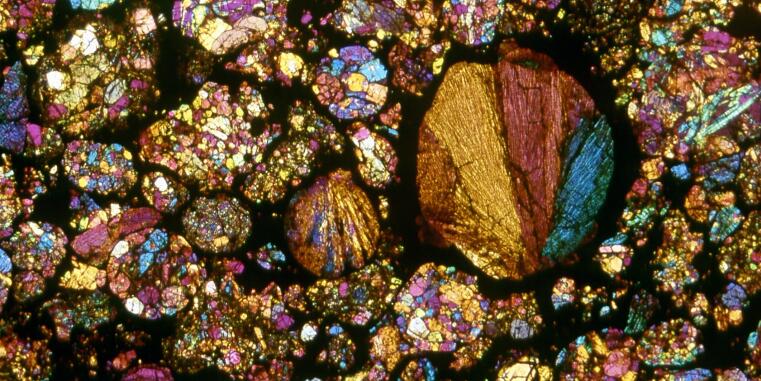

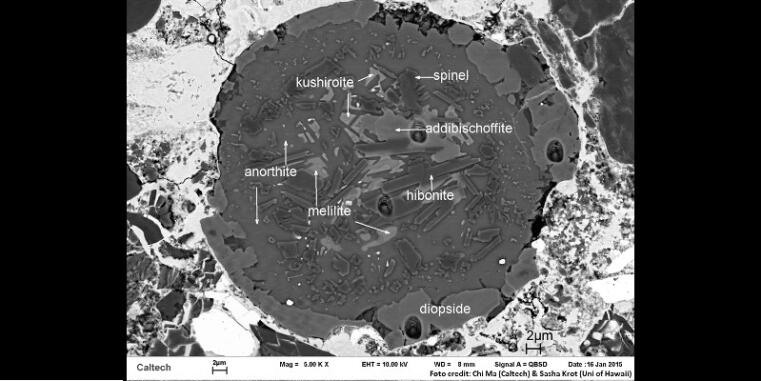


Meteorites are solid bodies from space that enter Earth's atmosphere and reach the surface. They primarily originate from asteroids, though there are also meteorites that come from Mars or the Moon. Meteorites, especially chondrites, are remnants from the early phase of our solar system and remained more or less unchanged since then.
Most meteorites are fragments of asteroids and originate from the asteroid belt between Mars and Jupiter. When these fragments enter Earth's atmosphere as meteoroids, they burn up due to their high speed and become visible as fireballs. If material survives the atmospheric entry and reaches Earth's surface, it can be collected as a meteorite. The majority of meteorites are "finds" and are discovered in hot and cold deserts, such as the Sahara or Antarctica, where they fell thousands of years ago and are easy to spot during expeditions.
Although fireballs caused by meteoroids entering the atmosphere occur regularly, actual meteorite falls are rarer. These are particularly valuable for research, as meteorites on Earth are quickly altered by high humidity and water.
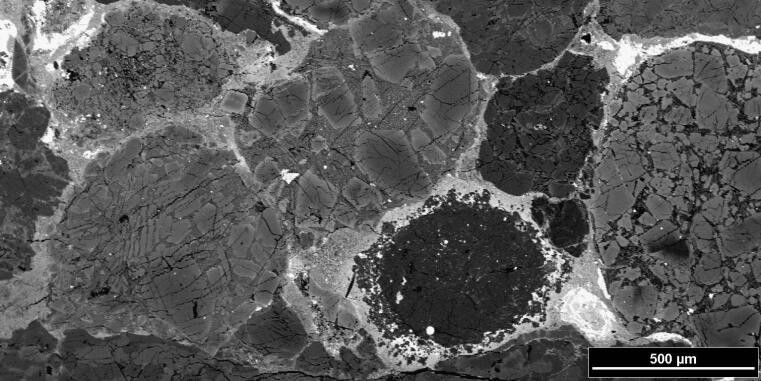
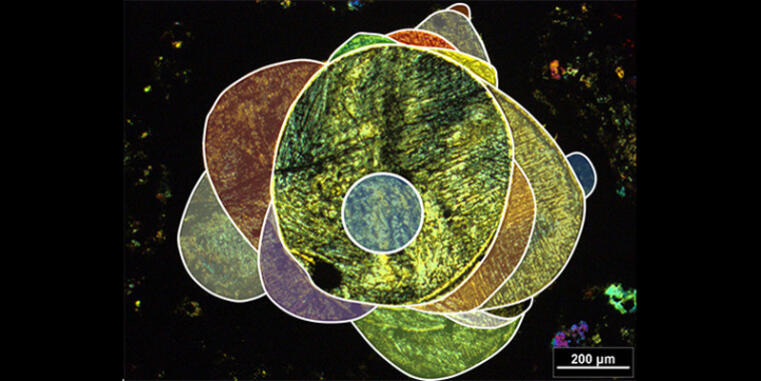
Meteorites provide us with unique insights into the early history of our solar system. By studying them, we can reconstruct processes within the solar system, examine rock samples from the Moon, Mars, and asteroids, and gain a deeper understanding of the formation and evolution of the solar system. Research focuses on various topics, such as the formation and development of chondrites and their components, the brecciation and reaccretion of meteorite parent bodies, the role of fluids and volatile elements in asteroids, the formation and evolution of differentiated meteorite parent bodies, and the experimental study of meteorites as analog materials for asteroids.
The institute’s meteorite collection, hosting more than 4,000 different meteorites, is one of the largest in Europe. It is actively curated and extensively used for research purposes.
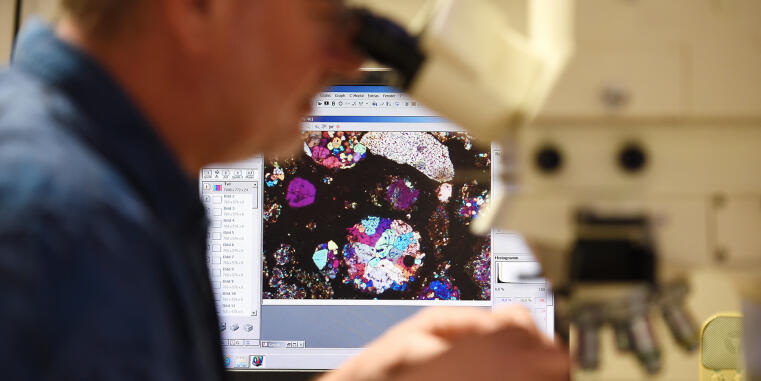
The meteorite collection of the Institut für Planetologie at the University of Münster comprises more than 4,000 different meteorites, making it one of the largest meteorite collections in Europe. The collection is complemented by more than 6,000 thin sections, which enable detailed mineralogical and petrographic investigations. It is actively curated as a scientific research collection and is closely integrated into national and international research collaborations.
The collection includes the major meteorite groups, including:
The collection also houses numerous recent meteorite falls from Central Europe. These freshly recovered specimens are particularly valuable for research because their well-documented fall circumstances and relatively limited terrestrial alteration provide excellent material for studying the physical and chemical properties of meteorites.
A particularly important part of the collection is the extensive set of samples from asteroid 2008 TC3, “Almahata Sitta.” The meteorites recovered after the asteroid’s disintegration over the Nubian Desert belong predominantly to the ureilite group and encompass an exceptional diversity of lithologies. The Münster collection therefore provides an important basis for investigating the internal composition and geological evolution of an asteroid through different rock types.
Research is at the heart of the collection. Meteorites are unique archives of the early Solar System and provide valuable insights into the formation and evolution of asteroids and planets. Research in Münster includes the formation and evolution of chondrites, processes affecting meteorite parent bodies, collisions and brecciation, interactions with fluids and volatile elements, and the differentiation of asteroids. Lunar and Martian meteorites additionally provide insights into the geological evolution of other planetary bodies. The breadth and diversity of the collection enable both comparative studies across different meteorite groups and detailed analyses of individual, particularly rare samples.
Peer-reviewed publications produced partially or totally by members of the “Meteoritics”-Group since 2010.
2026
2025
2024
2023
2022
2021
2020
2019
2018
2017
2016
2015
2014
2013
2012
2011
2010