ActSustainably
Enabling Transformative Actions to Leverage Sustainability of Eurasian Grasslands


How do we move from knowing that biodiversity is declining to implementing systemic change?
The decline of biodiversity poses a significant challenge to global sustainability. ActSustainably is an international research project that seeks to address this issue by identifying the leverage points necessary for shifting societal and institutional behaviours toward sustainable practices.
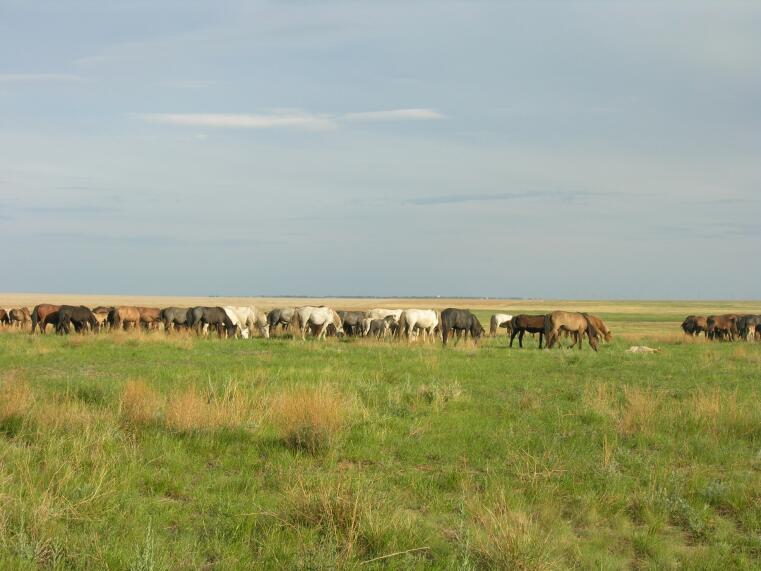
Eurasian grasslands
Eurasian grasslands, despite being among the largest terrestrial ecosystems, are under severe threat due to industrialization, agricultural expansion, and political shifts. Research is being conducted across Austria/South Tyrol, Denmark, Hungary, and Kazakhstan, where the complex drivers of biodiversity loss and governance dynamics are being analysed.
Interdisciplinary approach
ActSustainably adopts an interdisciplinary approach, combining insights from Social Anthropology, Economics, Landscape Planning, Ecology, Ecosystem Research, and Remote Sensing. This integration, coupled with a systems-thinking approach and both qualitative and quantitative research methods, enables us to understand how institutions, social norms, and plural values can contribute to a sustainable future for Eurasian grasslands.
Strategic modules
The project is structured around four strategic modules:
WP1: Analysing Historical and Current Land Use Drivers and their impact on biodiversity.
WP2: Examining Formal Governance Frameworks and institutional designs.
WP3: Investigating Informal Social Norms and Public Values that influence resource management.
WP4: Synthesising Findings to develop actionable biodiversity-positive transformations.
The Universities of Münster and Copenhagen are jointly leading the first work package (WP1).
Project duration: 01.03.2026 - 28.02.2029
to the Biodiversa+ project website
Network coordination:
Katharina Gugerell, Department of Landscape, Water and Infrastructure, Institute of Landscape Planning, BOKU University, Vienna, Austria
Network partners:
BOKU University, Department of Landscape, Water and Infrastructure, Institute of Landscape Planning, Vienna, Austria
Zurich University of Applied Sciences (ZHAW), Life Sciences and Facility Management, Institute of Natural Resource Sciences, Wädenswil, Switzerland
Aarhus University, Department of Environmental Science, Aarhus, Denmark
University of Zurich, Department of Social Anthropology and Cultural Studies, Zurich, Switzerland
HUN-REN Centre for Ecological Research, Institute of Ecology and Botany, Budapest, Hungary
Nazarbayev University, Graduate School of Public Policy, Astana, Kazakhstan
University of Münster, Institute of Landscape Ecology, Biodiversity and Ecosystem Research Group, Münster, Germany
Funding: