

2nd ZIN-Brown Bag Lecture: “When tumor cells grow uncontrollably and how medicine is tackling it”
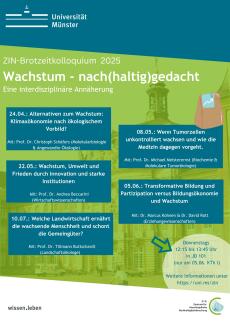
On Thursday, May 8, at 12:15 p.m., biochemist Prof. Dr. Michael Meisterernst will give a lecture on “When tumor cells grow uncontrollably and how medicine is tackling it” as part of the ZIN-Brown Bag Lectures.
How do cancer cells develop, what is the biology behind them, and what role do our genes play in this process? How inevitable is cancer as a disease? For a long time, the development of tumors remained a mystery. In the best-case scenario, tumors were surgically removed without any understanding of how they developed and grew. Therapeutic advances only came with chemotherapy, which is still very successful today, even though—as we will discuss—much of the early experimentation with it was done in the dark. Eventually, it was agreed that cancer arises from a single cell. Deeper insights resulted from the development of cell and molecular biology in the second half of the 20th century. As examples, we will outline here the simple basic principles of cell growth, changes in the growth programs of tumor cells, and their control by central genes. Detailed knowledge of the building blocks and processes has in many situations provided the basis for the development of highly specific active substances. Examples of this are synthetic antibodies directed against surface markers on tumor cells. The immune system itself has increasingly become a partner in therapy. It is fair to say that modern treatment strategies and early diagnosis have significantly improved people's prospects of being cured of cancer. In addition, completely new strategies for the future are emerging on the horizon.
The lecture will take place in JO 101 (Johannisstraße 1–4). No prior knowledge is required, and you are welcome to bring a small lunch with you!
Information about this and other dates for the ZIN-Brown Bag Lectures can also be found on the poster for the event series, on our Brown Bag Lectures website, and on LinkedIn (@Zentrum für Interdisziplinäre Nachhaltigkeitsforschung).