
The Potential of Sodium Ion Batteries
Sodium ion batteries have become a hot topic: They are considered to be cost-effective and widely available. At the same time, dependencies on Asian supply chains could be reduced. But does the technology deliver what it promises? On Battery Day on February 18, the birthday of the inventor of the first battery, Alessandro Volta, MEET Division Heads Dr Johannes Kasnatscheew and Dr Markus Börner take a nuanced look at the potential of sodium ion batteries.
Sodium Technology Occupies a Niche
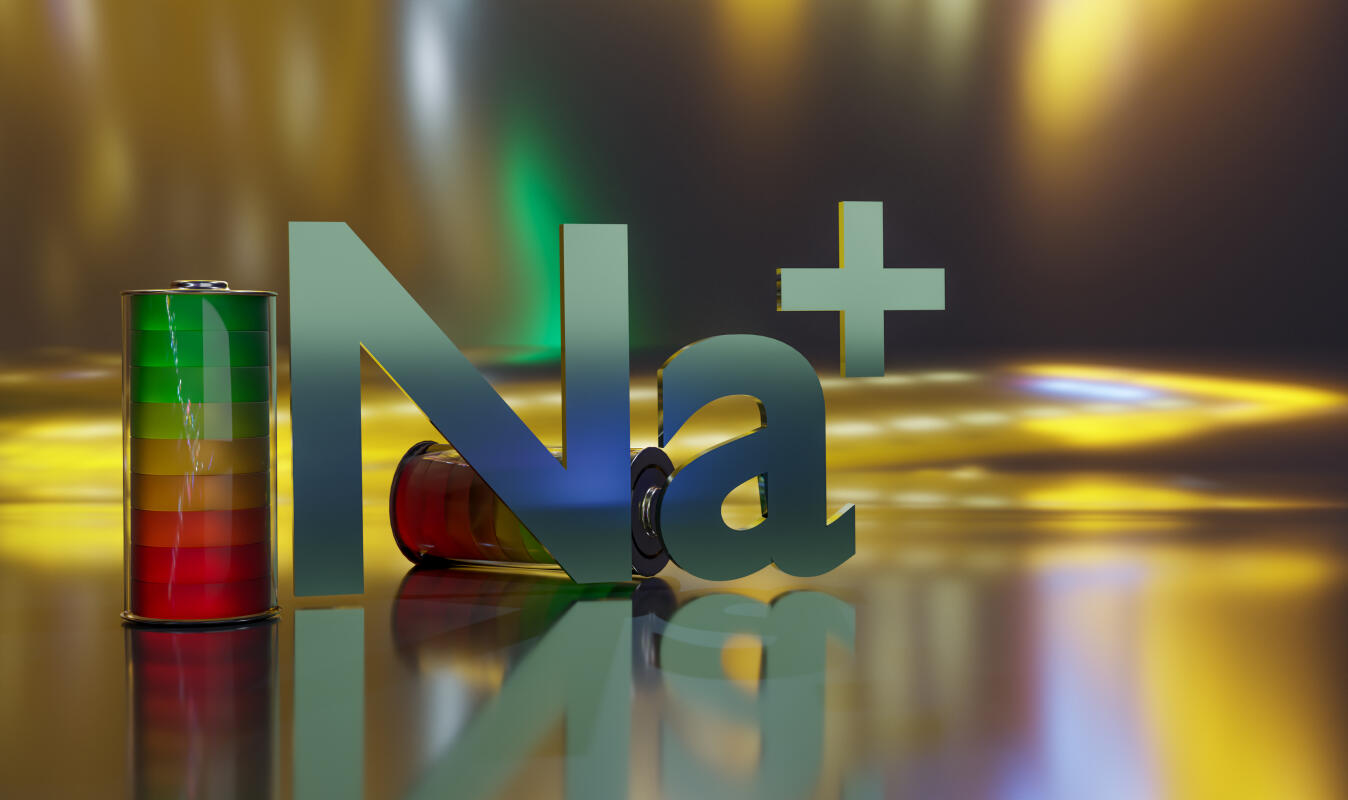
Sodium is the sixth most abundant element in the Earth's crust, accounting for around 2.3 to 2.8 percent by weight. Lithium, on the other hand, ranks around 30th place. As a result, the material has developed into a promising addition to lithium in battery research. “Sodium ion batteries will occupy a niche in the future, but a replacement of lithium ion batteries is unlikely,” explains Dr Johannes Kasnatscheew, Head of the MEET Research Division Materials. Compared to lithium ion batteries, cells with sodium ions have a lower energy density. Their biggest competitors are lithium ion batteries with a lithium iron phosphate cathode (LFP), as both have similar properties. Dr Markus Börner, Head of the MEET Research Division Cell System, explains: “Sodium ion batteries have advantages at low temperatures, for example.” Reasons for this are the hard carbon in the anode and the solvent propylene carbonate in the electrolyte instead of the commonly used ethylene carbonate.
In addition, the sodium ion technology can be used in applications such as stationary energy storage systems and e-scooters. Products with sodium ion batteries are already available on the Asian market. But they are also being used in Europe in certain applications. “In France, for example, there is a manufacturer that installs sodium ion batteries in cordless screwdrivers,” says Börner. One of the reasons why these cells can already be produced is that existing lithium ion battery production lines can be adapted for the manufacture of sodium ion cells without much effort.
The Key Advantage: Reducing Dependencies
However, MEET scientists emphasize that potential cost advantages must be considered holistically. Kasnatscheew explains: “It is not the price of a single material that is relevant, but rather the price per kilowatt hour. In this regard, LFP batteries are currently more cost-effective than sodium batteries.” However, sodium makes it possible to become less dependent on price fluctuations of lithium. “From a strict cost perspective, sodium is particularly attractive when lithium is expensive,” says Kasnatscheew.
Due to its high availability, the element also offers the opportunity to establish a European supply chain. Börner emphasizes: “This is a time-consuming process. We will not be able to compete with the low-cost mass market for lithium ion batteries overnight. As a result, however, Europe will be more independent and secure for the future with its own battery cell production.”
Strong Research and Development in Germany and Europe
To achieve this goal, further research on the sodium ion technology is required. There are various options for the materials to be used in the cathode, for example. One possibility is a layered oxide based on nickel-iron-manganese (NFM), which offers a good balance between structural stability and electrochemical performance. In the anode, the conventional copper-based current collector can be replaced by aluminum, which is substantially lighter.
At MEET Battery Research Center, the team therefore works on various projects to further develop sodium ion batteries for industrial use: from materials and aging to comprehensive analyses. The institute is part of Germany's largest consortium for the sodium ion technology: the project “Sodium-Ion-Battery Deutschland Forschung – SIB:DE FORSCHUNG”. Another project is Na.Ion.NRW, in which the team aims to produce large-format sodium ion battery cells towards pilot scale. In the long term, the technology should be used in stationary energy storage concepts. In the German-French cooperation “HIPOBAT - High Power Batteries,” MEET and its partners conduct research on high-performance sodium batteries.