

“Change is coming”
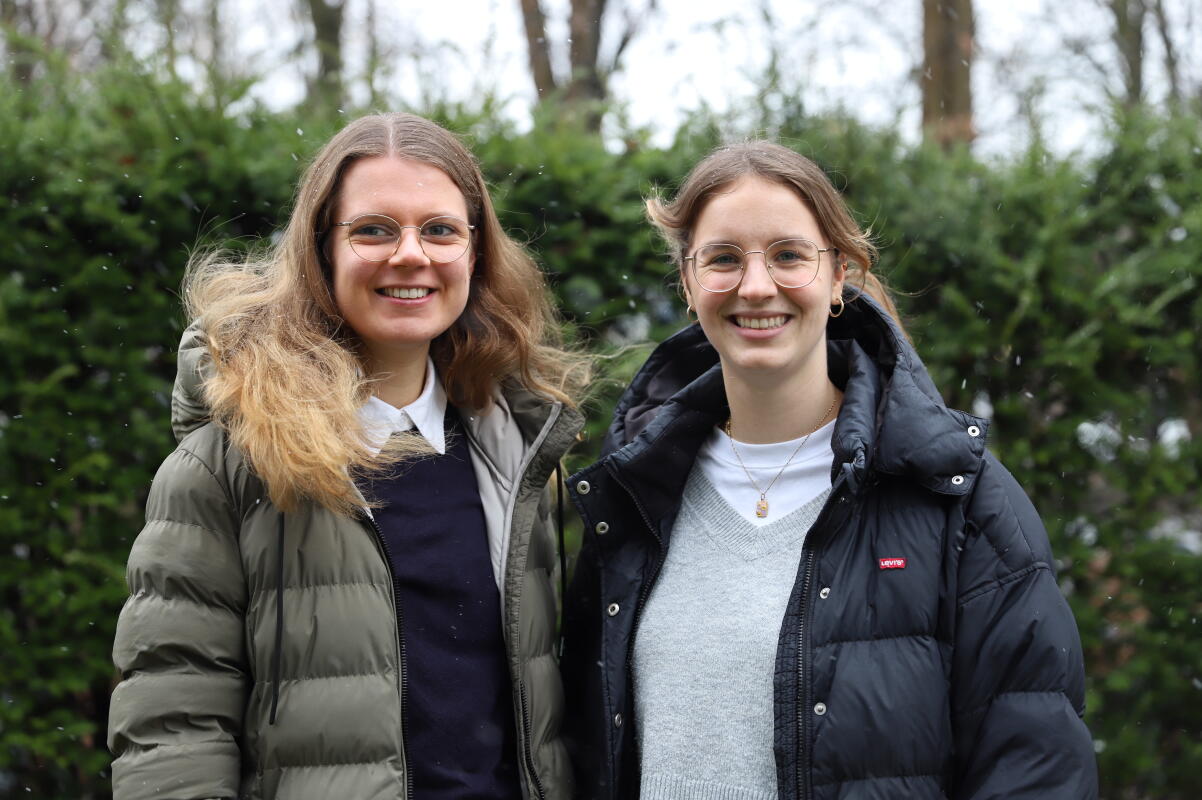
Women are still underrepresented in many areas of science. This is especially true for the forward-looking STEM subjects – science, technology, engineering and mathematics. This is highlighted by the “International Day of Women and Girls in Science” on February 11, which was initiated by UNESCO in 2015. Ineke Weich, PhD Student at MEET Battery Research Center at the University of Münster, and Lisa Marie Schnieder, PhD Student at Helmholtz Institute Münster of Forschungszentrum Jülich, report why they decided to pursue a career in research and what they wish for women in science.
Why did you decide to pursue a scientific career?
Lisa Marie Schnieder: Even as a child, I was fascinated to understand the world: from the level of tiny atoms to huge galaxies. At school, I was enthusiastic about the interdisciplinary sciences mathematics, physics, and chemistry. So early on, I had a desire to explore open questions, understand the world better, and use my knowledge to optimize it – even just a little bit.
Ineke Weich: Chemistry and mathematics were also the subjects I enjoyed most at school. In the end, the possibilities offered by studying chemistry convinced me more than those offered by mathematics. Even during my bachelor's degree, I realized that I wanted to do a PhD to have good career prospects later on. That was exactly the right decision.
Why?
Ineke Weich: Because my PhD studies give me a lot of freedom to decide when I want to work on what. Being able to conduct research independently and manage my own time offers me many opportunities – but at the same time involves a high level of personal responsibility.
What advice do you give to pupils and students who decide to pursue a study or a career in chemistry?
Lisa Marie Schnieder: Believe in yourself and stay confident. How qualified you are does not depend on your gender. If you are interested in chemistry, you will definitely find the right topic for you. Chemistry is everywhere in our lives. That is why it is so exciting and multifaceted. It often opens up completely new paths that you did not even consider at the beginning.
Ineke Weich: Exactly, you have to keep up. If you want to succeed, you will. It is completely normal to think about quitting your studies at times. If you fight your way out of these situations, show perseverance, and keep working, then you will succeed. Especially in science, mistakes are part of the process. They can also be a result of your work.
There are still too few highly qualified women working in the research fields related to the STEM subjects. How do you perceive the situation? And how can it be improved?
Ineke Weich: During my internships in industry and my stays abroad, I noticed that although there are many female laboratory assistants, there are few female managers. However, I am optimistic that change will come. In the past, the issue did not have the awareness that it has today. And that will pay off – even at the management level. Even today, equality plays a much more important role in new hires than it did a few years ago.
Lisa Marie Schnieder: I also think that a lot has already been achieved. In my view, it is important to promote interest in STEM subjects at an early age, whether through special programs at school or within the family. The social environment also plays a decisive role in breaking down stereotypical images of men and women.
Ineke, you represent the students in the MEET board. Are there any issues that specifically affect female employees that you address there?
Ineke Weich: Yes, for example, the issue of free sanitary products for women. These are already commonplace in many washrooms at the University of Münster. I would like to achieve this at MEET as well.
What do you wish for the future regarding women and girls in science?
Lisa Marie Schnieder: That equality is practiced and that every scientist receives recognition for their research. Gender should not play a role.
Ineke Weich: More visibility for women in science. And more female professors, especially during bachelor's studies. I did not have any female professors during that time, which I found very unfortunate.