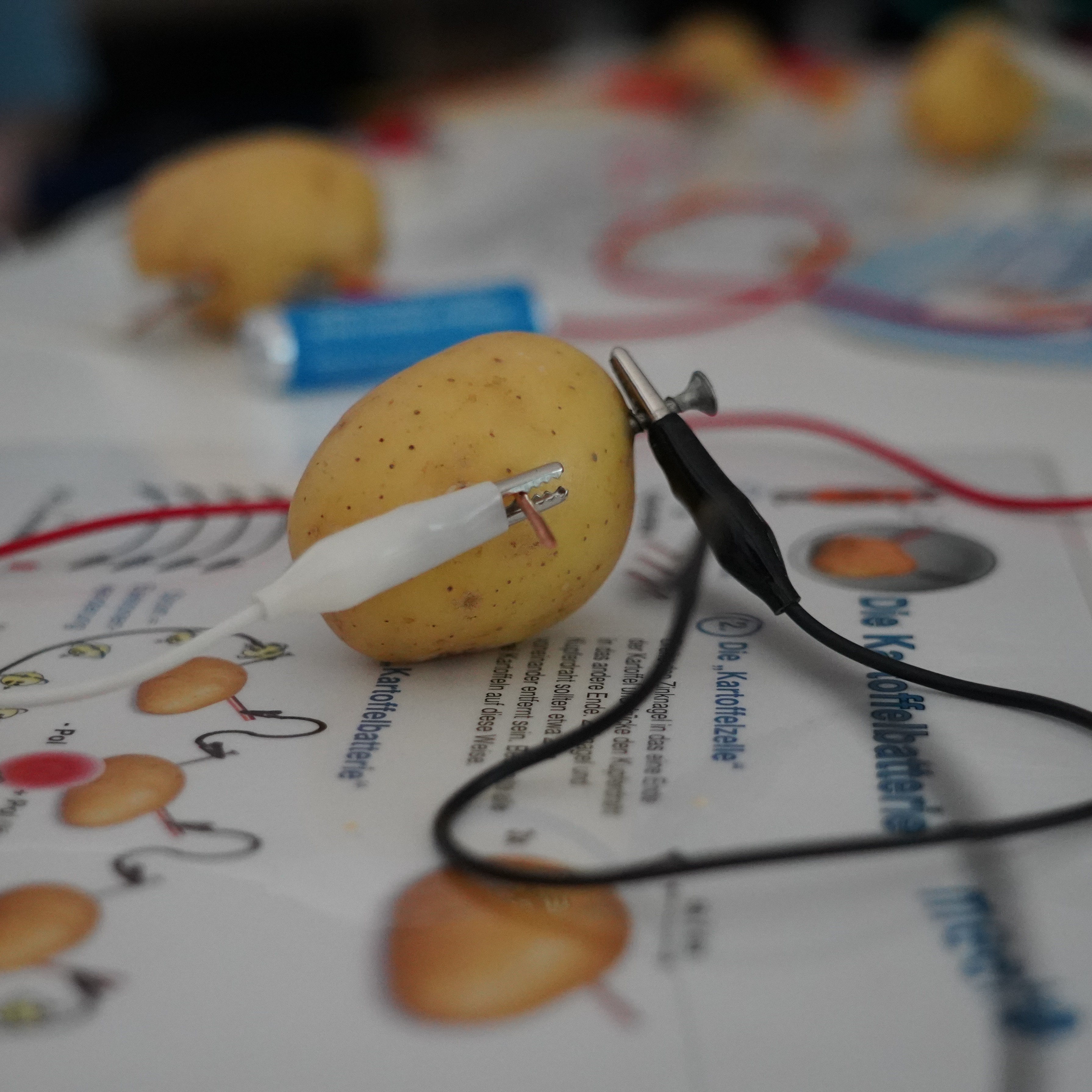
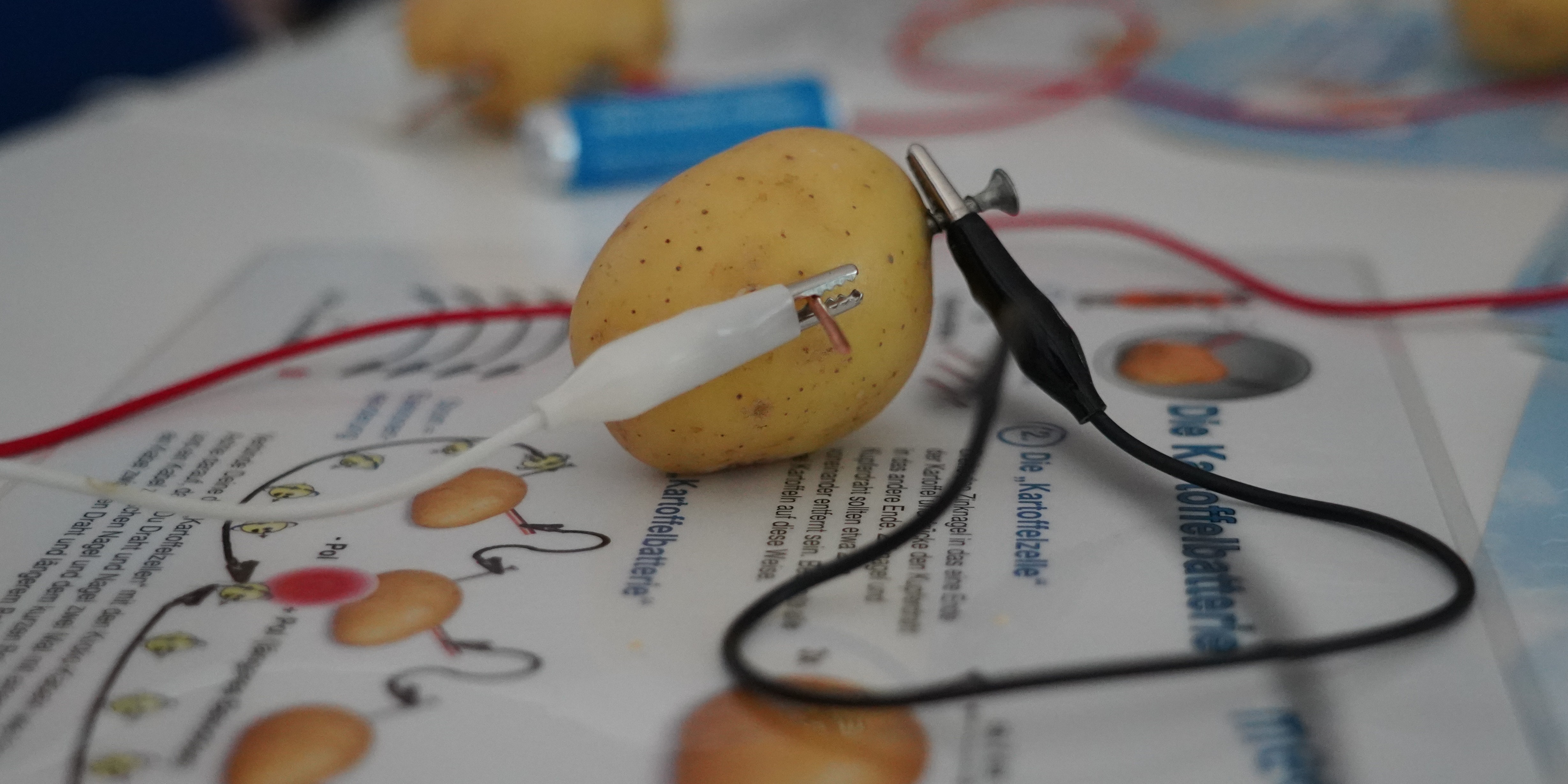
A potato, combined with a few components – and immediately a small diode lights up. 40 young researchers explored how this works during the “The Mouse's Open Doors Day” event at MEET Battery Research Center on October 3. Together with MEET scientists Dr Philip Niehoff and Felix Dahlhaus, the children built their own potato batteries and discovered how a chemical reaction generates electric current. Read more
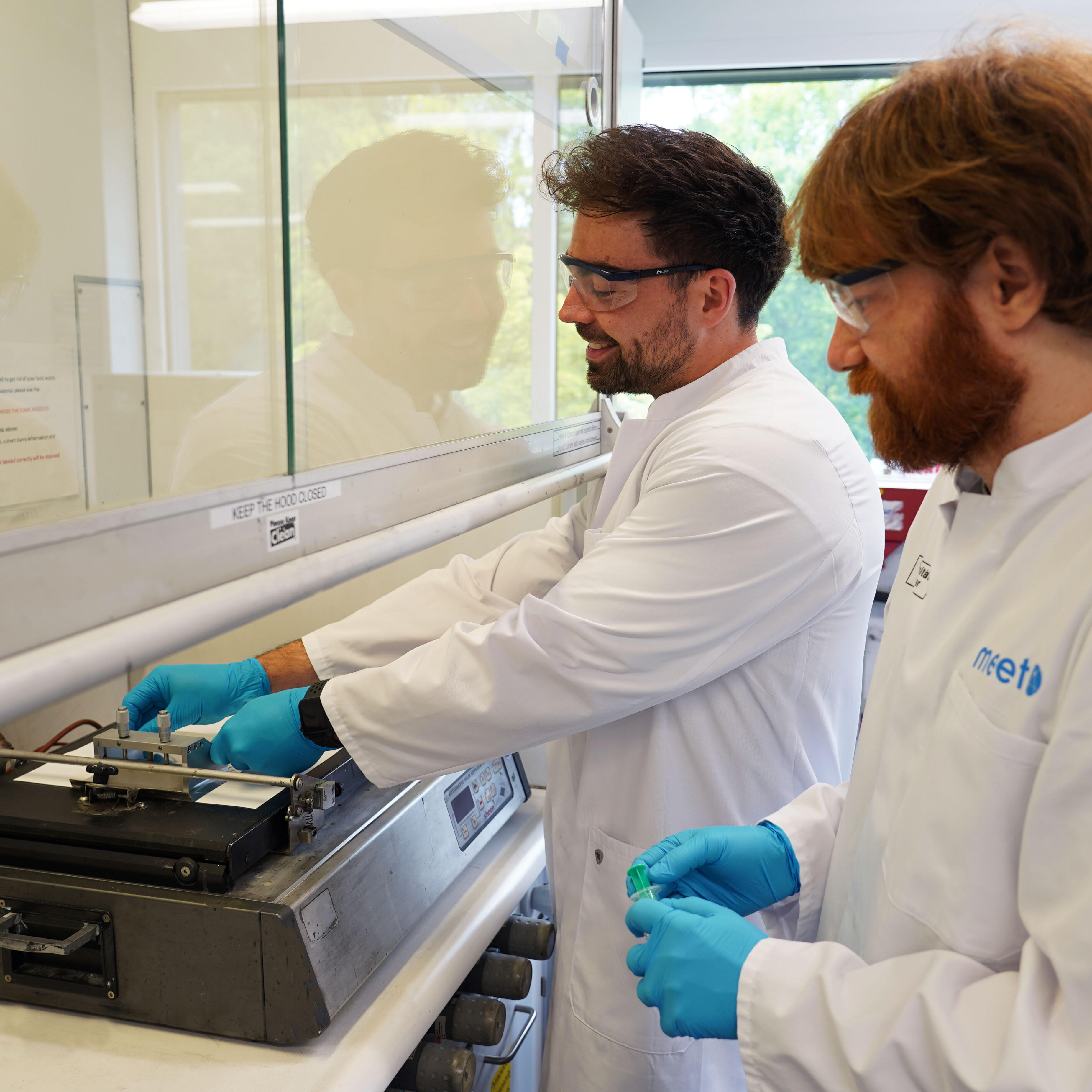
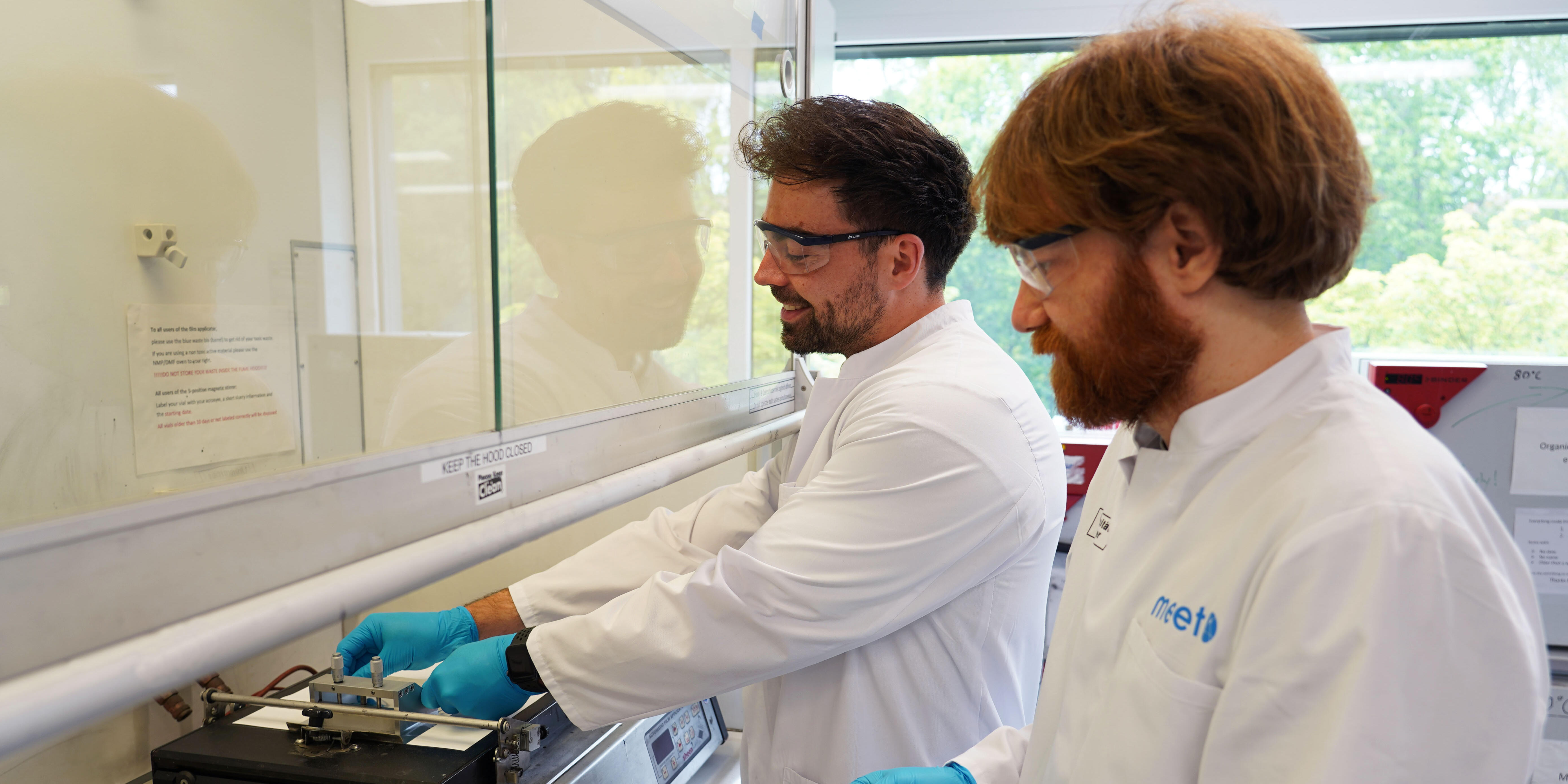
A promising approach to reduce the N-methylpyrrolidone content – and thereby lowering energy consumption in the existing manufacturing process – is to modify the properties of the binder polyvinylidene difluoride (PVdF). The MEET team has therefore investigated how the molecular weight of PVdF influences the properties of the electrode paste and the composite electrode, as well as the electrochemical performance of the cathodes. Read more
High-voltage lithium ion batteries are characterized by high energy and power densities, but often suffer from a shorter lifetime. A team from MEET Battery Research Center and the Institute for Plant Biology and Biotechnology at the University of Münster has now investigated how a bio-based electrolyte additive influences the lifetime of these battery cells. Read more
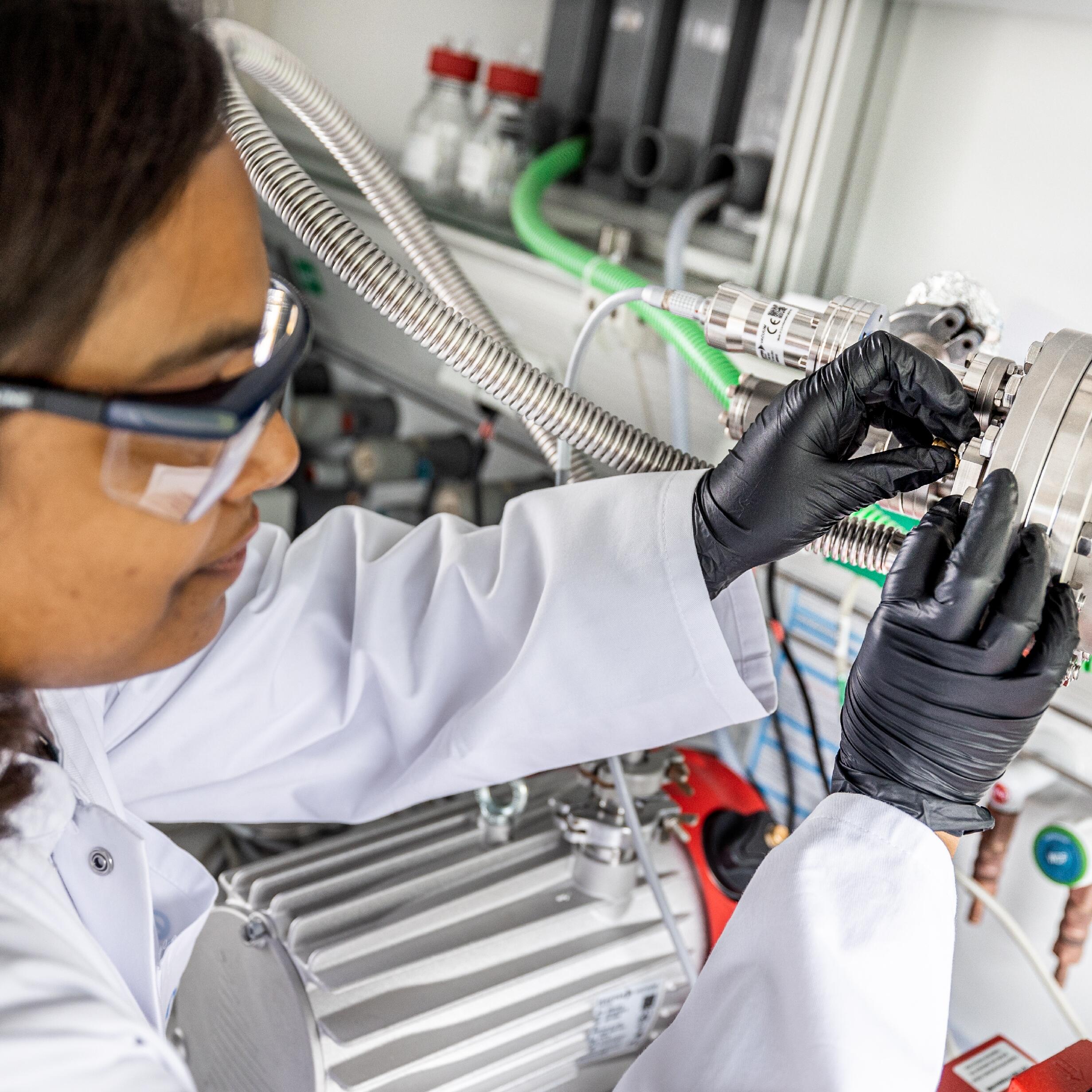
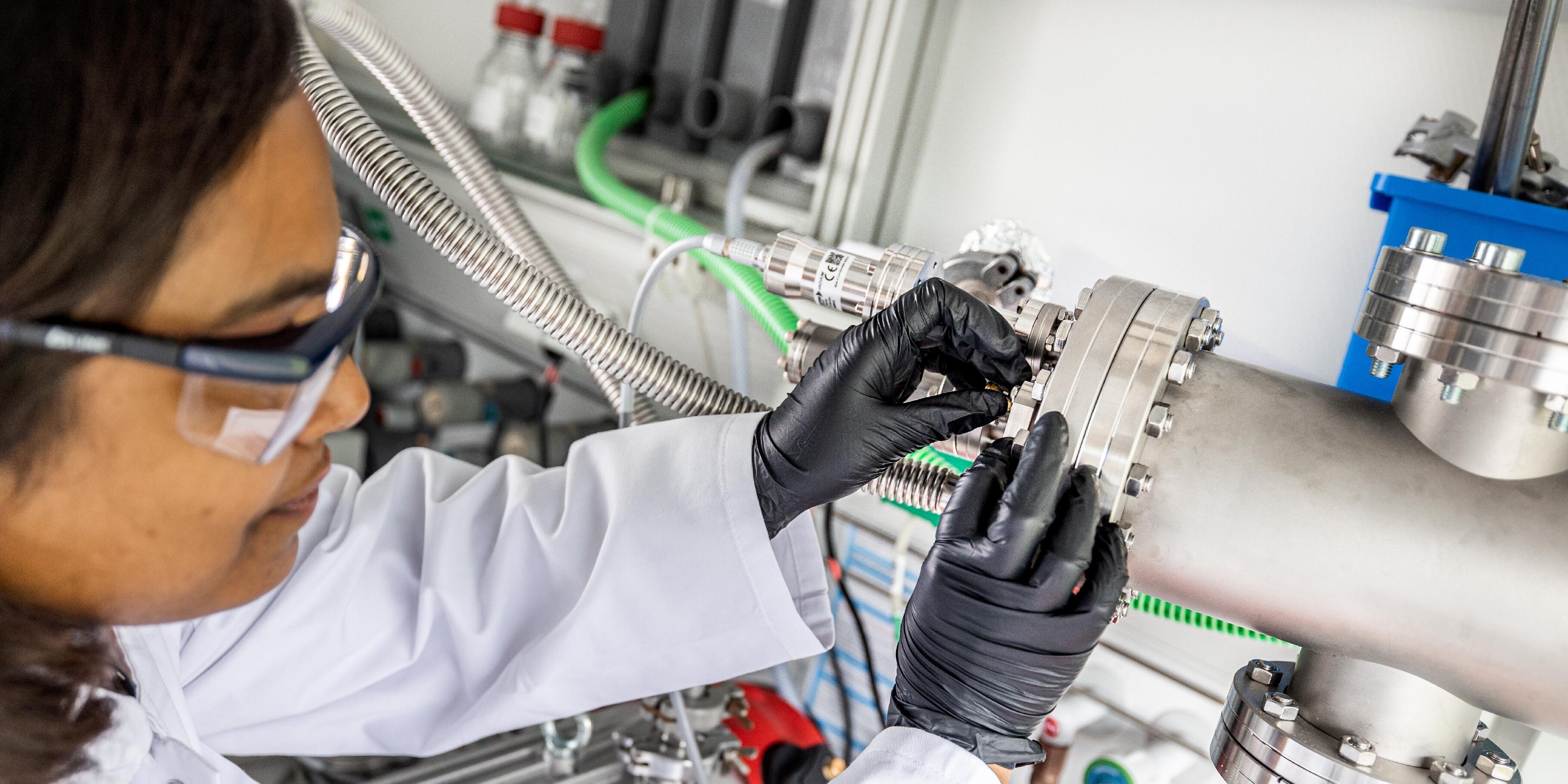
A team from MEET Battery Research Center, Helmholtz Institute Münster, and the South Korean company LG Energy Solution has investigated the influence of synthesis and calcination parameters on the discharge capacity and cycle stability of cathodes made of lithium-manganese-rich layered oxide. Read more