
Photos

© Lehrstuhl für öffentliches Recht, Völker- und Europarecht sowie empirische Rechtsforschung 
© Lehrstuhl für öffentliches Recht, Völker- und Europarecht sowie empirische Rechtsforschung 
© Lehrstuhl für öffentliches Recht, Völker- und Europarecht sowie empirische Rechtsforschung 
© Lehrstuhl für öffentliches Recht, Völker- und Europarecht sowie empirische Rechtsforschung 
© Lehrstuhl für öffentliches Recht, Völker- und Europarecht sowie empirische Rechtsforschung 
© Lehrstuhl für öffentliches Recht, Völker- und Europarecht sowie empirische Rechtsforschung 
© Lehrstuhl für öffentliches Recht, Völker- und Europarecht sowie empirische Rechtsforschung 
© Lehrstuhl für öffentliches Recht, Völker- und Europarecht sowie empirische Rechtsforschung 
© Lehrstuhl für öffentliches Recht, Völker- und Europarecht sowie empirische Rechtsforschung 
© Lehrstuhl für öffentliches Recht, Völker- und Europarecht sowie empirische Rechtsforschung 
© Lehrstuhl für öffentliches Recht, Völker- und Europarecht sowie empirische Rechtsforschung 
© Lehrstuhl für öffentliches Recht, Völker- und Europarecht sowie empirische Rechtsforschung 
© Lehrstuhl für öffentliches Recht, Völker- und Europarecht sowie empirische Rechtsforschung 
© Lehrstuhl für öffentliches Recht, Völker- und Europarecht sowie empirische Rechtsforschung 
© Lehrstuhl für öffentliches Recht, Völker- und Europarecht sowie empirische Rechtsforschung 
© Lehrstuhl für öffentliches Recht, Völker- und Europarecht sowie empirische Rechtsforschung 
© Lehrstuhl für öffentliches Recht, Völker- und Europarecht sowie empirische Rechtsforschung 
© Lehrstuhl für öffentliches Recht, Völker- und Europarecht sowie empirische Rechtsforschung 
© Lehrstuhl für öffentliches Recht, Völker- und Europarecht sowie empirische Rechtsforschung




Are coastal states powerless against the intrusion of data-collecting underwater drones into their territory? Under what circumstances is the decision of arbitration to be declared invalid? Can some states be habitually obliged to refrain from nuclear rearmament? Are there limits to the United Nations Security Council? Are his resolutions verifiable by the ICJ and how far does the Security Council’s decision-making scope extend?
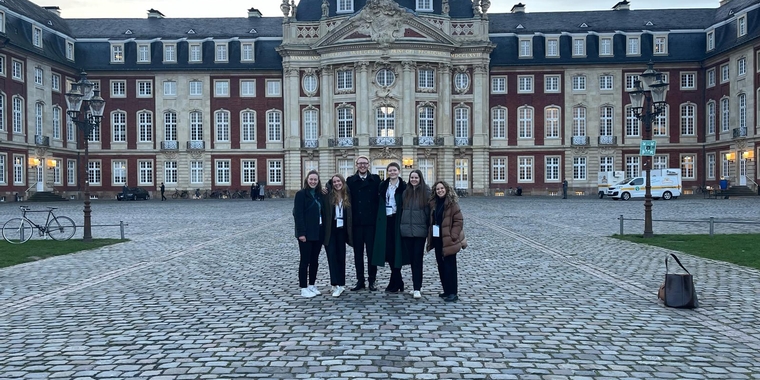
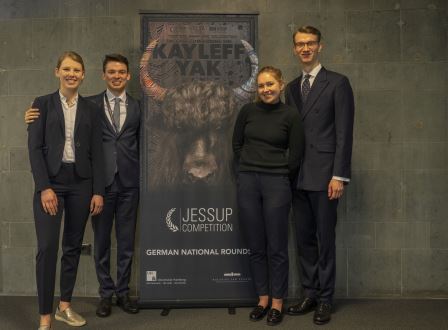
This year’s Münster-based Jessup Moot Court Team was able to deal with these highly topical questions in depth for half a year.
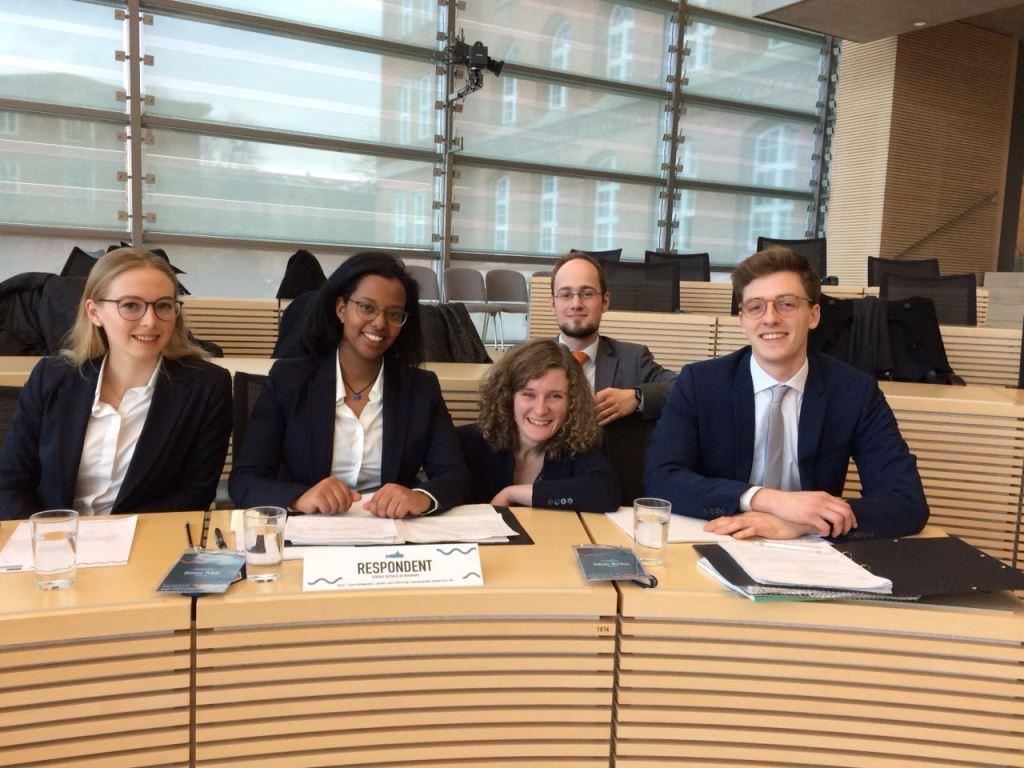
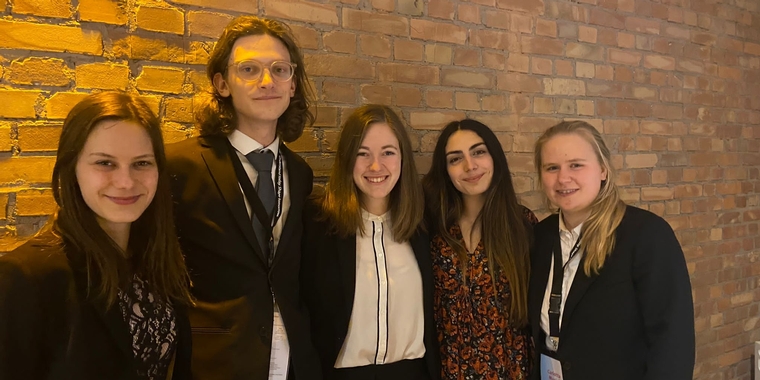
With the schedule in mind and getting to know the rest of the team members, the very own exciting #jessupjourney began for us (Elisabeth von Rosenstiel, Tobias Wirthle, Johannes Jacob, Lena Köhn and Hanna Tekle).
After we had already approached the individual topics superficially, it could really start in September after the publication of the facts. In the office in the AUB, we researched for months and dived deep into specific fields of international law, which often brought really exciting and helpful discussions within the team. In addition, our supervisor Jana Lohmann, research assistant at the chair of Mr. Prof. Dr. Petersen, parallel to the written phase rhetoric units through. These were intensified after the completion of our memorials in January. Our goal to be able to plead the developed points of view convincingly became the main part of our work. In numerous trial pleadings, lawyers from the large law firm Allen & Overy in Frankfurt, professors of the Faculty of Law, Jessup alumni and other supporters of our team followed our lectures and gave helpful feedback.
But also the team spirit was not neglected during the whole time, we quickly recognized our common passion for cooking (and food), which quickly secured us the nickname “Team Culinaria”. Freshly cooked lunch at an increased level and baking together after office work welded us even more together.
The national preliminary decision was held this year by the Walther-Schücking-Institute for International Law from 28.02.-04.03.18 in Kiel. After the handing out of the previously unknown memorials, our opponents were determined in the preliminary round with the Hertie School of Governance, the LMU Munich, the FU Berlin and the Bucerius Law School.
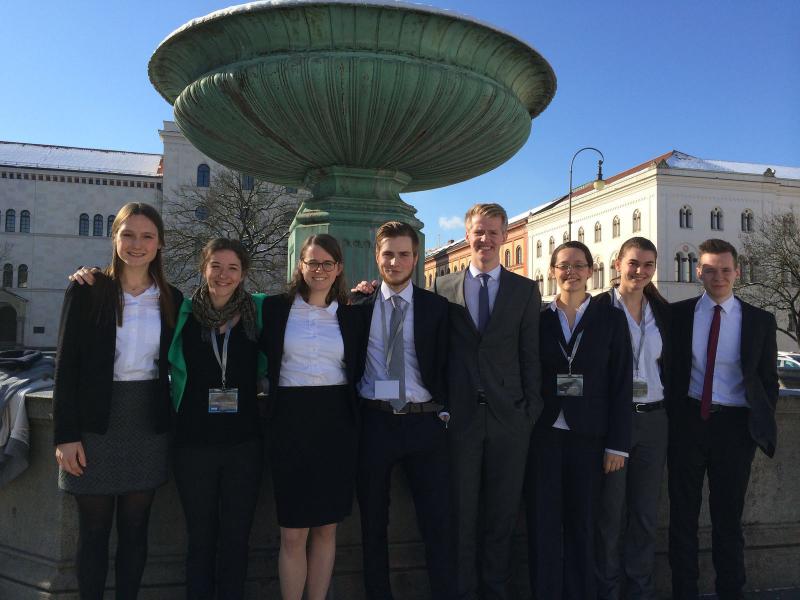
Against the impressive backdrop of the Kiel state parliament, the incredibly exciting matches against the teams took place on an equal footing. And the volunteer judges were also very familiar with the case and were eager to be able to ask the next of the many questions. Unfortunately, our team failed to qualify for the final in Washington D.C. Nevertheless, we concluded the matches with the certainty of being really proud of ourselves and each other. This year’s winner is the team of the LMU Munich, followed by the Hertie School of Governance from Berlin.
The organizing team around Prof. Dr. von Arnauld with Jens Kaiser and Torben Herber as national administration did all the work! They made sure that there was a very pleasant atmosphere at all times, despite the competition of the individual teams, and the process went smoothly.
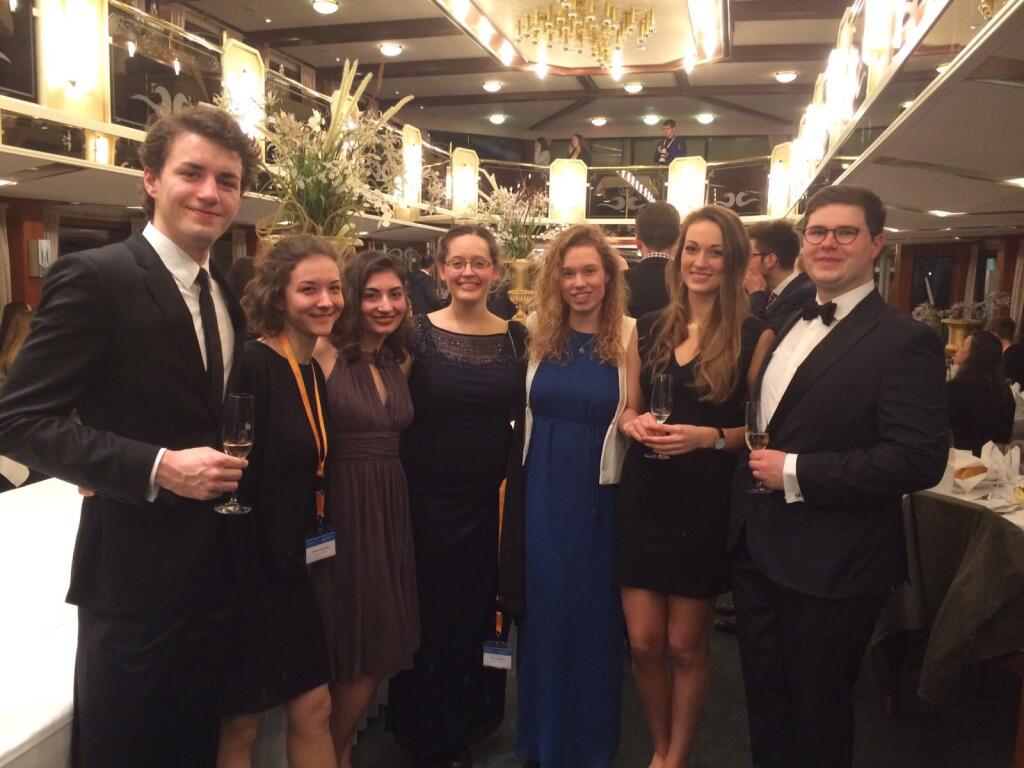
During the announcement dinner and the gala on the last evening, the participants had the opportunity to exchange ideas across universities, to make new acquaintances and to exchange ideas with the luminaries of international law acting as judges (and to discuss one or the other place in the much-read commentary).
Looking back, we all agree to be very up to ourselves because of the participation in the Jessup Moot Court. From the extensive research experience, to the ability to convincingly present a wealth of complex problems of international law orally and in professional English, to the close work in the team (and the one or other new recipe), we take helpful lessons with us on our further ways.