
Photos

© Lehrstuhl für öffentliches Recht, Völker- und Europarecht sowie empirische Rechtsforschung 
© Lehrstuhl für öffentliches Recht, Völker- und Europarecht sowie empirische Rechtsforschung 
© Lehrstuhl für öffentliches Recht, Völker- und Europarecht sowie empirische Rechtsforschung 
© Lehrstuhl für öffentliches Recht, Völker- und Europarecht sowie empirische Rechtsforschung 
© Lehrstuhl für öffentliches Recht, Völker- und Europarecht sowie empirische Rechtsforschung 
© Lehrstuhl für öffentliches Recht, Völker- und Europarecht sowie empirische Rechtsforschung 
© Lehrstuhl für öffentliches Recht, Völker- und Europarecht sowie empirische Rechtsforschung 
© Lehrstuhl für öffentliches Recht, Völker- und Europarecht sowie empirische Rechtsforschung 
© Lehrstuhl für öffentliches Recht, Völker- und Europarecht sowie empirische Rechtsforschung 
© Lehrstuhl für öffentliches Recht, Völker- und Europarecht sowie empirische Rechtsforschung 
© Lehrstuhl für öffentliches Recht, Völker- und Europarecht sowie empirische Rechtsforschung 
© Lehrstuhl für öffentliches Recht, Völker- und Europarecht sowie empirische Rechtsforschung 
© Lehrstuhl für öffentliches Recht, Völker- und Europarecht sowie empirische Rechtsforschung 
© Lehrstuhl für öffentliches Recht, Völker- und Europarecht sowie empirische Rechtsforschung 
© Lehrstuhl für öffentliches Recht, Völker- und Europarecht sowie empirische Rechtsforschung 
© Lehrstuhl für öffentliches Recht, Völker- und Europarecht sowie empirische Rechtsforschung 
© Lehrstuhl für öffentliches Recht, Völker- und Europarecht sowie empirische Rechtsforschung 
© Lehrstuhl für öffentliches Recht, Völker- und Europarecht sowie empirische Rechtsforschung 
© Lehrstuhl für öffentliches Recht, Völker- und Europarecht sowie empirische Rechtsforschung






“May it please the court.”
Can statelessness be a punishment in response to environmental protests and insults to the Majesty? Can any State turn to the International Court of Justice (ICJ) if it believes that central elements of a treaty have been violated? Does every country have to recognize “Golden Passports”? To what extent can the UN Security Council intervene in the internal affairs of a state?
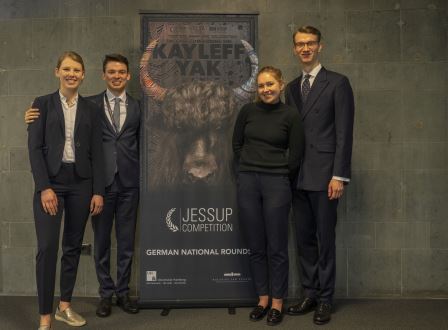
The Philip C revolved around these four exciting and current questions of international law. Jessup International Law Moot Court 2024, attended by the University of Münster from August 2023 to March 2024. This is the most traditional, renowned and largest student moot court in the world. It has been held since 1959 and now students from almost 700 universities from about 100 countries around the world participate every year.
The Jessup Moot Court consists of a simulated court case before the ICJ, which deals with an international legal dispute between two fictional states. The participating teams represent both the applicant and the respondent side. The participating students must first prepare pleadings and present them in mid-January. About six weeks after the submission of the pleadings, the participants compete against each other in oral proceedings at the national preliminary round. The role of judges is assumed by professors, lawyers and other practitioners, including judges of the ICJ and other international courts.
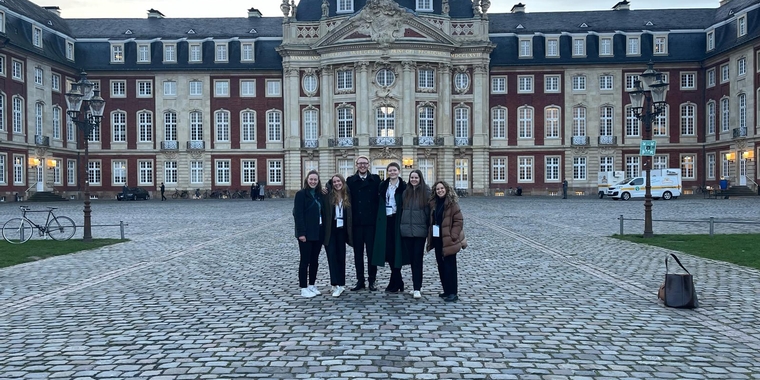
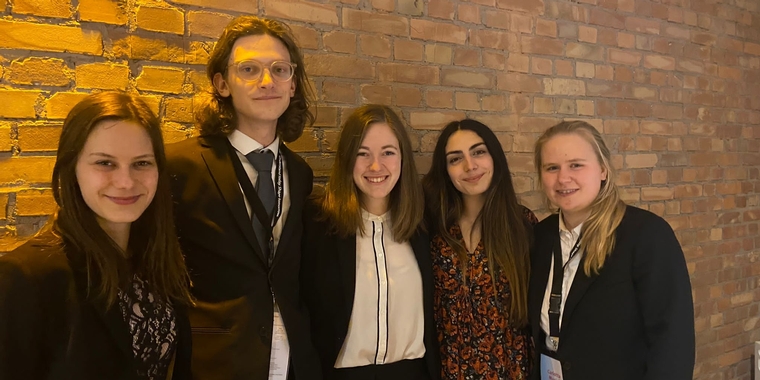
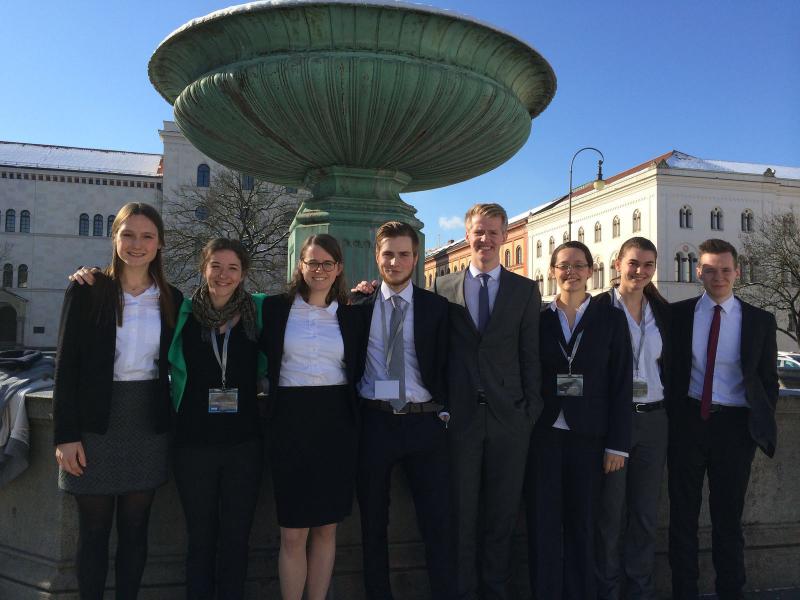
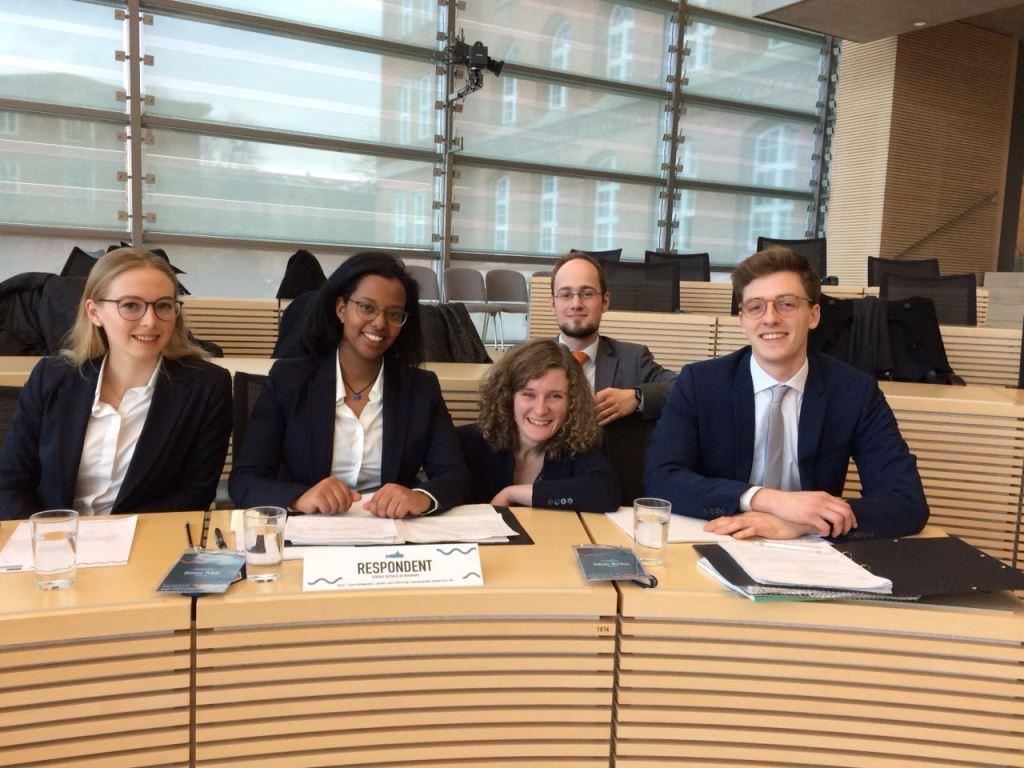
After a first meeting of international law in the summer of 2023, the publication of the facts in mid-September quickly began the intensive examination of the questions. We (Anika Flämig, Sofie von den Hoff, Simon Große-Bley, Katharina Christöphler) not only researched the turmoil of international law under the guidance of our coaches Leonie Brinkmann and Eva Janke, but also learned to take a stand rhetorically and argumentatively. Whether you’ve always wanted to play human rights lawyer or Devil’s Advocate, the Jessup gives you the opportunity to try different positions and discover the love for reasoning.
In the Jessup, we learned above all what falls short in law studies: rhetorical skills, independent deeper fall research, not only the reproduction, but the formation of opinions, teamwork and cooperation and of course an in-depth special knowledge in niche areas. Besides, we also had a lot of fun and can look back on enriching experiences. We went to The Hague together, for example. There we had the opportunity to visit the ICJ and the International Criminal Court and to get into conversation with people who work in these renowned institutions. In addition, we have gained insights into the work of the German Embassy, which in The Hague is primarily responsible for the international proceedings before the courts. Also on our trip to Berlin we had helpful trial preleadings, among others in the Federal Ministry of Justice in the Human Rights Unit, but also with many practitioners who were able to give us great new perspectives on our argument. Also rhetorically, we had the opportunity to work with a coach to work on our appearance (from gestures to facial expressions to the stand) and our emphasis. We would also like to thank the law firms in Düsseldorf, Frankfurt and Cologne, who have significantly advanced our pleas by organizing trial rehearsals.
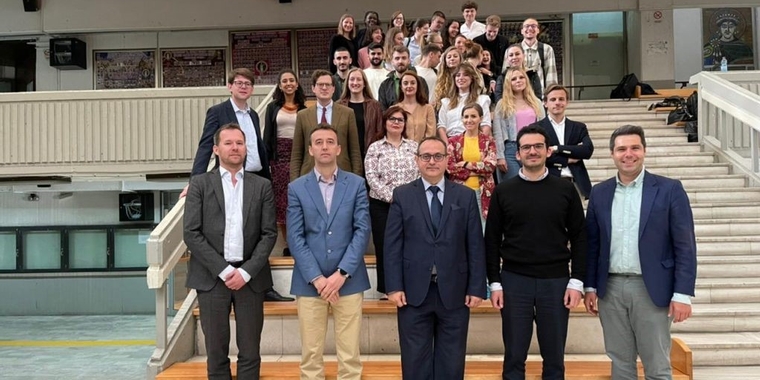
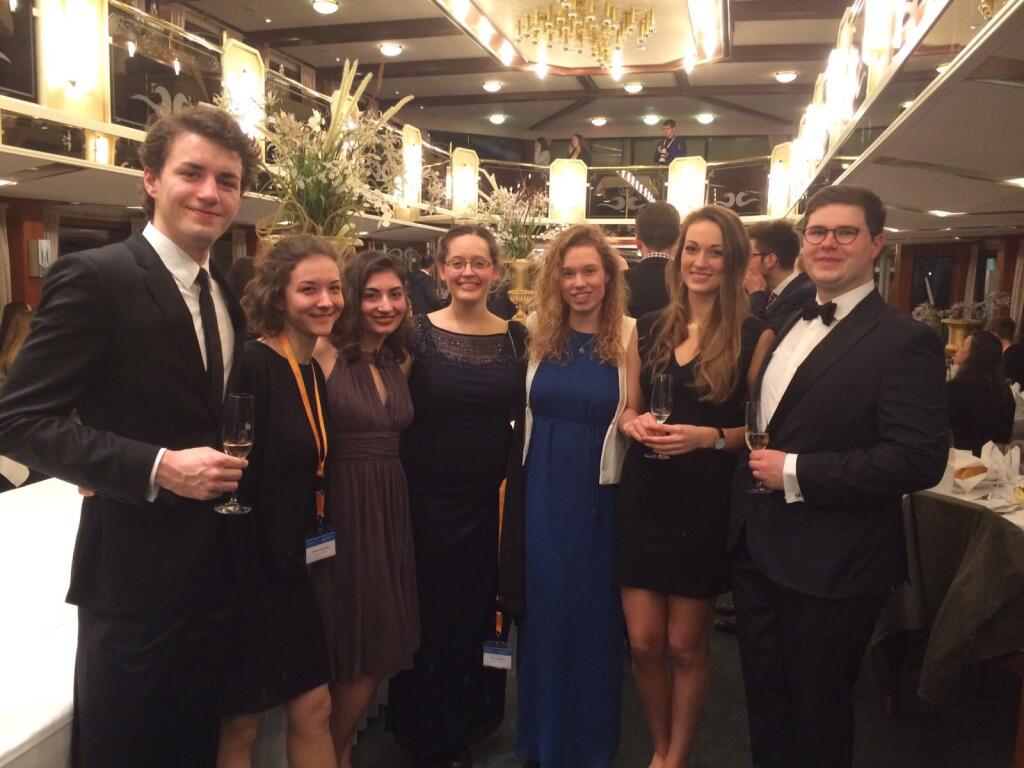
This time we were lucky that the National Rounds took place in Münster under the direction of Max Milas and Konrad Schilling. After several days of intense pleadings, we were able to successfully complete the National Rounds with a move into the quarter-finals. At nice evening events we had the opportunity to get to know the other 17 teams from Germany.
At this point we would like to thank the Freundeskreis Rechtswissenschaft and the Förderverein Fachschaft Jura for the generous financial support. We would also like to thank the law firms Noerr, GÖRG, Hoffmann Liebs and Heuking Kühn Lüer Wojtek for their financial help. A special thanks also goes to the chairs of Professor Fowkes, Professor Markard and Professor Hailbronner, who have helped us very much with their trial preleadings. Without your support, successful participation in the National Rounds would not have been possible.
The application phase for the Jessup Moot Court 2024/2025 will begin in June. The topics are expected to be announced in April by the International Law Students Association (ILSA). Information on the Jessup Moot Court can be found on the homepage of ILSA, the website of the Chair of Prof. Dr. Petersen and soon in the corresponding Learnweb course. Questions about the Jessup Moot Court can be directed at any time to Leonie Brinkmann (brinkmann@uni-muenster.de).