

Contesting Knowledge Formations in a Multipolar World: Towards a Transnational Supervision and Research Network
Inhaltsverzeichnis
Workshop
23–26 April 2026
Department of Social and Cultural Anthropology, Studtstraße 21, 14163 Münster
University of Münster, funded by the Cluster of Excellence “Religion and Politics”
How can knowledge be produced, shared, and supervised across unequal academic landscapes without reproducing existing hierarchies? What forms of collaboration become possible when scholars from different linguistic, institutional, and geopolitical contexts work together over time?
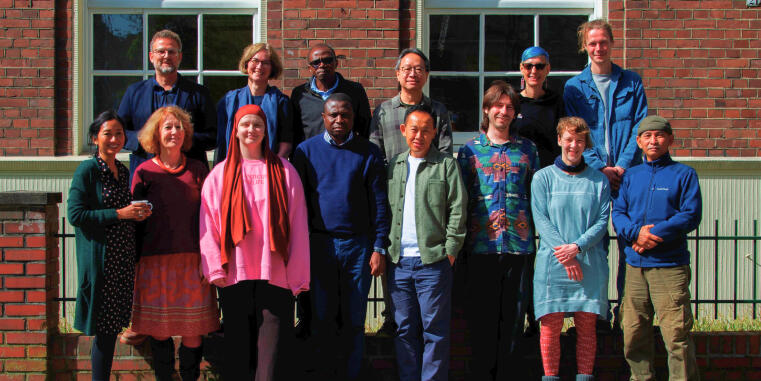
The workshop Contesting Knowledge Formations in a Multipolar World: Towards a Transnational Supervision and Research Network brought together scholars and PhD students from Universitas Gadjah Mada, National University of Singapore, University of Birmingham, Hekima University College, and the University of Münster to explore questions of supervision, research collaboration, decoloniality, and the infrastructures of knowledge production in a multipolar world.
Across two intensive workshop days, participants reflected on the possibilities and challenges of building a transnational supervision and research network grounded not in uniformity, but in epistemological plurality, relational ethics, and collaborative experimentation.
Participants
Faculty and Researchers
Dr. Elan Lazuardi — Universitas Gadjah Mada (online)
Prof. Pujo Semedi — Universitas Gadjah Mada
Dr. Victoria Kumala Sakti — Heidelberg University / University of Münster
Dr. Souleymane Diallo — University of Münster
Dr. Norbert Litoing — Hekima University College
Prof. Insa Nolte — University of Birmingham
Dr. Noorman Abdullah — National University of Singapore
Prof. Kelvin Low — National University of Singapore
Prof. Dorothea Schulz — University of Münster
Prof. Thomas Stodulka — University of Münster
Participating PhD Researchers
Batari Oja Andini — Universitas Gadjah Mada
Najmul Afad — Universitas Gadjah Mada
Amiel Jansen Demetrial — National University of Singapore
Christine Makuve — University of Birmingham
Irina Savu-Cristea — University of Münster
Kostadin Karavasilev — University of Münster
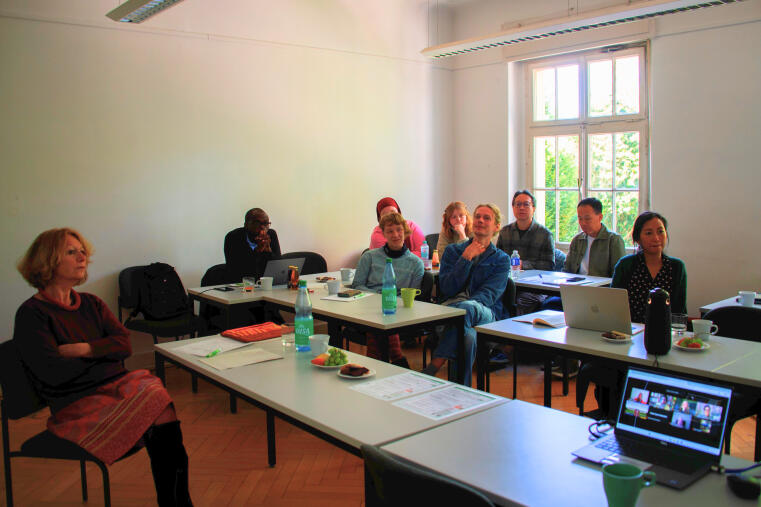
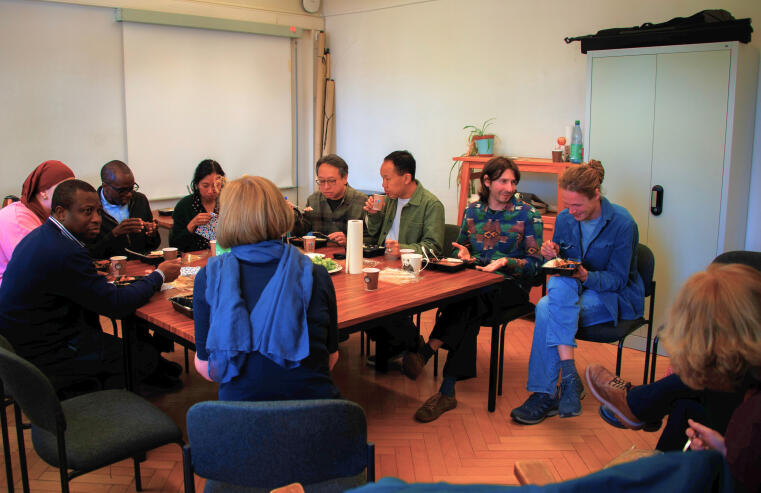
Day 1: Transnational Supervision as Collective Practice
The first workshop day focused on PhD supervision and emerging forms of transnational academic collaboration. Discussions revealed that a transnational supervision network is already beginning to take shape through overlapping research concerns, shared methodological interests, and collaborative relationships across institutions.
PhD presentations and collective discussions centered on questions such as: How is knowledge authorized and legitimized within unequal academic systems? How do language, translation, and archives shape what can be known? How do positionality, affect, and ethics inform ethnographic practice?
Rather than envisioning supervision as a fixed dyadic relationship between supervisor and student, participants explored supervision as a collective, multi-sited, and relational practice. Particular attention was given to the emotional and affective dimensions of ethnographic research, the asymmetries of time, funding, and access within global academia, and the challenges of sustaining collaboration across linguistic and geographical divides.
The workshop also critically engaged with debates on decoloniality. Participants emphasized the importance of moving beyond simplistic binaries between “colonial” and “decolonial” knowledge. Instead, discussions highlighted the need to engage with historically layered and interwoven knowledge traditions while remaining attentive to the risk that decolonial projects themselves can produce new hegemonies.
Several guiding principles emerged from these conversations:
- fostering relational ethics grounded in reciprocity, generosity, and patience
- supporting epistemological plurality without subsuming difference into universal frameworks
- cultivating reflexivity regarding authorship, positionality, and intellectual authority
- building collaborative infrastructures that allow divergent perspectives to coexist productively
Participants proposed concrete formats for future collaboration, including online colloquia, shared digital platforms, collaborative writing initiatives, peer supervision networks, summer schools, and co-teaching formats linking institutions across regions.
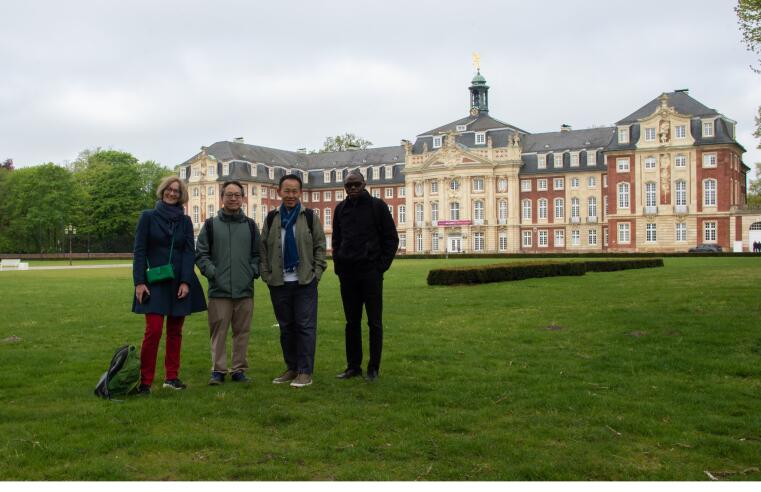
Day 2: Contesting Knowledge Formations in a Multipolar World
The second workshop day focused on the broader conceptual and political dimensions of knowledge production in a multipolar world. Discussions explored how languages, educational trajectories, institutional norms, publication systems, and geopolitical histories shape contemporary academic life.
Drawing on examples from Southeast Asia, West Africa, Europe, and beyond, participants examined how different linguistic repertoires and scholarly traditions intersect with colonial legacies and emerging global alignments. Rather than framing knowledge production through a simple “Western/non-Western” divide, the workshop emphasized the fragmented, stratified, and layered nature of contemporary epistemic landscapes.
Key themes included:
- the politics of language and translation in academic knowledge production
- the persistence of Eurocentric standards within internationalized universities
- unequal access to publishing infrastructures and evaluation systems
- the role of teaching, supervision, and collaborative writing in reshaping knowledge practices
- the tensions between institutional demands and critical aspirations
Participants also reflected on the affective dimensions of academic life, including experiences of exhaustion, validation, inadequacy, and resistance that accompany efforts to work critically within unequal systems of knowledge production.
A recurring concern throughout the workshop was how to build infrastructures that sustain long-term collaboration without reproducing extractive dynamics. Rather than seeking to resolve tensions between global standards and local specificity, the workshop approached these tensions as constitutive of scholarly practice in a multipolar world.
Taken together, the workshop marked an important step toward developing a sustained transnational network for supervision, research, and collaborative knowledge production. Rather than adding another institutional layer to existing academic structures, the initiative seeks to rethink how intellectual relationships, infrastructures, and practices can be cultivated across contexts while preserving difference and plurality.