


Yesterday in the Forest: Oak Gall
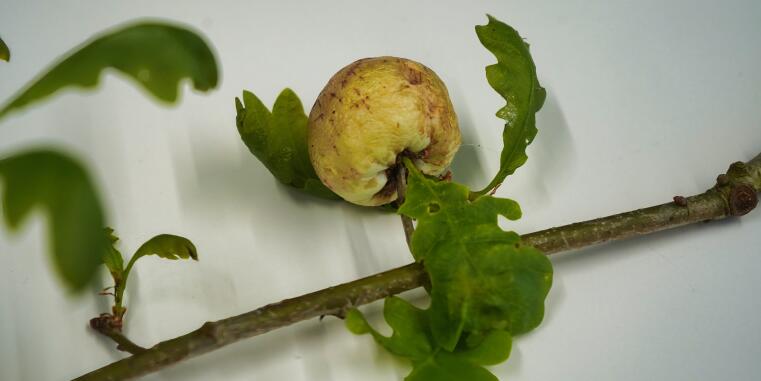
On an oak tree in Münster-Albachten we find a so-called gall—a spherical growth formed when certain insects (such as gall wasps) lay their eggs there, triggering the plant’s defensive response to the injury. Such galls can appear on stems, as in the specimen found, but are more commonly recognized as growths on leaves. The spherical galls contain quite large amounts of tannins, specifically from the subgroup of hydrolyzable tannins (syn. gallotannins), which consist of monosaccharides (mostly glucose) that are highly esterified with gallic acid (e.g., 1,2,3,4,6-pentagalloylglucose).

Tannin-enriched extracts from galls have been used topically for the treatment of mucosal inflammation, skin inflammation, or mild nonspecific diarrhea due to their tannin content. The effects are based on the interaction of gallotannins with proteins.