

Co-creating research environments: Inspiration from the MGSE Summer School
This article was collaboratively written by the participants in a workshop during the retreat.
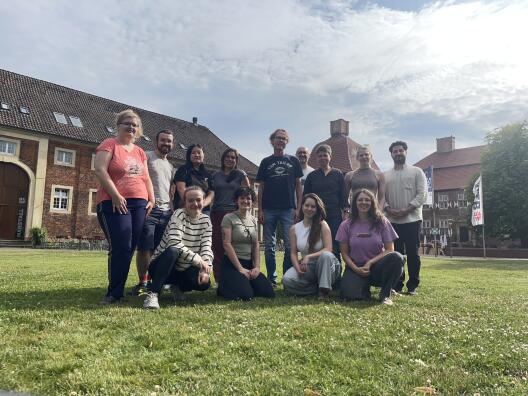
Doctoral students at the University of Münster swap the lab for three days of skills, science, and connection
Whether a doctoral project thrives depends on more than just the research question. Especially in summer when temperatures rise, time away from the usual research environment can prove just as valuable. With exactly this idea in mind, the Münster Graduate School of Evolution (MGSE) held a three-day summer school at Schloss Oberwerries in Hamm, bringing together a group of doctoral researchers with various backgrounds ranging from behavioural biology to microbiology.
The programme: from fostering important skills to philosophical discussions
At the heart of any successful summer school lies a thought-through programme. As most participants were in the later stages of their PhD projects, the organisers focused on transversal skills relevant to every participant. These included workshops on data visualisation, paper and grant writing as well as science communication.
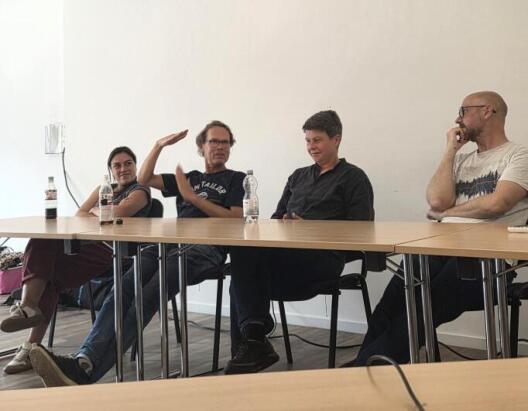
One especially lively discussion emerged during the career coaching sessions led by the invited principal investigators (PIs). It centred on a quote by Joachim Kurtz: “Scientists should be like a T.” This concept of an ideal researcher being someone who combines broad general knowledge (the horizontal line of the T) with deep specialisation in one particular niche (the vertical line of the T) prompted even the PIs to reflect on whether they lived up to this ideal. It is exactly these kinds of discussions that make a summer school memorable – at least that’s what the participants of this summer school experienced.
It’s always nice to engage with scientists because they are curious about everything and like strange or weird studies.
Finding common ground beyond the science
Summer schools are also about the connections they foster. In this case, the participants shared a curiosity to understand natural phenomena and biodiversity.
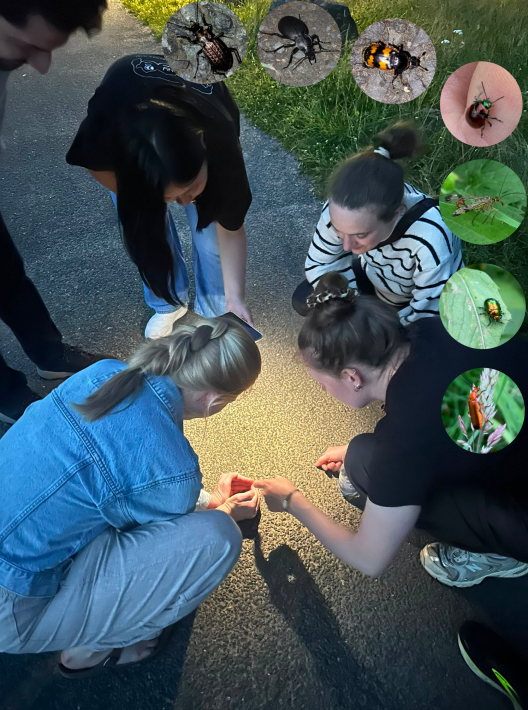
On extensive night walks with entertaining discussions they engaged in animal observations. Hamm boasts a rich variety of wildlife: the doctoral researchers spotted deer, various species of Coleoptera (beetles) and hares. The image of cows enjoying Lippe river’s cool waters will remain a fond memory, and the ObsIdentify App contest that happened during the nocturnal hikes may become a new habit.
Beyond being a relaxed past time, these night walks facilitated an atmosphere of informal exchange among students, some of which sparked unexpected scientific ideas.