

The Temple of Zeus
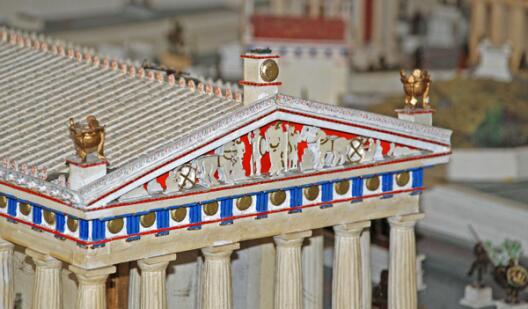
The Temple of Zeus at Olympia was built between 480/470 and 456 BC. It was approximately 64 meters long, 28 meters wide, and 20 meters high, making it the largest temple in mainland Greece at the time of its construction. It became world-famous primarily due to the twelve-meter-high statue of Zeus made of gold and ivory inside, according to ancient sources. It was created by the famous sculptor Phidias and was considered one of the Seven Wonders of the Ancient World due to its size and beauty.
In 391 AD, the closure of all pagan places of worship was ordered, but it is believed that worship continued in Olympia until the beginning of the 5th century AD. In 522 and 551, two earthquakes destroyed the temple. Until its excavation in the early 19th century, the ruins were partially built over and stones were removed for the construction of new buildings.
The Temple of Zeus was not systematically investigated until 1875 by German excavators. To this day, the German Archaeological Institute oversees the archaeological work in Olympia. A sufficient number of structural elements of the temple have been preserved to allow its former appearance to be largely reconstructed.