The Ottoman Balkans as a Space for Multilingualism: Actors, Practices, and Sites of Translation
From the 14th century onward, the Old Anatolian Turkish literary language underwent a process of Arabisation and Persianisation and established itself as the third of the “three languages” (Turkish: elsine-i s̱elās̱e) alongside Arabic and Persian in the milieu of the Ottoman elites. At the same time, the reception of Persian literature, in particular, expanded – a phenomenon that has been discussed in the context of the “Persianate world” as well as “Persophonie”/“Persographia” or the “Balkans-to-Bengal complex”. Given these overarching paradigms, translation activities and the complex phenomenon of multilingualism can be traced well beyond Anatolia and, particularly so, in the Eastern Mediterranean during the Ottoman (and post-Ottoman) period. In the Ottoman Balkans (Rumelia), as an important point of Islamicate literacy and a region where Ottoman and Western European cultures overlapped, these activities often included a fourth language, adding a new dimension to multilingual practices. Yet, in the scholarly discussions of multilingual practices and cultures, the region of the Balkans with their multiple hubs of cultural production, such as Saraybosna (Sarajevo), Mostar, Yenice-i Vardar (Giannitsa), and many others, has not yet featured as a distinct focus of studies on translation practices and multilingualism, despite evidence attesting to extensive literary production and copying processes, circulation, and even local appropriations of canonical Arabic-Persian texts.
This international workshop will centre on the Ottoman Balkans as a dynamic space for translation and cross-linguistic exchange specifically, seeking to relate broad-scale concepts (as mentioned above) to locally verifiable practices, thereby deepening our understanding of early modern multilingualism and the circulation of knowledge in the Ottoman Empire. As the focus of attention, the workshop is mainly though not exclusively concerned with translations between Arabic, Persian, (Ottoman) Turkish, and regional languages of the Balkans, Slavic and non-Slavic alike, as a key practice of early modern multilingualism in the Eastern Mediterranean, with a main emphasis on the Ottoman Balkans (15th–19th centuries). In doing so, it will shed light on the intersection of Islamic scholarly culture, empire building, and linguistic contact zones in a region that has been largely neglected by research.
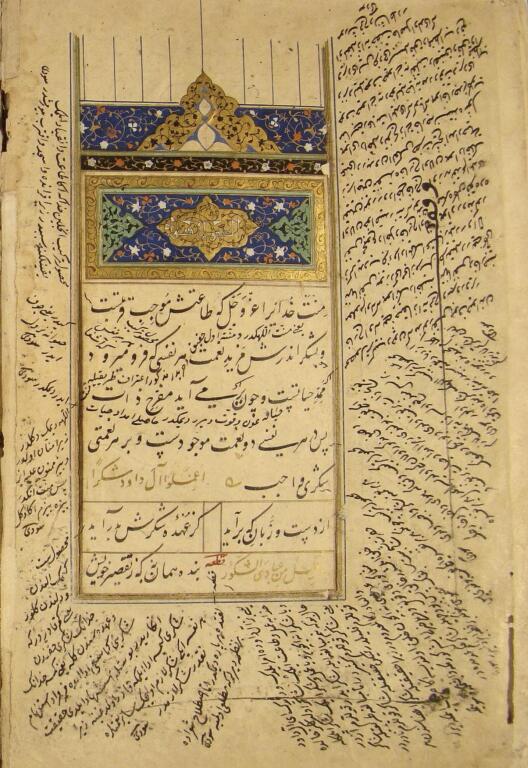
The specific contributions deal with the above themes and discuss primary source materials such as manuscript witnesses or early print editions, possibly also taking into account paratextual evidence (colophons, ownership, reading/endowment notes). Prospective studies will combine philological analyses with contextualising discussions of translators, scribes, patrons, and other actors, institutions, or networks facilitating practices of translation and multilingualism in this region.
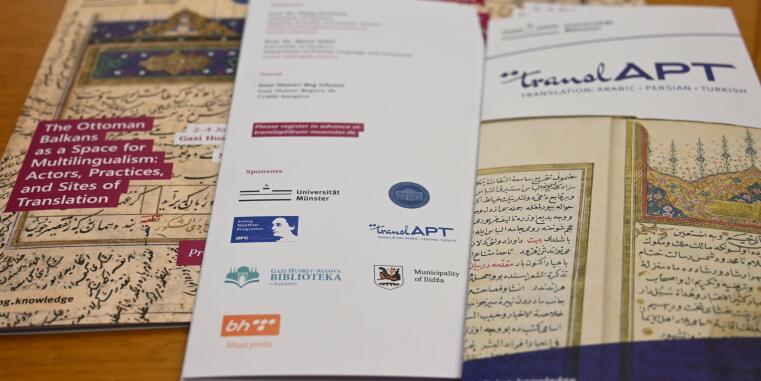
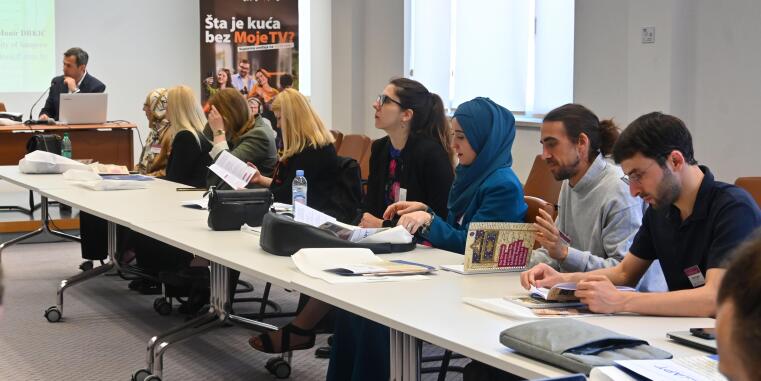
Jointly organised by the research group TRANSLAPT (University of Münster) and the University of Sarajevo, the workshop will be held at the Gazi Husrev-beg Library in Sarajevo, an institution housing a significant cultural heritage relating to the above themes, including around 11,000 manuscripts written in the Arabic, Persian, Turkish, and Bosnian languages as well as a rich collection of early printed works. The workshop aims to bring together studies on the complex and multilingual heritage of the region, with an emphasis on identifying what texts were translated, who undertook these translations, as well as the contexts in which they occurred.
Organising Committee
Prof. Dr. Philip Bockholt (University of Münster)
Prof. Dr. Munir Drkić (University of Sarajevo)
Programme
Tuesday, 2 June
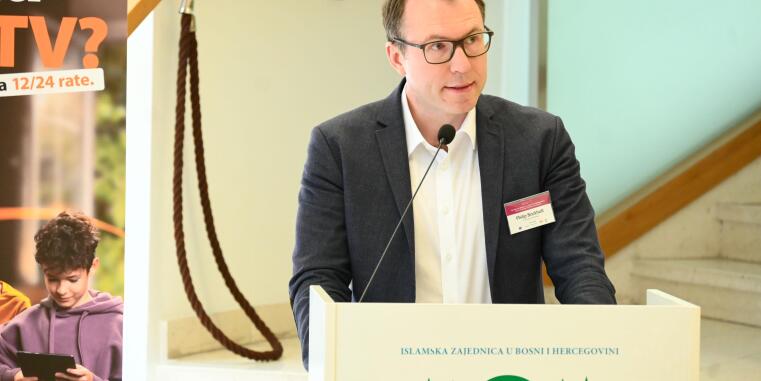
09:30 Welcoming Address & Introduction
- Dženan Handžić (Director of Gazi Husrev Beg Library, Sarajevo)
- Munir Drkić (Sarajevo)
- Philip Bockholt (Münster)
10:00 | Chair: Philip Bockholt
Panel 1: The Multilingual Legacy of Ottoman Bosnia
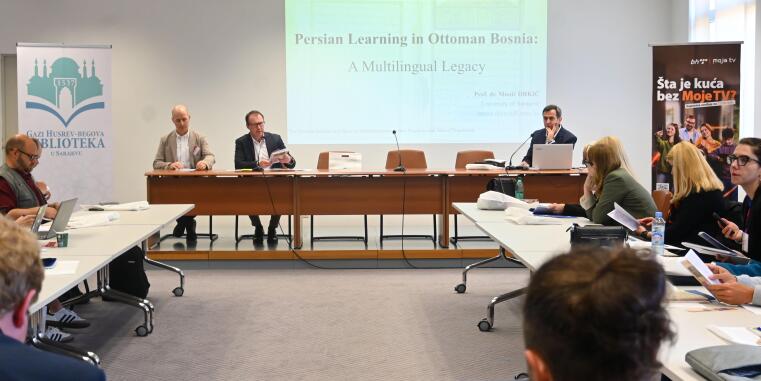
- Munir Drkić (Sarajevo): Persian Learning in Ottoman Bosnia: A Multilingual Legacy
- Ludwig Paul (Hamburg): The Linguistic Ecology of Ottoman Bosnia
11:00 Coffee break
11:30 | Chair: Kristof D’hulster
Panel 2: The Role of Translation in Shaping One’s Heritage
- Merisa Đido (Sarajevo): From Ottoman Bosnia to the Contemporary Era: Transformations in the Translation and Interpretation of Saʿdī’s Gulistān
- Gianfranco Bria (Rome), Abdulla Rexhepi (Pristina): Between Persianate Heritage and Albanian Vernacular: Dalip Frashëri’s Kopshti i të mirëvet as a Site of Translation and Piety
12:30 Lunch
14:00 | Chair: Hicham Bouhadi
Panel 3: Sites and Institutions of Multilingualism
- Andrew Peacock (St Andrews): Multilingual Literary Culture in Late Ottoman Shkodër
- Stevan Kordić (Belgrade): Translating Rebellion: Intercepted Serbian Letters and the Multilingual Order in the Ottoman Sanjak of Smederevo
- Eric Dursteler (Provo): Military Multilingualism in the Seventeenth-Century Balkans
15:30 Coffee break
16:00 | Chair: Ludwig Paul
Panel 4 & 5: The Potential of Dictionaries as Historical Sources & Romance-Slavic Language Contact in Ottoman Bosnia
- Ahmed Zildžić (Sarajevo): Tuḥfe-i Şāhidī in late Ottoman Sarajevo
- Ana Lalić (Sarajevo): The Litterae Missionarum as Evidence of Bosnian Literacy and Language Contact in the Italian Language in the Seventeenth Century: Lexical Characteristics
19:30 Dinner
Wednesday, 3 June
09:00 | Chair: Ahmet Aytep
Panel 6: Multilingual Manuscript Collections and Practices
- Kadir Turgut (Istanbul): Language Preferences and Scribal Practices of Balkan Copyists: Evidence from Manuscripts in Turkish Libraries
- Josh Mugler (Collegeville): What Is Persian about the Persianate? Manuscripts from Ottoman Bosnia and Herzegovina
10:00 Coffee break
10:30 | Chair: Tobias Sick
Panel 7: Becoming Multilingual: Educational Sources and Practices
- Numan Sabit Karali (Istanbul): Taʿlīm al-Mutaʿallim in the Ottoman Balkans: Readers, Practices, and Multilingual Interactions in the Manuscripts of a Widely Circulated Work
- Velida Mataradžija (Sarajevo): Taʿlīm al-Mutaʿallim fī Ṭarīq al-Taʿallum as Evidence of Multilingualism
11:30 Coffee break
12:00 | Chair: Munir Drkić
Panel 8: Poetry and Imitation Across Linguistic and Geographic Borders
- Benedek Péri (Budapest): Translation, Imitation or Something Else? Yenipazarlı Vālī and His Ḥüsn ü Dil
- Đenita Haverić (Sarajevo): Bulbulistān by Fevzī Mostārī: A Persian Literary Imitation and a Source of Local Cultural History
13:00 Lunch
14:30 | Chair: Velida Mataradžija
Panel 9: Vernacularisation in the Ottoman Balkans
- Abdulla Rexhepi (Pristina): Hurufist Texts Written in Albanian with Arabic Script
- Saadet Demiroğlu (Istanbul): Rethinking Aljamiado: Language, Community, and Religious Authority in Ottoman Bosnia
15:30 Coffee break
16:00 | Chair: Andrew Peacock
Panel 10: Scholarly Traditions of Arabic in the Ottoman Balkans
- Amra Mulović (Sarajevo): Arabic Study in Ottoman Bosnia: The Works of Muṣṭafā Ejubović known as Shaykh Yuyo
17:00 Coffee break
17:30 | Philip Bockholt/Munir Drkić
Panel 11: Concluding Remarks & New Initiative
- Ludwig Paul (Hamburg): New Initiative on the History of Iranian Studies in the Balkans and Neighbouring Regions
19:00 Dinner
Thursday, 4 June
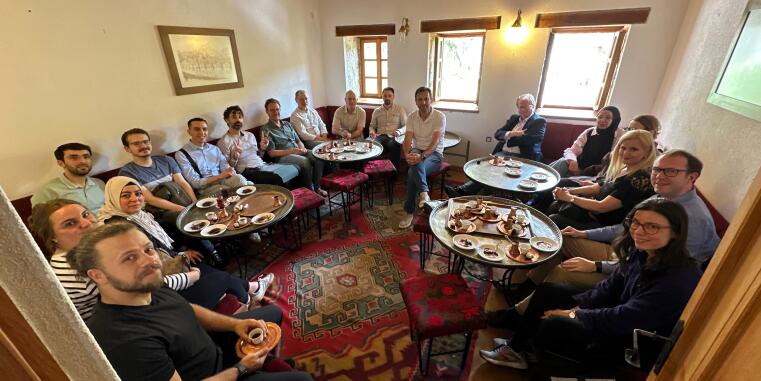
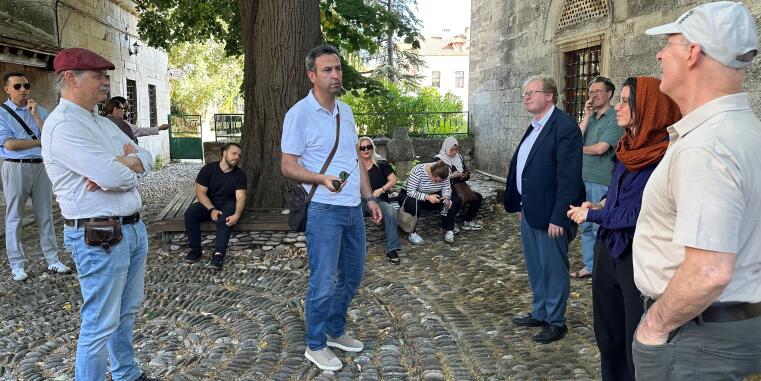
09:00 Tour programme