

PUBLICATIONS
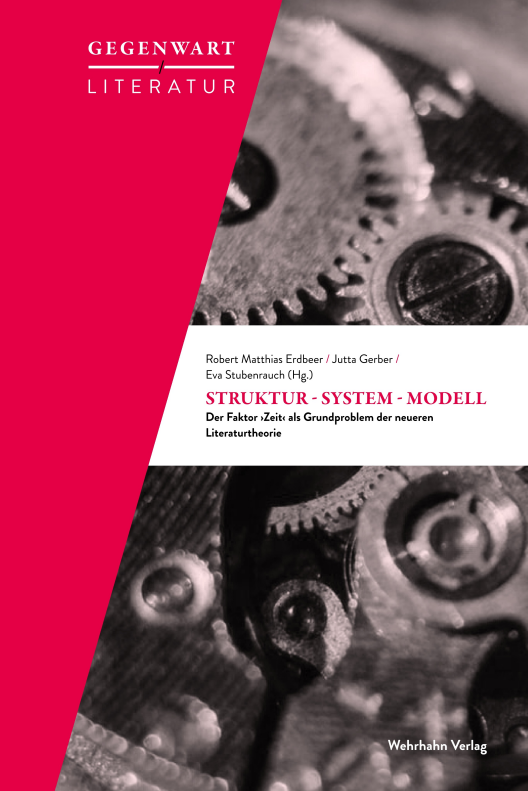
| Dynamic storytelling formats such as television series and digital games call for a reassessment of the relationship between time and literary narrative. Their individual inherent times or Eigenzeiten alter our sense of time and enable an experience of time that manifests itself in new forms of temporal agency. The reorientation of the cultural practice of narration challenges traditional distinctions: plot and narrative, text and image, fact and fiction, production and reception. This volume points to the phenomenon of time in literary fiction by discussing, applying and comparing three theoretical models: structural narratology, social systems theory and model theory. In doing so, it presents three theoretical perspectives that respond to the media transformation of storytelling and discuss new areas of conflict pertinent to both contemporary narrative culture and the shaping of the theoretical debate. / Hanover (Wehrhahn) 2026, in print |
NEW PALGRAVE SERIES: POETICS OF MODELLING
Modelling the Energy Transition. Cultures, Visions, Narratives
Robert Matthias Erdbeer, Veit Hagenmeyer, Klaus Stierstorfer (eds.)

|
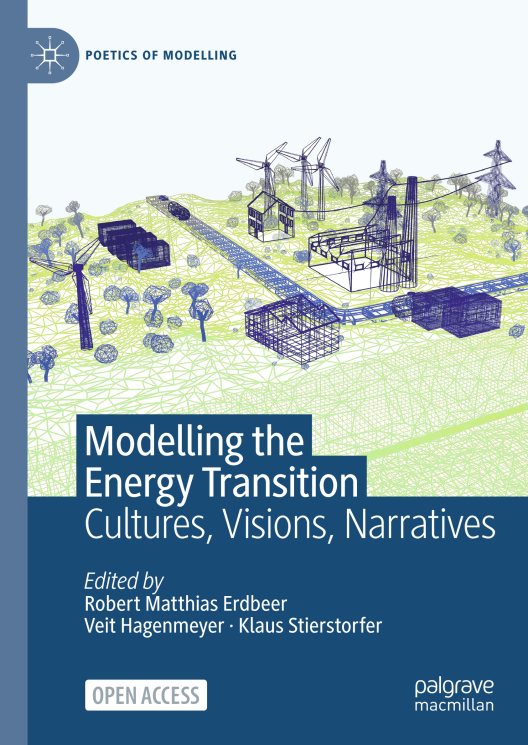
This volume reconfigures Energy Transition as a global discourse from a multidisciplinary perspective. Energy Transition is not only one of the most daring technological endeavours of the present, it is also its new master narrative. Focusing on modelling both as a cultural technique and as a strategy of innovation, the chapters provided in this volume throw into relief the visions, but also the blind spots of modelling the challenges of climate change. Thus, in a rare encounter, major voices from the Sciences and the Humanities, from Energy Systems Design, Mechanical Engineering, Theory of Science, Science and Technology Studies, Literary Studies and the Arts, have gathered here to overcome the cultural divide between the technological and the societal dimensions of this global task. In doing so, they offer a new form of model criticism, pointing to the impacts of what may be termed the ›Energy Imaginary‹ on the technosocial mindsets of our time. / London (Palgrave Macmillan) 2025 With contributions by Bas van Fraassen, Nancy Cartwright, Hans-Jörg Rheinberger, Lorenzo Magnani u.a. |