Research Project Doctoral Candidate 05

Neurological factors challenging bimanual motor control and learning in children with unilateral cerebral palsy (uCP)


Fellow

Louise Hocke


Host Institution

KU Leuven, Research Group for Neurorehabilitation & Cerebral Palsy Reference Center

Hasselt University


Supervisors

Prof. Dr. Hilde Feys

Prof. Dr. Katrijn Klingels (Hasselt University)

Co-supervisor: Dr. Lisa Mailleux (KU Leuven)

Co-supervisor: Prof. Dr. Els Ortibus (KU Leuven)


Project description

The doctoral project will focus on an advanced understanding of bimanual motor control and learning in children with unilateral Cerebral Palsy (uCP), contributing to tailor-made intervention programs. The aims are 1) to improve our current understanding of bimanual motor control and learning in children with uCP by focusing on an in-depth quantification using innovative robotic (Kinarm) and instrumented assessments with special focus on the structure of variability at a sensorimotor behaviour level; 2) to examine the role of neurological factors challenging bimanual motor control and learning in children with uCP. Specifically, to investigate in how far deficits in bimanual motor control depend on corpus callosum integrity, the type of the CST wiring pattern, mirror movements and the integrity of the sensory systems; 3) to investigate how neurological factors predict variability in treatment response following a sensorimotor programme to improve bimanual motor control and learning. Hereto, we will implement behavioral assessments, diffusion MRI and Transcranial Magnetic stimulation.


(Planned) Secondments

King's College London

Hasselt University
Project updates

October 2025

The doctoral project will focus on an advanced understanding of bimanual motor control (BMC) in children with unilateral Cerebral Palsy (uCP). Three main aims emerged from this general obective.

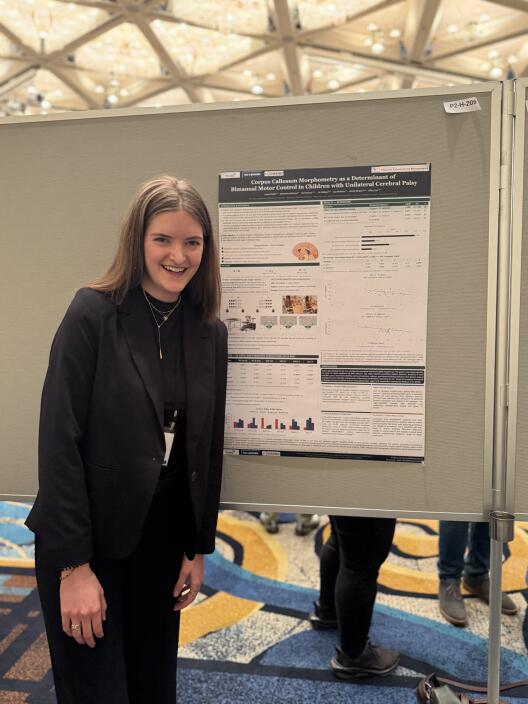
(1) First, we are assessing the influence of neurological determinants on the children’s BMC abilities. Neurological determinants included lesion extent, location and type, along with corpus callosum morphometrical anlyses and corticospinal tract wiring patterns. The BMC outcomes were acquired with novel robotic instruments (the Kinarm exoskeleton, the Tyneside Pegboard test and the box opening task). As this study relies on acquired data, we already conducted statistical analyses and analysed the results that we are in the process of transcribing. 

(2) Thereafter, we aim at analysing those same neurological predictors with mirror movements, a commonly seen characterisitics of uCP. (3) Lastly, we will analyse the correlation between BMC and mirror movements along with a view on their implications in children’s life.

The comination of those 3 studies will provide clinicians with a deeper and cleaner understanding of the complexity of BMC in children with uCP. Indeed, in contrast with the majority of current research, we will step forward by incorporating solely quantitative measurements for BMC and neurological determinants. Overall, this knowledge will contribute in tailoring future interventions in the field.