Research Project Doctoral Candidate 01

The relationship between cognition and motor variability in ageing and Parkinson Disease (PD) patients


Fellow

Dilşah Gençaslan


Host Institution

University of Münster, Department Neuromotor Behavior and Exercise


Supervisors

Prof. Dr. Claudia Voelcker-Rehage

PD Dr. Dieter F. Kutz


Project description

This research project, led by Dilşah Gençaslan, focuses on exploring the relationship between neurophysiological variability and motor variability in older adults, with a particular emphasis on age-related and disease-related effects. The primary goal is to systematically examine how brain activity, cognitive performance, and motor control are influenced by aging and potential neurodegenerative conditions.

The broader aim of this work is to identify early predictors of cognitive and motor decline, contribute to earlier diagnoses, and support the development of personalized interventions tailored to individuals’ motor, cognitive, and neural profiles. Ultimately, the project aims to enhance quality of life and promote healthy aging through targeted, data-informed approaches.


(Planned) Secondments 

Aix-Marseille University

Tel-Aviv University


Project Updates

June 2026

Since August 2025, I have been actively involved in EEG data collection for my PhD project. The study includes EEG recordings from participants with Parkinson’s disease during resting state, a motor task, and a cognitive task.

In April 2026, we expanded the data collection to include healthy participants as well. Recruitment and data collection are still ongoing, and the project continues to progress with both Parkinson’s disease and healthy participant groups.

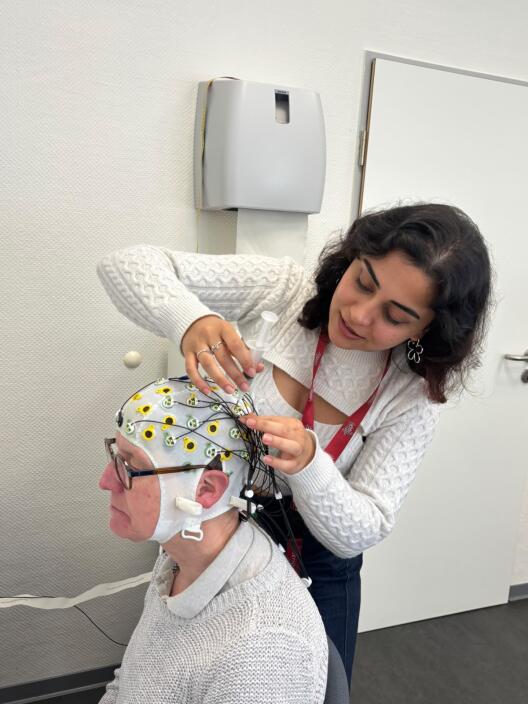
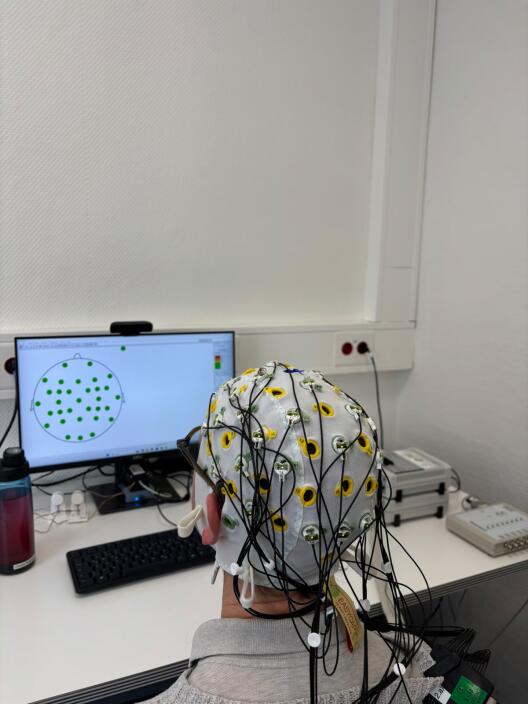
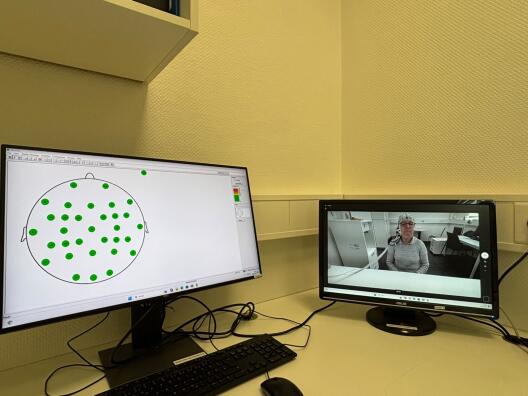
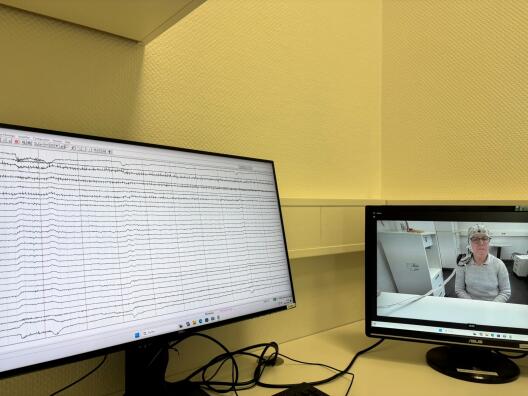
The photos below provide a brief impression of the experimental setup and the data collection process.

Conductive gel is applied to the EEG cap before the experiment to improve the quality of the EEG signal.
© Dilşah Gençaslan
The participant is wearing an EEG cap while seated in front of the computer screen used to present the experimental tasks.
© Dilşah Gençaslan
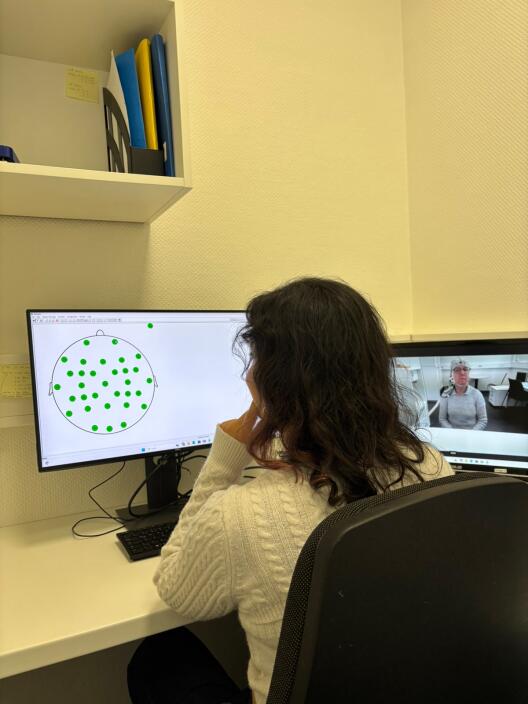
The screen shows the EEG impedance values for each channel while the participant is seated and prepared for the experiment. This step is used to check electrode contact before starting the recording.
© Dilşah Gençaslan
The screen displays the ongoing EEG signals while the participant is seated during the experimental session. The EEG activity is monitored throughout the recording to ensure signal quality.
© Dilşah Gençaslan
checking the EEG channel impedances before the experiment begins to ensure that the electrodes have good contact and that the recording quality is sufficient.
© Dilşah Gençaslan

June 2025

To achieve these aims, datasets from the SENDA study (Müller et al., 2020) are re-analyzed, which include resting-state EEG and grip force data from healthy younger and older adults, as well as individuals with mild cognitive impairment (MCI). In addition to the SENDA dataset, data from an ongoing study involving Parkinson’s disease (PD) patients will also be analyzed. The project applies advanced variability analyses, such as entropy measures, to uncover underlying patterns in these data.
Currently, Dilşah is conducting a secondment at Aix-Marseille University, where she collaborates closely with other researchers while working on these analyses. This phase of the project enables a more detailed examination of age- and disease-related changes in both neurophysiological and motor domains.