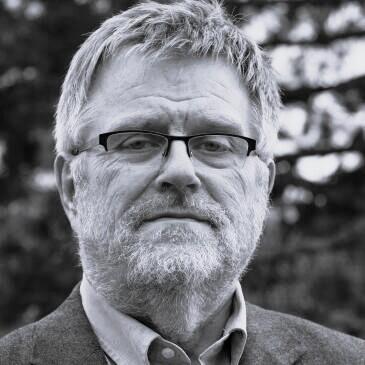
27 February 1959 – 27 September 2026
It is with profound sadness that we bid farewell to Prof. Dr. Bernd Strauß, who passed away on 27 September 2026. With his death, the Institute of Sport and Exercise Sciences has lost an outstanding scholar, university teacher, and academic leader who shaped our Institute for more than 28 years and made a significant contribution to the development of sport and exercise psychology far beyond Münster and Germany. We have also lost a dear friend, a scientific mentor, and a highly valued colleague.
Bernd Strauß studied psychology at Kiel University, where he received his degree in 1987 and completed his doctorate in 1992. In 1998, he completed his habilitation and was awarded the *venia legendi* in psychology. That same year, he moved to Münster: on 21 September 1998, he succeeded Prof. Dr. Willi Essing as Professor of Sport and Exercise Psychology and assumed leadership of the Dept. of Sport and Exercise Psychology. Of the more than 50 years of sport psychology at the University of Münster, Bernd Strauß personally shaped and decisively influenced more than half of it.
His research covered a broad range of topics while being characterised by several clear areas of focus. At its core were expertise in sport, social psychological aspects of sport, and research methods. In particular, his work on social influence in sport, spectators, and home advantage attracted considerable national and international attention. At the same time, Bernd Strauß never regarded science merely as the pursuit of individual research questions. For him, it was equally important to create structures, develop new fields of research, and bring people together. Among other initiatives, he was involved in establishing the DFG-funded OpenLab and was one of the applicants for the interdisciplinary DFG Research Training Group “Trust and Communication in a Digitised World”. Under his leadership, the Dept. of Sport and Exercise Psychology successfully conducted numerous research projects and attracted substantial third-party funding over the years.
Of particular importance to him was the integration of scientific excellence, high-quality teaching, support for early-career researchers, and the transfer of knowledge into sporting practice. Scientific knowledge, in his view, should not end at the boundaries of the university. Exchange with elite sport, sports associations and clubs, schools, and other institutions was as natural to him as his conviction that questions arising from practice could, in turn, provide valuable impulses for research. Over many years, he put this principle into practice through collaborations with, among others, the Federal Institute of Sport Science (BISp), the German Olympic Sports Confederation (DOSB), the State of North Rhine-Westphalia, the City of Münster, and numerous partners from the world of sport.
Bernd Strauß shaped not only his own academic department, but also the Institute, the Faculty, and the University of Münster as a whole. As early as 2001, only a few years after his appointment, he served for the first time as Dean of Faculty 7, Psychology and Sport and Exercise Sciences. In total, he served seven years as Dean and eight years as Vice-Dean. In addition, he was involved in numerous Rectorate and Senate committees, chaired the Rectorate Commission for Strategic Planning and Quality Assurance for five years, and was the founding chair of the University of Münster’s Tenure Track Board.
Bernd Strauß had a particularly strong connection to elite sport at our University. From 2009 onwards, in his role as the University of Münster’s commissioner of top-level sports, he worked to improve the compatibility of elite sport and university studies. This commitment reflected his conviction that science, the university, and sporting practice should be closely connected. In this role, too, he established structures and initiated developments that will endure well beyond his own term of office.
His commitment extended far beyond the University. For decades, Bernd Strauß played a major role in shaping the development of sport science and, in particular, sport and exercise psychology in Germany. From 2003 to 2009, he served as President of the German Society of Sport Science (dvs), and from 2013 to 2021 as President of the German Association of Sport Psychology (asp), having previously served for many years on the executive boards of both organisations. He also chaired the Scientific Advisory Board of the Federal Institute of Sport Science and was the founding chair of the PotAS Commission of the Federal Ministry of the Interior and the DOSB. In recognition of his contributions, he received the dvs Gold Medal of Honour in 2012, was made an honorary member of the dvs in 2019, and was awarded the Hermann Rieder Medal of Honour by the asp in 2023.
Bernd Strauß also helped shape the landscape of scientific publishing over many years. He was a founding editor of the *Zeitschrift für Sportpsychologie* and, together with Nikos Ntoumanis, served for more than eleven years as Editor-in-Chief of the international journal *Psychology of Sport and Exercise*. His name appears on numerous textbooks, handbooks, and international publications. Throughout his work, he was committed to strengthening the visibility and standing of sport psychology within both psychology and sport science.
We particularly remember his commitment to national and international scientific exchange and networking. Under his leadership, numerous conferences and symposia were held in Münster. A particular highlight was the international FEPSAC Congress in 2019, marking the 50th anniversary of European sport and exercise psychology. For organising what was, at the time, the largest international congress in sport and exercise psychology, the Münster team received the City of Münster’s Congress Award. This was complemented by several conferences of the asp and dvs as well as German-Japanese symposia. Fostering scientific exchange and building networks were matters particularly close to Bernd Strauß’s heart.
Perhaps the most lasting testament to his work, however, can be found in the people he supported and mentored. Under his leadership, the Dept. of Sport and Exercise Psychology developed into a place dedicated to the intensive promotion of early-career researchers. More than 25 doctoral dissertations and several habilitations were completed during this period, and numerous former members of staff went on from Münster to pursue careers in academia and professional practice. Bernd Strauß enabled, supported, and shaped academic careers. For many of us, he was therefore far more than the head of an academic unit: he was an academic teacher, mentor, adviser, and intellectual counterpart – especially when it came to scientific debate.
Yet Bernd was far more than the sum of his academic achievements, publications, and offices. Those who worked with him knew his great passion for science, his enthusiasm for research methods, and his deep commitment to sport and exercise psychology. He could be equally enthusiastic about a methodological question or a new research idea, and he defended his positions with great persistence. He was a scholar who welcomed debate in the best sense of the term: for him, science also meant discussion, disagreement, and the shared endeavour to arrive at the better answer.
With his death, we have lost a person whose influence will extend far beyond his active years at the Institute. He leaves behind an academic department that he built and shaped over decades, scientific structures that he played a major role in establishing, and an extensive network of colleagues, companions, and former students. Above all, however, there remain the many people who worked with him, learned from him, debated with him, and shared with him the endeavour of advancing science.
Our deepest sympathy goes to his family and to all those who were close to him.
We will greatly miss Bernd as a scholar and academic teacher, as a mentor and colleague, and above all as a person. His legacy will remain visible at our Institute and throughout the field of sport and exercise psychology for many years to come.
The Rector of the University of Münster
Prof. Dr. Johannes Wessels
The Dean of Faculty 07 Psychology and Sport and Exercise Sciences
Prof. Dr. Ricarda Schubotz
The Deputy Director of the Institute of Sport and Exercise Sciences
Prof. Dr. Heiko Wagner
Dr. Barbara Halberschmidt & Prof. Dr. Maike Tietjens, on behalf of all colleagues at the Institute of Sport and Exercise Sciences at the University of Münster