Local News: The Search for New Contraceptives – Is the Male Pill on the Verge of a Breakthrough?
In March 2026, current research at the Center for Soft Nanoscience (SoN) took centre stage when a WDR television crew visited the centre to learn about the latest approaches to studying sperm motility.
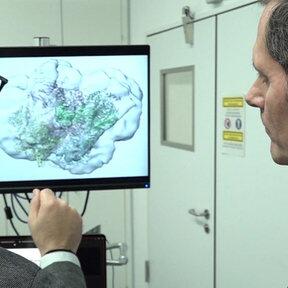
Using cryo-electron microscopy (cryo-EM), researchers can visualise biological structures at atomic resolution. The research group led by Christos Gatsogiannis at the SoN employs this technique, among other applications, in collaboration with Timo Strünker from the Centre of Reproductive Medicine and Andrology to advance the development of novel contraceptive strategies.
Million-Euro Funding for Research into New Contraceptive Methods
Ion Channels in Sperm as Potential Game Changers
For the past 66 years, contraception has relied almost exclusively on women taking oral contraceptives—the birth control pill. An equivalent option for men does not yet exist. The Contraception.MS research consortium now aims to investigate new approaches to non-hormonal contraceptive methods for both women and men. To support this work, the German Federal Ministry for Research, Technology and Space (BMFTR) is providing €3 million in funding. With the funding approval, the team of experts from Münster and Hamburg outlines the main objectives and research priorities of the project.
Biological Nanomachines in Detail: WWU Münster Researchers Take a Closer Look at Peroxisomal Processes (September 2023)
Every system has its own waste disposal mechanism. In the human body, cell organelles known as peroxisomes remove toxic substances and break down fatty acids, thereby helping to prevent serious diseases. A group of proteins called Pex (Peroxisome Biogenesis Factors) ensures that these cellular "detox units" function properly. A research team led by Professor Christos Gatsogiannis at the University of Münster has now, for the first time, revealed at the atomic level how these highly complex processes work. This breakthrough, which has been recognized with the publication of the study in the journal Nature Communications, was made possible by the university's new state-of-the-art cryo-electron microscope.
Biological Nanomachines in Detail: University of Münster Researchers Investigate Peroxisomal Processes, September 2023
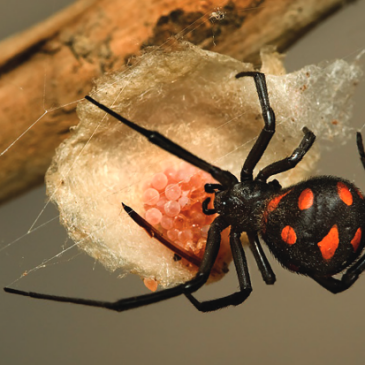
Black widow spiders are the only spiders native to Europe whose venom poses a serious threat to humans. This is due to the neurotoxin α-latrotoxin, which can cause severe muscle spasms by triggering the uncontrolled release of neurotransmitters. To achieve this, a complex formed by the toxin creates a channel in the membrane of nerve cells.
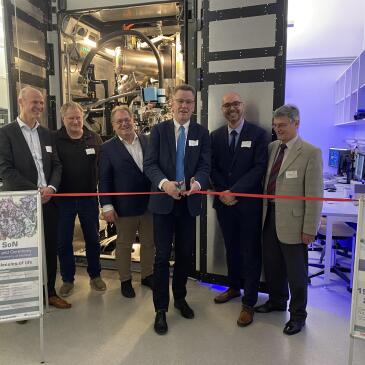
At an inaugural symposium attended by around 150 guests, the Center for Soft Nanoscience (SoN) at the University of Münster officially inaugurated a state-of-the-art high-performance cryo-electron microscope (cryo-EM) on 19 April (Wednesday). The instrument is among the most powerful of its kind worldwide and, under the direction of Prof. Dr. Christos Gatsogiannis, will be used by approximately 20 research groups and collaborative research networks from the fields of medicine, biology, and chemistry. It is expected to help the University of Münster maintain and further strengthen its internationally leading position in multiscale imaging.