PROJECT B15
The Role of Latrophilin in Contact-stimulated Mesenchymal Cell Migration and Cell Alignment
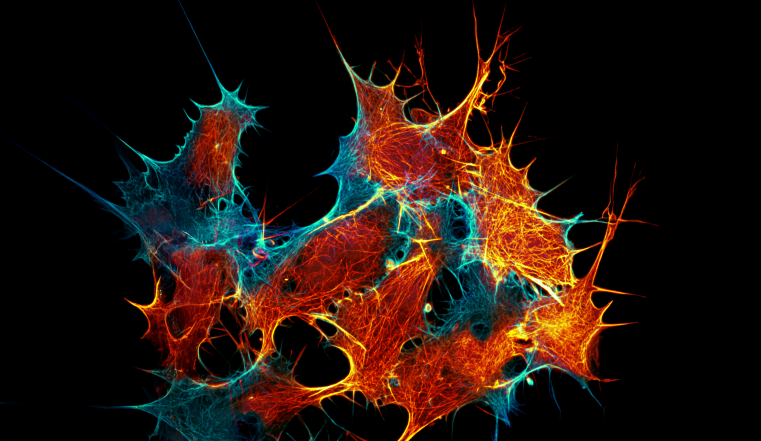
This project investigates how mesenchymal cells form a continuous tissue layer through collective cell migration and liquid-crystal–like (nematic) alignment. Latrophilins, adhesion G-protein-coupled receptors (aGPCRs) conserved across the animal kingdom, are well known for their roles in neuronal guidance and adhesion, yet their functions in mesenchymal collective migration remain unexplored. We use the Drosophila testis nascent myotube (TNM) as a genetically accessible model to study these behaviors. TNMs are mesenchymal muscle precursors that migrate collectively and align nematically to envelop the testis. Drosophila carries a single Latrophilin ortholog, the calcium-independent receptor of latrotoxin (Cirl), a receptor essential for touch sensation, nociception, and epithelial morphogenesis. Our preliminary work reveals that Cirl is also crucial for TNM motility and nematic alignment, enabling the formation of a continuous muscle sheath around the testis. Our goal is to uncover how Cirl performs this function. Using live imaging and advanced genetic tools, we will determine Cirl’s localization and activation dynamics during TNM migration and alignment. Through mutants and genetic mosaic approaches, we will dissect Cirl’s roles in regulating migration, filopodial dynamics, and actomyosin organization and potentially in mechanosensation. By linking molecular mechanisms to emergent collective behaviors, this project will illuminate how mesenchymal cells self-organize to generate tissue-scale patterns during organ morphogenesis.