
Publications Prof. Dr. Guido Hertel
Prof. Dr. Guido Hertel at Google Scholar
Prof. Dr. Guido Hertel at ResearchGate
Prof. Dr. Guido Hertel at Google Scholar
Prof. Dr. Guido Hertel at ResearchGate
Müller, L. S., Nohe, C., Reiners, S., Becker, J., & Hertel, G. (2026). Building trust in workplace information systems: a four-company study. Behaviour & Information Technology, 45(3), 388–408. https://doi.org/10.1080/0144929X.2025.2518236 [Open Access]
Rosenbruch, A., Nohe, C., & Hertel, G. (2026). Why does my boss trust me? Followers’ attributions about leaders’ trusting behavior and their subsequent reactions. Collabra: Psychology, 12(1), 158155. https://doi.org/10.1525/collabra.158155
Müller, L. S., & Hertel, G. (2025). Trusting information systems in everyday work events – effects on cognitive resources, performance, and well-being. Ergonomics, 68(1), 19–36. https://doi.org/10.1080/00140139.2023.2286910
Sondern, D., Arnholz, N., & Hertel, G. (2025). Employment negotiations with an algorithm? How AI as negotiation counterpart would affect negotiators' trust and subjective value expectations. Conflict Resolution Quarterly, 43(1), 5–13. https://doi.org/10.1002/crq.21472
Eisbach, S., Mai, O., & Hertel, G. (2024). Combining theoretical modelling and machine learning approaches: The case of teamwork effects on individual effort expenditure. New Ideas in Psychology, 73, 101077. https://doi.org/10.1016/j.newideapsych.2024.101077
Höddinghaus, M., Nohe, C., & Hertel, G. (2024). Leadership in virtual work settings: what we know, what we do not know, and what we need to do. European Journal of Work and Organizational Psychology, 33(2), 188–212. https://doi.org/10.1080/1359432X.2023.2250079
Müller, L. S., Nohe, C., Reiners, S., Becker, J., & Hertel, G. (2024). Adopting information systems at work: a longitudinal examination of trust dynamics, anteced ents, and outcomes. Behaviour & Information Technology, 43(6), 1096–1128. https://doi.org/10.1080/0144929X.2023.2196598
Niemann, L., & Hertel, G. (2024). Perceived forcedness and perils of migration: Development and validation of a questionnaire for migrants in receiving countries. International Journal of Intercultural Relations, 99, 101951. https://doi.org/10.1016/j.ijintrel.2024.101951 [Open Access]
Niemann, L., Naudascher, H., Kuyumcu, U., & Hertel, G. (2024). “How long are you gonna stay?” Implications of residents’ perceptions of refugees’ occupational future time perspective in receiving countries. Journal of International Migration and Integration, 25(3), 1423–1443. https://doi.org/10.1007/s12134-024-01117-0
Onyishi, I. E., Nohe, C., Ugwu, F. O., Amazue, L. O., & Hertel, G. (2024). When high work engagement is negative for family tasks: mechanisms and boundary conditions. Frontiers in Psychology, 15, 1403701. https://doi.org/10.3389/fpsyg.2024.1403701
Röseler, S., Hertel, G., & Thielsch, M. T. (2024). What about the “soft factors”? Longitudinal effects of leadership behaviors on psychological resources of firefighters. International Journal of Disaster Risk Reduction, 111, 104720. https://doi.org/10.1016/j.ijdrr.2024.104720
Röseler, S., Hilbert, M., Hertel, G., & Thielsch, M. T. (2024). Getting the Most Out of Every Training Day: The Influence of Instructors on Self-Regulated Learning During Firefighter Leadership Courses. International Journal of Disaster Risk Science, 15(3), 332–345. https://doi.org/10.1007/s13753-024-00560-y
Sondern, D., & Hertel, G. (2024). Revisiting the classic ABI model of trustworthiness: interactive effects of trustworthiness components on trust in mixed-motive social exchange contexts. Journal of Trust Research, 14(2), 213–236. https://doi.org/10.1080/21515581.2024.2388659
Wehrle, K., Kira, M., Klehe, U.-C., & Hertel, G. (2024). Scorched Earth: Employers’ Breached Trust in Refugees’ Labor Market Integration. Business & Society, 63(1), 60–107. https://doi.org/10.1177/00076503231202022
Eisbach, S., Daugs, F., Thielsch, M. T., Böhmer, M., & Hertel, G. (2023). Predicting Rating Distributions of Website Aesthetics with Deep Learning for AI-Based Research. ACM Transactions on Computer-Human Interaction, 30(3), Article 37, 1–28. https://doi.org/10.1145/3569889
Eisbach, S., Langer, M., & Hertel, G. (2023). Optimizing human-AI collaboration: Effects of motivation and accuracy information in AI-supported decision-making. Computers in Human Behavior: Artificial Humans, 1(2), 100015. https://doi.org/10.1016/j.chbah.2023.100015
Müller, L. S., Reiners, S., Becker, J., & Hertel, G. (2023). Long-Term Effects of COVID-19 on Work Routines and Organizational Culture – A Case Study within Higher Education’s Administration. Journal of Business Research, 163, 113927. https://doi.org/10.1016/j.jbusres.2023.113927
Niemann, L., & Hertel, G. (2023). Refugees’ occupational future time perspective: Implications for their integration in receiving countries. Current Research in Ecological and Social Psychology, 5, 100139. https://doi.org/10.1016/j.cresp.2023.100139
Rosenbruch, A., Nohe, C., Schwarz, I., & Hertel, G. (2023). Leader trusting behaviours: a mixed-method approach on follower’s perceptions and reactions. European Journal of Work and Organizational Psychology, 32(6), 798–815. https://doi.org/10.1080/1359432X.2023.2250087
Sondern, D., & Hertel, G. (2023). Building negotiator trust through social presence – Effects of communication media and information reprocessability on trust in negotiations. Negotiation and Conflict Management Research, 16(4), 290–319. https://doi.org/10.34891/vw4p-st41
Thielsch, M. T., Röseler, S., Lamers, C., & Hertel, G. (2023). The COVID-19 marathon: demands and resources of crises managers in continuous operation. Zeitschrift für Psychologie, 231(2), 115–125. https://doi.org/10.1027/2151-2604/a000522
Hüffmeier, J., Hertel, G., Torka, A.-K., Nohe, C., & Krumm, S. (2022). In field settings group members (often) show effort gains instead of social loafing. European Review of Social Psychology, 33(1), 131–170. https://doi.org/10.1080/10463283.2021.1959125
Niemann, L., & Hertel, G. (2022). Perceived forcedness and perils of migration: Development and validation of a questionnaire for residents in receiving countries. International Journal of Intercultural Relations, 89, 1–18. https://doi.org/10.1016/j.ijintrel.2022.05.002
Nohe, C., Hüffmeier, J., Bürkner, P., Mazei, J., Sondern, D., Runte, A., Sieber, F., & Hertel, G. (2022). Unethical choice in negotiations: A meta-analysis on gender differences and their moderators. Organizational Behavior and Human Decision Processes, 173, 104189. https://doi.org/10.1016/j.obhdp.2022.104189
Reiners, S., Müller, L. S., Becker, J., & Hertel, G. (2022). Measuring the Influence of Characteristics on Decision-Making Scenarios: A Prototype. In C. Stephanidis, M. Antona, & S. Ntoa (Eds.), HCI International 2022 Posters. HCII 2022 (Communications in Computer and Information Science, Vol. 1580). Cham: Springer. https://doi.org/10.1007/978-3-031-06417-3_52
Höddinghaus, M., Sondern, D., & Hertel, G. (2021). The automation of leadership functions: Would people trust decision algorithms? Computers in Human Behavior, 116, 106635. https://doi.org/10.1016/j.chb.2020.106635
Rudolph, C., Allan, B., Clark, M., Hertel, G., Hirschi, A., Kunze, F., Shockley, K., Shoss, M., Sonnentag, S., & Zacher, H. (2021). Pandemics: Implications for research and practice in industrial and organizational psychology. Industrial and Organizational Psychology, 14(1–2), 1–35. https://doi.org/10.1017/iop.2020.48
Schäpers, P., Windscheid, L., Mazei, J., Thielsch, M. T., & Hertel, G. (2021). “Like will to Like” or “Opposites Attract”? Management Board Diversity Affects Employer Attractiveness. Gender in Management: An International Journal, 36(5), 569–590. https://doi.org/10.1108/GM-10-2019-0182
Thielsch, M. T., Röseler, S., Kirsch, J., Lamers, C., & Hertel, G. (2021). Managing pandemics – demands, resources, and effective behaviors within crisis management teams. Applied Psychology: An International Review, 70(1), 150–187. https://doi.org/10.1111/apps.12303
Breuer, C., Hüffmeier, J., Hibben, F., & Hertel, G. (2020). Trust in teams: A taxonomy of perceived trustworthiness factors and risk-taking behaviors in face-to-face and virtual teams. Human Relations, 73(1), 3–34. https://doi.org/10.1177/0018726718818721
Echterhoff, G., Hellmann, J. H., Back, M. D., Kärtner, J., Morina, N., & Hertel, G. (2020). Psychological Antecedents of Refugee Integration (PARI). Perspectives on Psychological Science, 15(4), 856–879. https://doi.org/10.1177/1745691619898838
Gärtner, L. U. A., & Hertel, G. (2020). Age as moderator of the relationship between self-efficacy and effort in occupational teams. Work, Aging and Retirement, 6(2), 118–129. https://doi.org/10.1093/workar/waz024
Meeßen, S. M., Thielsch, M. T., & Hertel, G. (2020). Trust in Management Information Systems (MIS): A Theoretical Model. Zeitschrift für Arbeits- und Organisationspsychologie, 64(1), 6–16. https://doi.org/10.1026/0932-4089/a000306
Meeßen, S. M., Thielsch, M. T., Riehle, D. M., & Hertel, G. (2020). Trust is Essential: Positive Effects of Information Systems on Users’ Memory require Trust in the System. Ergonomics, 63(7), 909–926. https://doi.org/10.1080/00140139.2020.1758797
Borg, I., Hertel, G., Krumm, S., & Bilsky, W. (2019). Work values and Facet Theory: From intercorrelations to individuals. International Studies of Management & Organization, 49, 283–302. https://doi.org/10.1080/00208825.2019.1623980
Ellwart, T., Ulfert, A.-S., Antoni, C., Becker, J., Frings, C., Göbel, K., Hertel, G., Kluge, A., Meeßen, S., Niessen, C., Nohe, C., Riehle, D., Runge, Y., Schmid, U., Schüffler, A., Siebers, M., Sonnentag, S., Tempel, T., Thielsch, M. T., & Wehrt, W. (2019). Intentional Forgetting in Socio-Digital Work Systems: System Characteristics and User-related Psychological Consequences on Emotion, Cognition, and Behavior. AIS Transactions on Enterprise Systems, 4(1). https://doi.org/10.30844/ais-tes.v4i1.16
Hertel, G., Meeßen, S. M., Riehle, D. M., Thielsch, M. T., Nohe, C., & Becker, J. (2019). Directed forgetting in organisations: The positive effects of decision support systems on mental resources and well-being. Ergonomics, 62(5), 597–611. https://doi.org/10.1080/00140139.2019.1574361
Hüffmeier, J., Zerres, A., Freund, P. A., Backhaus, K., Trötschel, R., & Hertel, G. (2019). Strong or weak synergy? Revising the assumption of team-related advantages in integrative negotiations. Journal of Management, 45(7), 2721–2750. https://doi.org/10.1177/0149206318770245
Sondern, D., & Hertel, G. (2019). Does Paying Back Pay Off? Effects of Reciprocity and Economic Outcomes on Trust Emergence in Negotiations. Group Decision and Negotiation, 28(6), 1053–1076. https://doi.org/10.1007/s10726-019-09639-0
Wohlers, C., Hartner-Tiefenthaler, M., & Hertel, G. (2019). The Relation between Activity-based Work Environments and Office Workers’ Job Attitudes and Vitality. Environment and Behavior, 51(2), 167–198. https://doi.org/10.1177/0013916517738078
Gerdenitsch, C., Korunka, C., & Hertel, G. (2018). Need-supply fit in an Activity-based Flexible Office: A longitudinal study during relocation. Environment and Behavior, 50(3), 273–297. https://doi.org/10.1177/0013916517697766
Hertel, G., Nohe, C., Wessolowski, K., Meltz, O., Pape, J., Fink, J., & Hüffmeier, J. (2018). Effort gains in occupational teams – The effects of social competition and social indispensability. Frontiers in Psychology, 9, 769. https://doi.org/10.3389/fpsyg.2018.00769
Thielsch, M. T., Meeßen, S. M., & Hertel, G. (2018). Trust and Distrust in Information Systems at the Workplace. PeerJ, 6, e5483. https://doi.org/10.7717/peerj.5483
Wohlers, C., & Hertel, G. (2018). Longitudinal effects of Activity-Based Flexible Office Design on teamwork. Frontiers in Psychology, 9, 2016. https://doi.org/10.3389/fpsyg.2018.02016
Borg, I., Hertel, G., & Hermann, D. (2017). Age and personal values: Similar value circles with shifting priorities. Psychology and Aging, 32(7), 636–641. https://doi.org/10.1037/pag0000196
Gärtner, L. U. A., & Hertel, G. (2017). Future time perspective in occupational teams: Do older workers prefer more familiar teams? Frontiers in Psychology, 8, 1639. https://doi.org/10.3389/fpsyg.2017.01639
Hertel-Waszak, A., Brouwer, B., Schönefeld, E., Ahrens, H., Hertel, G., & Marschall, B. (2017). Medical doctors' job specification analysis: A qualitative inquiry. GMS Journal for Medical Education, 34(4), Doc43. https://doi.org/10.3205/zma001120
Hüffmeier, J., Filusch, M. A., Mazei, J., Hertel, G., Mojzisch, A., & Krumm, S. (2017). On the boundary conditions of effort losses and effort gains in action teams. Journal of Applied Psychology, 102(12), 1673–1685. https://doi.org/10.1037/apl0000245
Nohe, C., & Hertel, G. (2017). Transformational leadership and organizational citizenship behavior: A meta-analytic test of underlying mechanisms. Frontiers in Psychology, 8, 1364. https://doi.org/10.3389/fpsyg.2017.01364
Wohlers, C., & Hertel, G. (2017). Choosing where to work at work – Towards a theoretical model of benefits and risks of activity-based flexible offices. Ergonomics, 60(4), 467–486. https://doi.org/10.1080/00140139.2016.1188220
Breuer, C., Hüffmeier, J., & Hertel, G. (2016). Does trust matter more in virtual teams? A meta-analysis of trust and team effectiveness considering virtuality and documentation as moderators. Journal of Applied Psychology, 101(8), 1151–1177. https://doi.org/10.1037/apl0000113
Statement on the correction of Breuer, Hüffmeier & Hertel, Journal of Applied Psychology, 2016.
Krumm, S., Kanthak, J., Hartmann, K., & Hertel, G. (2016). What does it take to be a virtual team player? Human Performance, 29(2), 123–142. https://doi.org/10.1080/08959285.2016.1154061
Hertel, G., Rauschenbach, C., Thielgen, M. M., & Krumm, S. (2015). Are older workers more active copers? Longitudinal effects of age-contingent coping on strain at work. Journal of Organizational Behavior, 36, 514–537. https://doi.org/10.1002/job.1995
Krumm, S., Lievens, F., Hüffmeier, J., Lipnevich, A., Bendels, H., & Hertel, G. (2015). How "situational" is judgment in Situational Judgment Tests? Journal of Applied Psychology, 100(2), 399–416. https://doi.org/10.1037/a0037674
Mazei, J.*, Hüffmeier, J.*, Freund, P. A., Stuhlmacher, A. F., Bilke, L., & Hertel, G. (2015). A meta-analysis on gender differences in negotiation outcomes and their moderators. Psychological Bulletin, 141(1), 85–104. (* geteilte Erstautorenschaft / shared first authorship) https://doi.org/10.1037/a0038191
Thielgen, M. M., Krumm, S., & Hertel, G. (2015). When being old pays off – age mitigates adverse effects of low implicit-explicit motive congruency on work motivation. Journal of Career Assessment, 23(3), 459–480. https://doi.org/10.1177/1069072714547614
Thielgen, M. M., Krumm, S., Rauschenbach, C., & Hertel, G. (2015). Older but wiser: Age moderates congruency effects between implicit and explicit motives on job satisfaction. Motivation and Emotion, 39, 182–200. https://doi.org/10.1007/s11031-014-9448-8
Hüffmeier, J., Freund, P. A., Zerres, A., Backhaus, K., & Hertel, G. (2014). Being tough or being nice? A meta-analysis on the impact of hard- and softline strategies in distributive negotiations. Journal of Management, 40(3), 866–892. https://doi.org/10.1177/0149206311423788
Hüffmeier, J., Wessolowski, K., van Randenborgh, A., Bothin, J., Schmid-Loertzer, N., & Hertel, G. (2014). Social support from fellow group members triggers additional effort in groups. European Journal of Social Psychology, 44(4), 287–296. https://doi.org/10.1002/ejsp.2021
Hertel, G., van der Heijden, B., De Lange, A., & Deller, J. (2013). Facilitating age diversity in organizations – part I: Challenging popular misbeliefs. Journal of Managerial Psychology, 28(7/8), 729–740. https://doi.org/10.1108/JMP-07-2013-0233
Hertel, G., van der Heijden, B., De Lange, A., & Deller, J. (2013). Facilitating age diversity in organizations – part II: Managing perceptions and interactions. Journal of Managerial Psychology, 28(7/8), 857–866. https://doi.org/10.1108/JMP-07-2013-0234
Hüffmeier, J., Dietrich, H., & Hertel, G. (2013). Effort intentions in teams: Effects of task type and teammate performance. Small Group Research, 44(1), 62–88. https://doi.org/10.1177/1046496412472242
Hüffmeier, J., Kanthak, J., & Hertel, G. (2013). Specificity of partner feedback as moderator of group motivation gains in Olympic swimmers. Group Processes and Intergroup Relations, 16(4), 516–525. https://doi.org/10.1177/1368430212461962
Krumm, S., Grube, A., & Hertel, G. (2013). No time for compromises: Age as a moderator of the relation between needs-supply fit and job satisfaction. European Journal of Work and Organizational Psychology, 22(5), 547–562. https://doi.org/10.1080/1359432X.2012.676248
Krumm, S., Grube, A., & Hertel, G. (2013). The Munster Work Value Measure. Journal of Managerial Psychology, 28(5), 532–560. https://doi.org/10.1108/JMP-07-2011-0023
Krumm, S., Terwiel, K., & Hertel, G. (2013). Challenges in norm formation and adherence: The knowledge, skills, and ability requirements of virtual and traditional cross-cultural teams. Journal of Personnel Psychology, 12(1), 33–44. https://doi.org/10.1027/1866-5888/a000077
Rauschenbach, C., Krumm, S., Thielgen, M., & Hertel, G. (2013). Age and work-related stress: A review and meta-analysis. Journal of Managerial Psychology, 28(7/8), 781–804. https://doi.org/10.1108/JMP-07-2013-0251
Wittchen, M., Krimmel, A., Kohler, M., & Hertel, G. (2013). The two sides of competition: Competition-induced effort and affect during intergroup vs. interindividual competition. British Journal of Psychology, 104(3), 320–338. https://doi.org/10.1111/j.2044-8295.2012.02120.x
Zerres, A., Hüffmeier, J., Freund, P. A., Backhaus, K., & Hertel, G. (2013). Does it take two to tango? Longitudinal effects of unilateral and bilateral integrative negotiation training. Journal of Applied Psychology, 98(3), 478–491. https://doi.org/10.1037/a0032255
Hüffmeier, J., Krumm, S., Kanthak, J., & Hertel, G. (2012). “Don’t let the group down”: Facets of instrumentality moderate the motivating effects of groups in a field experiment. European Journal of Social Psychology, 42(5), 533–538. https://doi.org/10.1002/ejsp.1882
Rauschenbach, C., Göritz, A., & Hertel, G. (2012). Age stereotypes about emotional resilience at work. Educational Gerontology, 38(8), 511–519. https://doi.org/10.1080/03601277.2011.595346
Hertel, G. (2011). Synergetic effects in working teams. Journal of Managerial Psychology, 26(3), 176–184. https://doi.org/10.1108/02683941111112613
Hüffmeier, J., & Hertel, G. (2011). When the whole is more than the sum of its parts: Group motivation gains in the wild. Journal of Experimental Social Psychology, 47(2), 455–459. https://doi.org/10.1016/j.jesp.2010.12.004 [Diskutiert in der New York Times / Discussed in the New York Times].
Hüffmeier, J., & Hertel, G. (2011). Many cheers make light the work: How social support triggers process gains in teams. Journal of Managerial Psychology, 26(3), 185–204. https://doi.org/10.1108/02683941111112622
Hüffmeier, J., Krumm, S., & Hertel, G. (2011). The practitioner-researcher divide in psychological negotiation research: Current state and future perspective. Negotiation and Conflict Management Research, 4(2), 145–168. https://doi.org/10.1111/j.1750-4716.2011.00076.x
Kerr, N. L., & Hertel, G. (2011). The Köhler group motivation gain: How to motivate the ‘weak links’ in a group. Social and Personality Psychology Compass, 5(1), 43–55. https://doi.org/10.1111/j.1751-9004.2010.00333.x
Konradt, U., Syperek, S., & Hertel, G. (2011). Testing on the Internet: Faking in a web-based self-administered personality measure. Journal of Business and Media Psychology, 2, 1–10.
Rack, O., Ellwart, T., Hertel, G., & Konradt, U. (2011). Team-based rewards in computer-mediated groups. Journal of Managerial Psychology, 26(5), 419–438. https://doi.org/10.1108/02683941111139029
Rauschenbach, C., & Hertel, G. (2011). Age differences in strain and emotional reactivity to stressors in professional careers. Stress and Health, 27, e48–e60. https://doi.org/10.1002/smi.1332
Wittchen, M., van Dick, R., & Hertel, G. (2011). Motivated information processing during intergroup competition: A model of intergroup competition effects on individual effort. Organizational Psychology Review, 1, 257–272. https://doi.org/10.1177/2041386611398166
Stamov-Rossnagel, C., & Hertel, G. (2010). Older workers’ motivation: Against the myth of general decline. Management Decision, 48(6), 894–906. https://doi.org/10.1108/00251741011053451
Antoni, C., & Hertel, G. (2009). Team processes, their antecedents and consequences: Implications for different types of teamwork. European Journal of Work and Organizational Psychology, 18(3), 251–256. https://doi.org/10.1080/13594320902958306
Schroer, J., & Hertel, G. (2009). Engagement in an open web-based encyclopedia: Wikipedians and why they do it. Media Psychology, 12(1), 96–120. https://doi.org/10.1080/15213260802669458
van Dick, R., Tissington, P. A., & Hertel, G. (2009). Do many hands make light the work? How to overcome social loafing and gain motivation in work teams. European Business Review, 21(3), 233–245. https://doi.org/10.1108/09555340910956621
Weber, B., Wittchen, M., & Hertel, G. (2009). Gendered ways to motivation gains in groups. Sex Roles, 60, 731–744. https://doi.org/10.1007/s11199-008-9572-z
Grube, A., Schroer, J., Hentzschel, C., & Hertel, G. (2008). The Event Reconstruction Method: An efficient measure of experience-based job satisfaction. Journal of Occupational and Organizational Psychology, 81(4), 669–689. https://doi.org/10.1348/096317907X251578
Hertel, G., Niemeyer, G., & Clauss, A. (2008). Social indispensability or social comparison: The why and when of motivation gains of inferior group members. Journal of Applied Social Psychology, 38(5), 1329–1363. https://doi.org/10.1111/j.1559-1816.2008.00350.x
Hertel, G., Schroer, J., Batinic, B., & Naumann, S. (2008). Do shy people prefer to send e-mail? Personality effects on communication media preferences in threatening and non-threatening situations. Social Psychology, 39(4), 231–243. https://doi.org/10.1027/1864-9335.39.4.231
van Dick, R., van Knippenberg, D., Kerschreiter, R., Hertel, G., & Wieseke, J. (2008). Interactive effects of work group and organizational identification on job satisfaction and extra-role behavior. Journal of Vocational Behavior, 72(3), 388–399. https://doi.org/10.1016/j.jvb.2007.11.002
Hertel, G. (2007). Motivating job design as a factor in Open Source governance. Journal of Management and Governance, 11(2), 129–137. https://doi.org/10.1007/s10997-007-9022-9
Topolinski, S., & Hertel, G. (2007). The role of personality in psychotherapists' careers: Relationships between personality traits, therapeutic schools, and job satisfaction. Psychotherapy Research, 17(3), 378–390. https://doi.org/10.1080/10503300600830736
Weber, B., & Hertel, G. (2007). Motivation gains of inferior group members: A meta-analytical review. Journal of Personality and Social Psychology, 93(6), 973–993. https://doi.org/10.1037/0022-3514.93.6.973
Diskutiert in/Discussed in Santora, J. C., & Seaton, W. J. (2008). The weakest link: Can inferior members raise the bar in work groups? The Academy of Management Perspectives, 22(2), 104–105.
Wittchen, M., Schlereth, D., & Hertel, G. (2007). Indispensability effects under temporal and spatial separation: Motivation gains in a sequential task during anonymous cooperation on the Internet. International Journal of Internet Science, 2(1), 12–27. Free Download at www.ijis.net
Geister, S., Konradt, U., & Hertel, G. (2006). Effects of process feedback on motivation, satisfaction and performance in virtual teams. Small Group Research, 37(5), 459–489. https://doi.org/10.1177/1046496406292337
Hertel, G., Konradt, U., & Voss, K. (2006). Competencies for virtual teamwork: Development and validation of a web-based selection tool for members of distributed teams. European Journal of Work and Organizational Psychology, 15(4), 477–505. https://doi.org/10.1080/13594320600908128
Hertel, G., Geister, S., & Konradt, U. (2005). Managing virtual teams: A review of current empirical research. Human Resource Management Review, 15(1), 69–95. https://doi.org/10.1016/j.hrmr.2005.01.002
Hertel, G., Konradt, U., & Orlikowski, B. (2004). Managing distance by interdependence: Goal setting, task interdependence, and team-based rewards in virtual teams. European Journal of Work and Organizational Psychology, 13(1), 1–28. https://doi.org/10.1080/13594320344000228
Hertel, G., Deter, C., & Konradt, U. (2003). Motivation gains in computer-supported work groups. Journal of Applied Social Psychology, 33(10), 2080–2105. https://doi.org/10.1111/j.1559-1816.2003.tb01876.x
Hertel, G., Niedner, S., & Herrmann, S. (2003). Motivation of software developers in Open Source projects: An internet-based survey of contributors to the Linux kernel. Research Policy, 32(7), 1159–1177. https://doi.org/10.1016/S0048-7333(03)00047-3
Konradt, U., Hertel, G., & Joder, K. (2003). Web-based assessment of call center agents: Development and validation of a computerized instrument. International Journal of Selection and Assessment, 11(2-3), 184–193. https://doi.org/10.1111/1468-2389.00242
Konradt, U., Hertel, G., & Schmook, R. (2003). Quality of management by objectives, task-related stressors and non-task-related stressors as predictors of stress and job satisfaction among teleworkers. European Journal of Work and Organizational Psychology, 12(1), 61–80. https://doi.org/10.1080/13594320344000002
Hertel, G., Aarts, H. A. G., & Zeelenberg, M. (2002). What do you think is "fair"? Effects of ingroup norms and outcome control on fairness judgments. European Journal of Social Psychology, 32(3), 327–342. https://doi.org/10.1002/ejsp.95
Messé, L. A., Hertel, G., Kerr, N. L., Lount, R. B., Jr., & Park, E. (2002). Knowledge of partner's ability as a moderator of group motivation gains: Exploration of the Köhler Discrepancy Effect. Journal of Personality and Social Psychology, 82(6), 935–946. https://doi.org/10.1037/0022-3514.82.6.935
Hertel, G., & Kerr, N. L. (2001). Priming ingroup favoritism: The impact of normative scripts in the minimal group paradigm. Journal of Experimental Social Psychology, 37(4), 316–324. https://doi.org/10.1006/jesp.2000.1459
Hertel, G. (2000). Motivation gains in groups: A brief review of the state of the art. Zeitschrift für Sozialpsychologie, 31(3), 169–175. https://doi.org/10.1024//0044-3514.31.3.169
Hertel, G., Kerr, N. L., & Messé, L. A. (2000). Motivation gains in performance groups: Paradigmatic and theoretical developments on the Köhler effect. Journal of Personality and Social Psychology, 79(4), 580–601. https://doi.org/10.1037/0022-3514.79.4.580
Hertel, G., Kerr, N. L., Scheffler, M., Geister, S., & Messé, L. A. (2000). Exploring the Köhler Motivation Gain Effect: Impression management and spontaneous goal setting. Zeitschrift für Sozialpsychologie, 31(4), 204–220. https://doi.org/10.1024//0044-3514.31.4.204
Hertel, G., Neuhof, J., Theuer, T., & Kerr, N. (2000). Mood effects on cooperation in small groups: Does positive mood simply lead to more cooperation? Cognition and Emotion, 14(4), 441–472. https://doi.org/10.1080/026999300402754
Konradt, U., Schmook, R., Wilm, A., & Hertel, G. (2000). Health circles for teleworkers: Selective results on stress, strain, and coping styles. Health Education Research, 15(3), 327–338. https://doi.org/10.1093/her/15.3.327
Hertel, G., & Fiedler, K. (1998). Fair and dependent versus egoistic and free: Effects of semantic and evaluative priming on the 'Ring measure of social values'. European Journal of Social Psychology, 28(1), 49–70. https://doi.org/10.1002/(SICI)1099-0992(199801/02)28:1<49::AID-EJSP861>3.0.CO;2-9
Fiedler, K., & Hertel, G. (1994). Content-related schemata versus verbal-framing effects in deductive reasoning. Social Cognition, 12(2), 129–147. https://doi.org/10.1521/soco.1994.12.2.129
Hertel, G., & Fiedler, K. (1994). Affective and cognitive influences in a social dilemma game. European Journal of Social Psychology, 24(1), 131–146. https://doi.org/10.1002/ejsp.2420240110
Fisher, S., Marler, J., & Hertel, G. (Guest Eds.). (in prep.). Beyond AI: HRM and the work of the future. Special issue of The International Journal of Human Resource Management. https://think.taylorandfrancis.com/special_issues/beyond-ai-hrm-and-the-work-of-the-future/
Inceoglu, I., Spell, C., Wihler, A., & Hertel, G. (Guest Eds.). (in prep.). Artificial Intelligence at work and organizational psychology: Are our theories ready? Special issue of Organizational Psychology Review. https://journals.sagepub.com/pb-assets/PDF/OPR%20AI%20Special%20Issue-1729063461.pdf
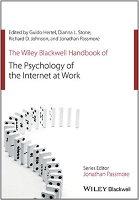
Hertel, G., Stone, D., Johnson, R., & Passmore, J. (Eds.). (2017). The Wiley Blackwell Handbook of the Psychology of the Internet at Work. Chichester: Wiley-Blackwell. Zum Buch / To the book
Hertel, G., van der Heijden, B., De Lange, A., & Deller, J. (Guest Eds.). (2013). Facilitating age diversity in organizations – part I: Challenging popular misbeliefs. Special issue of the Journal of Managerial Psychology, 28(7/8), 729–856.
Hertel, G., van der Heijden, B., De Lange, A., & Deller, J. (Guest Eds.). (2013). Facilitating age diversity in organizations – part II: Managing perceptions and interactions. Special issue of the Journal of Managerial Psychology, 28(7/8), 857–972.
Hertel, G., Binnewies, C., Krumm, S., Holling, H., & Kleinmann, M. (Eds.). (2013). Imagine the future world: How do we want to work tomorrow? Abstract proceedings of the 16th EAWOP Congress 2013. Münstersches Informations- und Archivsystem multimedialer Inhalte (miami). URN: urn:nbn:de:hbz:6-66399491491
Hertel, G. (Guest Ed.). (2011). Excellence in teams: How to achieve performance gains in working groups. Special issue of the Journal of Managerial Psychology, 26(3), 176–258.
Antoni, C., & Hertel, G. (Eds.). (2009). Team innovation, knowledge and performance management: Requirements for different types of teamwork. Special issue of the European Journal of Work and Organizational Psychology, 18(3), 251–379.
Deller, J., & Hertel, G. (Gasthrsg.). (2009). Demographic change in work organizations. Sonderheft der Zeitschrift für Personalpsychologie, 8(2).
Konradt, U., & Hertel, G. (2007). Telekooperation und virtuelle Teamarbeit. München: Oldenbourg.
Hertel, G., & Konradt, U. (Hrsg.). (2004). Human Resource Management im Inter- und Intranet. Göttingen: Hogrefe.
Konradt, U., & Hertel, G. (2002). Management virtueller Teams – Von der Telearbeit zum virtuellen Unternehmen. Weinheim: Beltz.
Hertel, G. (Hrsg.). (2000). Motivation gains in groups. Englischsprachiges Sonderheft der Zeitschrift für Sozialpsychologie. Bern: Huber.
Lamers, C., Röseler, S., Kirsch, J., Hertel, G., & Thielsch, M. T. (2021). Der Corona-Marathon: Was war für Krisenstäbe in der COVID-19-Pandemie hilfreich? Notfallvorsorge – Zeitschrift für Bevölkerungsschutz und Katastrophenhilfe, 52(2), 4–12. [PDF]
Hertel, G., & Meeßen, S. M. (2020). Wie Technologien das Vergessen unterstützen – und warum das wichtig ist. Wirtschaftspsychologie aktuell, Heft 1/2020, 38–42. https://www.psychologenverlag.de/Produkte/dCatID/162/pid/761/backLink/Produkte__catID__162
Breuer, C., Hüffmeier, J., & Hertel, G. (2017). Vertrauen per Mausklick: Wie Vertrauen in virtuellen Teams entstehen kann. Personal Quarterly, 69(2), 10–16.
Hüffmeier, J., & Hertel, G. (2012). Erfolgreich verhandeln: Das integrative Phasenmodell der Verhandlungsführung. Psychologische Rundschau, 63(3), 145–159.
Gehring, F., & Hertel, G. (2011). Antezedenzien und Konsequenzen von Dienstleistungsqualität in der Universitätsverwaltung. Zeitschrift für Arbeits- und Organisationspsychologie, 55(2), 57–73.
Wittchen, M., Kleinlein, N., & Hertel, G. (2011). Zielvereinbarungen und Kommunikationsmanagement als komplementäre Führungsstrategien in virtuellen Teams. Wirtschaftspsychologie, (3). Themenheft „Kooperation im virtuellen und globalen Kontext“.
Deller, J., & Hertel, G. (2009). Demographic change in work organizations. Zeitschrift für Personalpsychologie, 8(2), 1–2.
Gehring, F., & Hertel, G. (2009). Dienstleistungsqualität in öffentlichen Verwaltungen. Zeitschrift Führung + Organisation, 78(6), 268–275.
Grube, A., & Hertel, G. (2008). Altersbedingte Unterschiede in Arbeitsmotivation, Arbeitszufriedenheit und emotionalem Erleben während der Arbeit. In J. Wegge, E. Frieling & K.-H. Schmidt (Hrsg.), Alter und Arbeit. Sonderheft der Wirtschaftspsychologie, 10, 18–29.
Rossnagel, C., & Hertel, G. (2006). Altersbedingte Unterschiede in Inhalten und im Zustandekommen von Arbeitsmotivation und Arbeitszufriedenheit. Zeitschrift für Arbeitswissenschaft, 60(3).
Orlikowski, B., Hertel, G., & Konradt, U. (2004). Führung und Erfolg in virtuellen Teams: Eine empirische Studie. Arbeit, Heft 1/2004, 33–47.
Konradt, U., Hertel, G., & Behr, B. (2002). Interkulturelle Managementtrainings – Eine Bestandsaufnahme von Konzepten, Methoden und Modalitäten in Deutschland. Zeitschrift für Sozialpsychologie, 33, 197–207.
Konradt, U., Vibrans, O., König, C.-D., & Hertel, G. (2002). Wirksamkeit und Akzeptanz eines Videos zur Erstunterweisung in Arbeitssicherheit. Zeitschrift für Arbeits- und Organisationspsychologie, 46, 78–88.
Hertel, G., & Bless, H. (2000). „On-line“ und erinnerungsgestützte Urteilsbildung: Auslösefaktoren und empirische Unterscheidungsmöglichkeiten. Psychologische Rundschau, 51, 19–28.
Hertel, G., Bretz, E., & Moser, K. (2000). Freiwilliges Arbeitsengagement: Begriffsklärung und Forschungsstand. Gruppendynamik und Organisationsberatung, 31, 121–140.
Hertel, G., Dünnfründ, T., Filsinger, I., Guggenberger, A., Klinkner, A., Kraft, A., Schultz-Amling, D., & Moser, K. (1998). Entwicklung eines Leitbilds für ein mittelständisches Unternehmen. Zeitschrift für Arbeits- und Organisationspsychologie, 42, 158–165.
Eisbach, S., Heghmanns, M., & Hertel, G. (2022). Künstliche Intelligenz im Strafverfahren am Beispiel von Kriminalprognosen. Zeitschrift für Internationale Strafrechtswissenschaft, Heft 7–8/2022, 489–496.
Müller, L. S., Meeßen, S. M., Thielsch, M. T., Nohe, C., Riehle, D. M., & Hertel, G. (2020). Do not Disturb! Trust in Decision Support Systems improves work outcomes under certain conditions. In MuC '20: Proceedings of the Conference on Mensch und Computer 2020 (pp. 229–237). New York: ACM. https://doi.org/10.1145/3404983.3405515
Heckersbruch, C., Öksüz, A., Walter, N., Becker, J., & Hertel, G. (2013). Vertrauen und Risiko in einer digitalen Welt. Hamburg: Deutsches Institut für Vertrauen und Sicherheit im Internet.
Orlikowski, B., Hertel, G., & Konradt, U. (2003). Erfolgreiche virtuelle Teams: Beobachtungen aus der Praxis. Harvard Business Manager, Heft 5/2003, 18–19.
Hertel, G. (2002). Motivation in Gruppen: Kann Teamarbeit die Arbeitsmotivation zusätzlich steigern? Wirtschaftspsychologie, Heft 2, 15–21.
Hertel, G., & Konradt, U. (2001). Führung von und in virtuellen Teams. Personalführung, 34, 40–45.
Hertel, G., Orlikowski, B., & Konradt, U. (2001). Virtuelle Teams erfolgreich managen. Wirtschaftspsychologie, Heft 4, 28–34.
Reiners, S., Müller, L. S., Becker, J., & Hertel, G. (2026). Trust Matters: The Role of Trust and Intentional Forgetting for Information Systems in Organizations. In J. O. Berndt, M. Grum, K. Göbel, & A. Kluge (Eds.), Intentional Forgetting with Intelligent Systems: Developing Dynamic Capabilities for Work and Organizations (Progress in IS, pp. 63–82). Cham: Springer. https://doi.org/10.1007/978-3-032-17621-9_4 [Open Access]
Rettagliata, G., van 't Klooster, J. W., Hertel, G., & Bondarouk, T. (2026). When algorithms sit at the negotiation table: Employer branding, ethics, and social robots in human-centered talent management. In R. Marcão, V. Ribeiro, F. Martinho, & I. Reis (Eds.), Employer Branding, Ethics, and Talent Management for Human-Centered Organizations (pp. 265–298). IGI Global Scientific Publishing. https://doi.org/10.4018/979-8-3373-9255-4.ch010
Hertel, G., Fisher, S. L., & Van Fossen, J. A. (2025). Motivated trust in AI: An integrative model considering multiple stakeholder views in HRM. In B. Murray, J. H. Dulebohn, D. L. Stone, & K. M. Lukaszewski (Eds.), Research in Human Resource Management: The Future of Human Resource Management (pp. 123–161). Emerald Publishing. https://doi.org/10.1108/979-8-88730-816-620251005 [Open Access]
Wilhelmy, A., Hertel, G., & Köhler, T. (2022). Qualitative methods for studying age and work. In H. Zacher & C. W. Rudolph (Eds.), Age and Work: Advances in Theory, Methods, and Practice (pp. 202–218). Routledge (SIOP Organizational Frontiers Series).
Höddinghaus, M., & Hertel, G. (2021). Trust and Leadership: Implications of Digitization. In B. Blöbaum (Ed.), Trust and Communication. Findings and Implications of Trust Research (pp. 185–206). Cham: Springer Nature. https://doi.org/10.1007/978-3-030-72945-5_9
Hertel, G., & Hüffmeier, J. (2020). Temporal stability of effort gains in teams. In S. J. Karau (Ed.), Individual motivation within groups: Social loafing and motivation gains in work, academic, and sports teams (pp. 109–148). New York: Academic Press.
Hertel, G., Meeßen, S. M., & Höddinghaus, M. (2020). Trust in the Context of e-HRM. In T. Bondarouk & S. Fisher (Eds.), Encyclopedia of Electronic HRM (pp. 76–81). Berlin: De Gruyter Oldenbourg. https://doi.org/10.1515/9783110633702-012
Hüffmeier, J., & Hertel, G. (2020). Effort losses and effort gains in sports teams. In S. J. Karau (Ed.), Individual motivation within groups: Social loafing and motivation gains in work, academic, and sports teams (pp. 223–258). New York: Academic Press.
Gärtner, L. U. A., Nohe, C., & Hertel, G. (2019). Lifespan perspectives on individuals’ effort in work teams. In B. B. Baltes, C. W. Rudolph, & H. Zacher (Eds.), Work across the lifespan (pp. 437–454). London: Academic Press.
Hertel, G., & Zacher, H. (2018). Managing the aging workforce. In D. S. Ones, N. Anderson, C. Viswesvaran, & H. K. Sinangil (Eds.), The SAGE Handbook of Industrial, Work, & Organizational Psychology (2nd ed., Vol. 3, pp. 396–428). Thousand Oaks, CA: Sage.
Hertel, G., Stone, D., Johnson, R., & Passmore, J. (2017). The Psychology of the Internet at Work. In G. Hertel, D. Stone, R. Johnson, & J. Passmore (Eds.), The Wiley Blackwell Handbook of the Psychology of the Internet at Work (pp. 1–18). Chichester: Wiley-Blackwell. [Link]
Hertel, G. (2016). Motive-congruency and person-environment fit of aging workers. In N. Pachana (Ed.), Encyclopedia of Geropsychology. Singapore: Springer Science+Business Media. https://doi.org/10.1007/978-981-287-080-3_235-1
Kanthak, J., & Hertel, G. (2016). Trust Fostering Competencies in Asynchronous Digital Communication. In B. Blöbaum (Ed.), Trust and Communication in a Digitized World (pp. 177–189). Cham: Springer International Publishing.
Mazei, J., & Hertel, G. (2016). Trust in Electronically Mediated Negotiations. In B. Blöbaum (Ed.), Trust and Communication in a Digitized World (pp. 191–204). Cham: Springer International Publishing.
Hertel, G., & Orlikowski, B. (2015). Project management in distributed virtual teams. In M. Wastian, L. von Rosenstiel, M. A. West, & I. Braumandl (Eds.), Applied Psychology for Project Managers (pp. 305–322). Berlin: Springer.
Hertel, G., & Hüffmeier, J. (2014). Teamarbeit: Wirkmechanismen und Rahmenbedingungen. In H. Schuler & K. Moser (Hrsg.), Lehrbuch Organisationspsychologie (5., vollständig überarbeitete Aufl., S. 219–262). Bern: Huber.
Hertel, G. (2013). Zusammenarbeit mittels elektronischer Medien: E-Leadership und virtuelle Teams. In W. Sarges (Hrsg.), Management-Diagnostik (4. Aufl., S. 162–171). Göttingen: Hogrefe.
Hertel, G., & Stamov-Rossnagel, C. (2013). Reconstruction methods: Using episodic memory traces to capture experiences at work efficiently. In A. B. Bakker & K. Daniels (Eds.), A day in the life of a happy worker (pp. 100–113). London: Psychology Press.
Hertel, G., Thielgen, M., Rauschenbach, C., Grube, A., Stamov-Roßnagel, C., & Krumm, S. (2013). Age differences in motivation and stress at work. In C. Schlick, E. Frieling, & J. Wegge (Eds.), Age-differentiated work systems (pp. 119–147). Berlin: Springer. https://doi.org/10.1007/978-3-642-35057-3_6
Krumm, S., & Hertel, G. (2013). Knowledge, Skills, Abilities and Other Characteristics (KSAOs) for Virtual Teamwork. In A. Bakker & D. Derks (Eds.), The Psychology of Digital Media and Work (pp. 80–99). East Sussex, UK: Psychology Press.
Hertel, G., & Lauer, L. (2012). Führung auf Distanz und E-Leadership – die Zukunft der Führung? In S. Grote (Hrsg.), Die Zukunft der Führung (S. 103–118). Berlin: Springer.
Gnambs, T., Batinic, B., & Hertel, G. (2011). Internetbasierte psychologische Diagnostik. In L. F. Hornke & M. Amelang (Hrsg.), Enzyklopädie der Psychologie, Psychologische Diagnostik 3, Leistungs-, Intelligenz- und Verhaltensdiagnostik (S. 447–498). Göttingen: Hogrefe.
Hüffmeier, J., & Hertel, G. (2011). Creativity in negotiations. In M. Benoliel (Ed.), Negotiation excellence: Successful deal making (pp. 79–98). Hackensack, NJ: World Scientific Publishing.
Hertel, G., & Orlikowski, B. (2009). Projektmanagement in ortsverteilten „virtuellen“ Teams. In M. Wastian, I. Braumandl & L. von Rosenstiel (Hrsg.), Angewandte Psychologie für das Projektmanagement. Berlin: Springer.
Hertel, G., & Schroer, J. (2008). E-HRM: Personalarbeit mit netzbasierten Medien. In B. Batinic (Hrsg.), Lehrbuch Medienpsychologie (S. 449–476). Heidelberg: Springer.
Hertel, G., & Wittchen, M. (2008). Work motivation. In N. Chmiel (Ed.), An Introduction to Work and Organizational Psychology. A European Perspective (2nd ed., pp. 29–55). Oxford: Blackwell.
Hertel, G. (2007). Management virtueller Teams. In H. Schuler & K.-H. Sonntag (Hrsg.), Handbuch der Arbeits- und Organisationspsychologie (S. 713–722). Göttingen: Hogrefe.
Schulz-Hardt, S., Hertel, G., & Brodbeck, F. (2007). Gruppenleistung und Leistungsförderung. In H. Schuler & K.-H. Sonntag (Hrsg.), Handbuch der Arbeits- und Organisationspsychologie (S. 698–706). Göttingen: Hogrefe.
Hertel, G., & Scholl, W. (2006). Grundlagen kooperativer Arbeit. In B. Zimolong & U. Konradt (Hrsg.), Ingenieurpsychologie. Enzyklopädie der Psychologie (Bd. D-III-2, S. 181–216). Göttingen: Hogrefe.
Hertel, G. (2005). Die Frage der Mitarbeitermotivation bei Gruppenarbeit. In Digitale Fachbibliothek Führungspraxis – Motivieren, Kooperieren, Führen. Düsseldorf: Symposion Publishing.
Hertel, G., Schroer, J., Batinic, B., Konradt, U., & Naumann, S. (2005). Kommunizieren schüchterne Menschen lieber per E-Mail? Einflüsse der Persönlichkeit auf die Präferenz von Kommunikationsmedien. In K.-H. Renner, A. Schütz & F. Machilek (Hrsg.), Internet und Persönlichkeit (S. 134–147). Göttingen: Hogrefe.
Geister, S., Konradt, U., & Hertel, G. (2004). Online-Feedback für virtuelle Teams. In W. Bungard, B. Koop & C. Liebig (Hrsg.), Psychologie und Wirtschaft leben. Aktuelle Themen der Wirtschaftspsychologie in Forschung und Praxis (S. 471–476). München: Rainer Hampp Verlag.
Hertel, G., & Konradt, U. (2004). Human Resource Management im Inter- und Intranet: Inhalte und Überblick. In G. Hertel & U. Konradt (Hrsg.), Human Resource Management im Inter- und Intranet (S. 9–15). Göttingen: Hogrefe.
Hertel, G., & Konradt, U. (2004). Führung aus der Distanz: Steuerung und Motivierung bei ortsverteilter Zusammenarbeit. In G. Hertel & U. Konradt (Hrsg.), Human Resource Management im Inter- und Intranet (S. 169–186). Göttingen: Hogrefe.
Hertel, G., Orlikowski, B., Jokisch, W., Schöckel, D., & Haardt, C. (2004). Entwicklung, Durchführung und Evaluation eines Basistrainings für virtuelle Teams bei der Siemens AG. In G. Hertel & U. Konradt (Hrsg.), Human Resource Management im Inter- und Intranet (S. 313–325). Göttingen: Hogrefe.
Konradt, U., & Hertel, G. (2004). Personalauswahl, Platzierung und Potenzialanalyse mit internetbasierten Verfahren. In G. Hertel & U. Konradt (Hrsg.), Human Resource Management im Inter- und Intranet (S. 55–71). Göttingen: Hogrefe.
Konradt, U., Hertel, G., & Joder, K. (2004). Der Callcenter-Aptitude-Test (C-A-T). In W. Sarges & H. Wottawa (Hrsg.), Handbuch wirtschaftspsychologischer Verfahren (S. 225–227). Lengerich: Pabst.
Geister, S., Konradt, U., & Hertel, G. (2003). A group development system for improving motivation, performance and team climate in virtual teams. In D. Harris, V. Duffy, M. Smith, & C. Stephanidis (Eds.), Human-centred computing: Cognitive, social and ergonomic aspects (pp. 719–723). Mahwah, NJ: Erlbaum.
Hertel, G. (2003). Gewinn oder Verlust von Motivation durch Gruppenarbeit? In C. H. Antoni, E. Eyer & J. Kutscher (Hrsg.), Das flexible Unternehmen. Arbeitszeit, Gruppenarbeit, Entgeltsysteme (Kap. 2.13, S. 1–12). Wiesbaden: Gabler.
Hertel, G., Konradt, U., & Orlikowski, B. (2003). Ziele und Strategien von E-Assessment aus Sicht der psychologischen Personalauswahl. In U. Konradt & W. Sarges (Hrsg.), E-Recruitment und E-Assessment. Rekrutierung, Auswahl und Beurteilung von Personal im Inter- und Intranet (S. 37–54). Göttingen: Hogrefe.
Konradt, U., Lehmann, K., Boehm-Ruprecht, J., & Hertel, G. (2003). Internet-gestützte Personalarbeit für Anwerbung, Auswahl, Entwicklung und Business Reengineering: Ein empirischer Überblick. In U. Konradt & W. Sarges (Hrsg.), E-Recruitment und E-Assessment. Rekrutierung, Auswahl und Beurteilung von Personal im Inter- und Intranet (S. 105–124). Göttingen: Hogrefe.
Hertel, G. (2002). Management virtueller Teams auf der Basis sozialpsychologischer Theorien: Das VIST Modell. In E. H. Witte (Hrsg.), Sozialpsychologie wirtschaftlicher Prozesse (S. 172–202). Lengerich: Pabst.
Hertel, G., Naumann, S., Konradt, U., & Batinic, B. (2002). Person assessment via Internet: Comparing online and paper-and-pencil questionnaires. In B. Batinic, U.-D. Reips, & M. Bosnjak (Eds.), Online Social Sciences (pp. 115–133). Berlin: Hogrefe.
Kerr, N. L., Hertel, G., & Messé, L. A. (2001). Motivation gains in performance groups: Explorations of the Köhler effect. In R. K. Silbereisen & M. Reitzle (Hrsg.), Bericht über den 42. Kongress der Deutschen Gesellschaft für Psychologie (S. 135–150). Lengerich: Pabst Science Publishers.
Hertel, G., Kerr, N. L., & Messé, L. A. (2000). Revisiting the Köhler effect: Does diversity enhance group motivation and performance? In S. Stumpf & A. Thomas (Eds.), Diversity and group effectiveness (pp. 320–337). Lengerich: Pabst Science Publishers.
Hertel, G. (1999). Mood and cooperation: What we know so far. In M. Foddy, M. Smithson, S. Schneider, & M. Hogg (Eds.), Resolving Social Dilemmas: Dynamic, Structural, and Intergroup Aspects (pp. 227–244). Philadelphia: Psychology Press.