What’s in Compost? One Topic, Many Perspectives
On October 23, the ZIN Salon “Compost” took place with strong participation from academia and the field
Through the “ZIN Salon” format, the Center for Interdisciplinary Sustainability Research (ZIN) at the University of Münster regularly creates space for interdisciplinary dialogue. In internal colloquia, individual topics are discussed collectively, different disciplinary perspectives are brought together, and opportunities for collaboration are explored—including, when necessary, the involvement of external experts and partners from the field.
On October 23, 2026, a ZIN Salon focusing on the topic of “compost” took place. The three-hour workshop centered on the question of how scientific perspectives on composting can be expanded to include issues from the social sciences and humanities. The workshop’s content was primarily designed by ZIN members Prof. Bodo Philipp and Dr. Friederike Gabel and was co-organized and moderated by ZIN staff members Dr. Tobias Gumbert and Fynn Schmidt. The goal was to bring together different theoretical approaches, research questions, and methods and to explore possibilities for an interdisciplinary project.
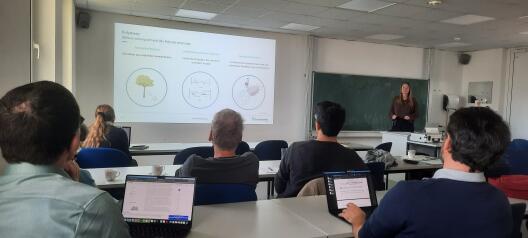
Prof. Bodo Philipp and Dr. Friederike Gabel kicked off the ZIN Salon, including a presentation by the latter on the significance of plastics in agriculture and forestry. Marie Winter from the Fraunhofer Institute then provided insights into European regulations governing biodegradable polymers and explained the differences between the terms “bio-based,” “biodegradable,” “compostable,” and “ecotoxicologically safe.”
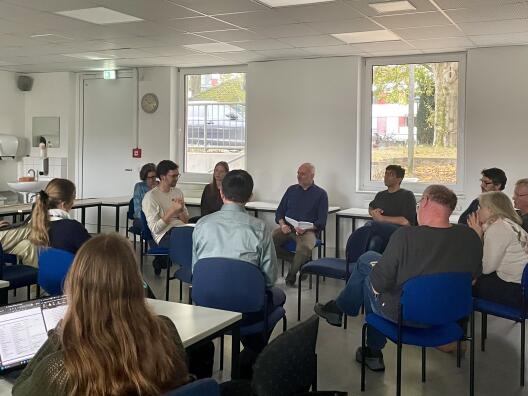
The workshop then centered on a fishbowl discussion in which all participants—including ZIN members from the fields of microbiology, ecotoxicology, landscape ecology, psychology, political science, and geography, as well as partners from the field—actively participated. Topics discussed included why people compost, what learning and behavioral processes may be associated with it, and whether it leads, for example, to changes in shopping behavior. The societal conditions necessary for sustainable activities were also discussed, and it became clear overall just how diverse the scientific questions surrounding composting are.
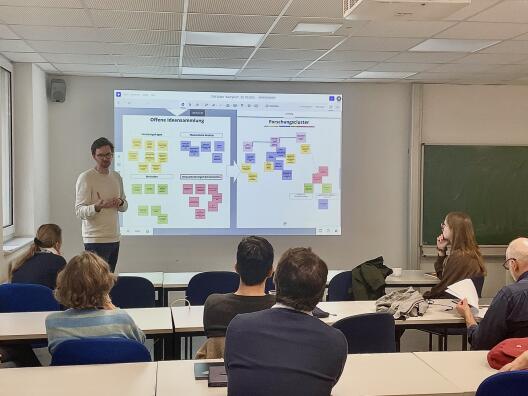
In conclusion, the various perspectives from academia and practice were brought together, and potential points of connection for further collaboration were discussed. This exchange is expected to give rise to an interdisciplinary research project that addresses and integrates the different perspectives on composting—the ZIN Salon “Compost” laid a fertile foundation for cross-disciplinary collaboration.