

Battery Technologies for Drones and Other Applications: Challenges in the Aerospace Industry
Electrification has long since reached the aerospace industry as well. At the same time, it poses unique challenges for development: As a central key technology, batteries must offer high energy and power densities while keeping weight as low as possible, meet high safety standards, and ensure efficient thermal management. These factors significantly determine the range and performance of drones and Co. In the latest MEET Academy Online, Dr Martin Pulst, Head of Laboratory at EAS Batteries GmbH, and Dr Johannes Kasnatscheew, Head of the Research Division Materials at MEET Battery Research Center at the University of Münster, explained the technological advances currently being made and the solutions emerging for various applications.
The Best Solution for Demanding Applications
In his presentation “Custom Cell and Battery Development from Prototype to Certification,” shows Dr Martin Pulst the wide range of custom-designed cells offered by EAS Batteries GmbH. The company is one of the few European manufacturers that develops lithium ion-based energy storage systems from the cell to the complete battery system and manufactures them. The focus is on custom-made cylindrical cells, e.g., for the aerospace industry. Project partners include the ESA and NASA. The Thuringian company holds several patents for energy storage systems that must withstand extreme environmental and temperature conditions. “Our in-house pilot production line enables rapid evaluation and implementation of new technologies,” says Pulst, explaining the advantages of the Nordhausen location. The battery systems developed by EAS are used in launch vehicles, high-performance drones, aircraft, and high-performance satellites.
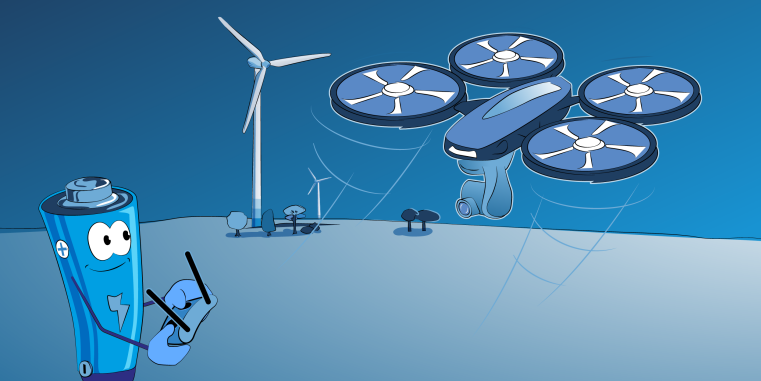
Dr Johannes Kasnatscheew outlined the key challenges in developing batteries for drone applications during the second lecture of the MEET Academy Online. “One of the biggest hurdles is the weight of the cells. Unlike in electric mobility, batteries in aerospace must not only provide the energy for propulsion but also for the lift that is constantly required,” said the MEET scientist. He emphasized that the perfect all-rounder battery, one that simultaneously combines high gravimetric energy density, high power, low heat generation, long lifetime, maximum safety, and economical manufacturing costs, will not be available anytime soon. Instead, the challenge lies in finding the best compromise between these requirements for each application. “Current research approaches focus primarily on maximizing gravimetric energy and power density. Unfortunately, factors such as cost and lifetime have to take a back seat for now. It would be even more challenging for manned applications,” Kasnatscheew summarized.
Next MEET Academy Online in Autumn 2026
The 25th MEET Academy will take place in Autumn 2026. The topic will be announced soon. The MEET Academy, which is free of charge, is organized by MEET Battery Research Center at University of Münster.