
New Research Project Examines the Instrumentalization of History by Far-Right Ideologies
Prof. Dr. Thorsten Quandt, together with international partners, has received a grant from the Volkswagen Foundation for the project “Manipulation of the Past.”
(10.07.2026) How do far-right actors use historical narratives to reach young people and shift democratic discourse? This question is the focus of the new research project “Manipulation of the Past: Far-Right Ideologies and the Weaponization of History” (MAP), which is funded by the Volkswagen Foundation with approximately 1.3 million euros as part of the program “Transformational Knowledge on Democracies in Transition.”
The four-year project investigates how far-right groups in Germany, Italy, and Spain strategically draw on the legacy of Nazism, fascism, and the Franco regime to spread revisionist historical narratives, influence public debates, and appeal specifically to young audiences. The focus is on the interplay between online and offline spaces. Among other things, the study examines the extent to which platforms such as TikTok, YouTube, Telegram, 4chan, Facebook, and X contribute to the dissemination and amplification of such narratives.
The international consortium combines perspectives from communication studies, computer science, sociology, and ethnography. In addition to large-scale data and narrative analyses (large language models and network analyses), the project employs methods such as computer vision, interviews, focus groups, and ethnographic observations. The aim is to shed light on how revisionist content is created, how it spreads in digital public spheres, and how young people perceive these narratives in their everyday lives.
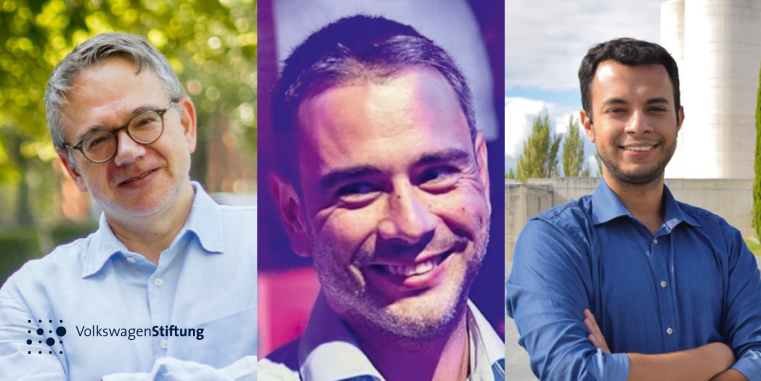
The project is led by Prof. Dr. Thorsten Quandt. International partners include Prof. Dr. Walter Quattrociocchi from Sapienza University of Rome and Dr. Mathias Felipe De Lima Santos from Pompeu Fabra University in Barcelona. In addition, the project collaborates with civil society and digital organizations, including RED ACOGE, Complexium, and DataNinja.
The project’s goal is to translate scientific findings into practical knowledge. Plans include policy briefs, teaching modules, and media literacy toolkits designed to support teachers, policymakers, and civil society actors in promoting critical thinking and strengthening democratic structures in the digital age.
The “SYNDIKAT” project was approved just last May. In light of this dual funding, the University of Münster is also reporting in detail on both projects.
Contact person public relations:
Dr Stephan Völlmicke
Telefon: +49 251 83-23006
Telefax: +49 251 83-21310 (Geschäftszimmer IfK)