Teach4Sustainability Showcased at EUROGEO 2026
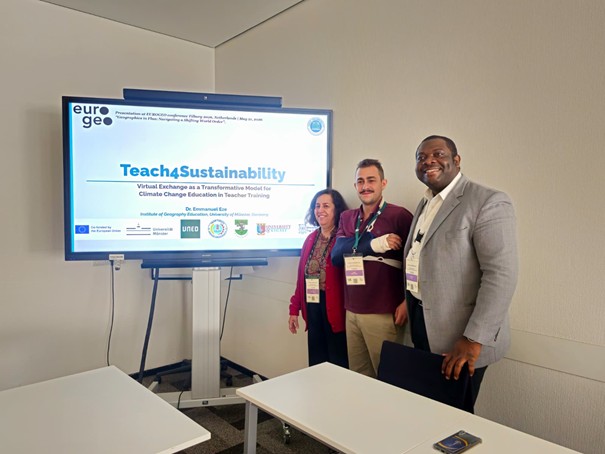
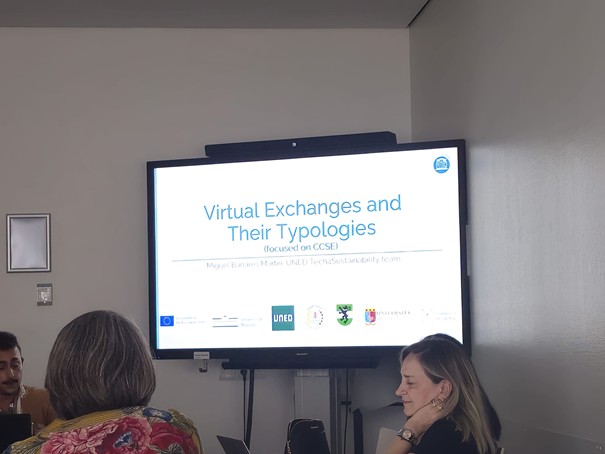
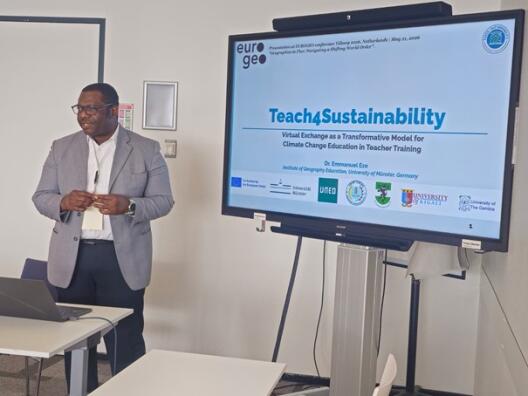
Teach4Sustainability was presented at the EUROGEO 2026 Annual Meeting and Conference in Tilburg, The Netherlands, through two complementary contributions from the German and Spanish partner teams.
The German team presented “Teach4Sustainability: Virtual Exchange as a Transformative Model for Climate Change Education in Teacher Training,” introducing the project’s vision, partnership structure, and approach to strengthening sustainability education across Europe and Sub-Saharan Africa. Complementing this, the Spanish partner team contributed with a presentation on “Virtual Exchanges and Their Typologies,” offering important conceptual insights into how virtual exchange can support intercultural dialogue, collaborative learning, global competence, and sustainability-oriented pedagogy.
Together, both presentations positioned Teach4Sustainability as an emerging model for connecting teacher educators, students, and institutions across borders in response to shared climate and sustainability challenges.
Teach4Sustainability Featured in The New Times Rwanda
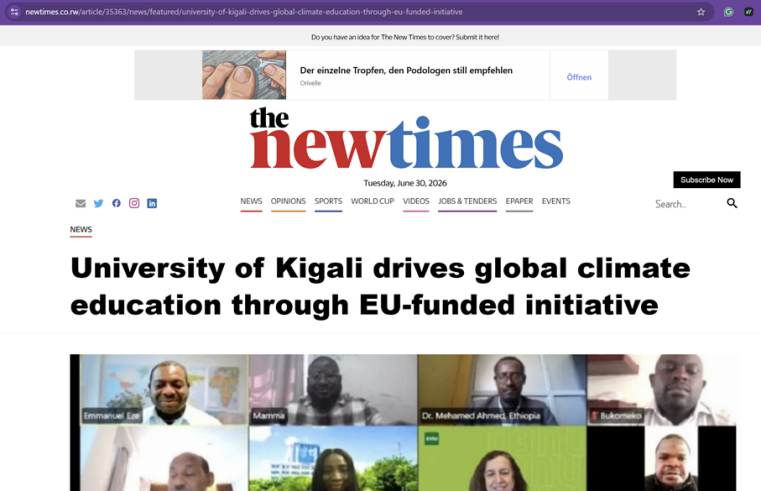
Teach4Sustainability received public visibility in Rwanda through a feature article in The New Times, highlighting the University of Kigali’s role in advancing global climate education through the EU-funded Erasmus+ initiative. The article presented the project as a collaborative effort to strengthen climate change and sustainability education through virtual exchange, digital tools, and intercultural teacher training.
This media coverage marks an important step in raising awareness of the project’s goals in Rwanda and beyond, especially its ambition to prepare future teachers with the knowledge, skills, and pedagogical tools needed to address climate and sustainability challenges. The New Times article was published on 6 May 2026 under the title “University of Kigali drives global climate education through EU-funded initiative.”
Second Kick-off Meeting Advances Work Package Planning (17 April 2026)
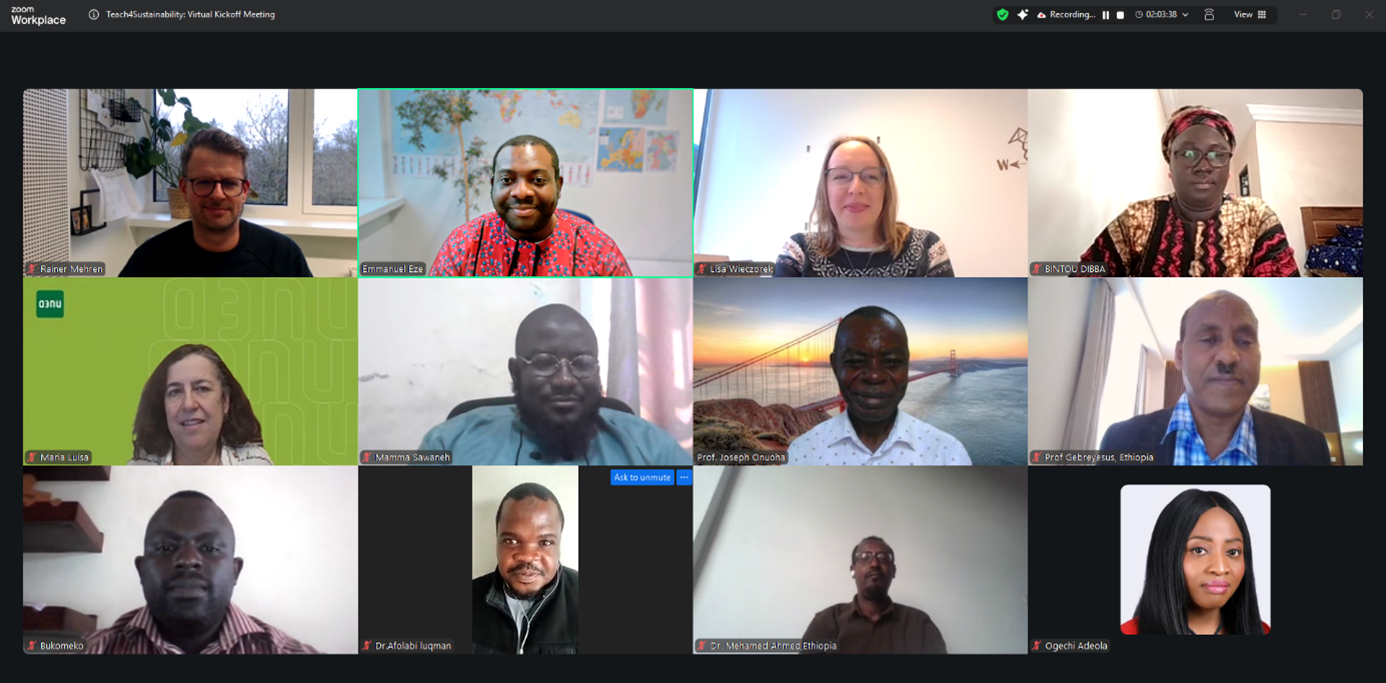
The second Teach4Sustainability kick-off meeting took place virtually on 17 April 2026, focusing on operational planning and implementation. Partners reviewed governance arrangements, adopted the project tracker, discussed work package timelines, and agreed on immediate steps for project management, needs assessment, curriculum development, and documentation.
A major focus of the meeting was the launch of WP2: Multi-Country Needs Assessment, including survey instruments, expert interviews, and digital infrastructure audits across partner countries. Partners also began early preparatory work for WP3: Curriculum Co-Development, including module planning, reviewer identification, and alignment of key milestones.

Teach4Sustainability Holds First Virtual Kick-off Meeting (10–12 February 2026)
The Teach4Sustainability consortium held its first virtual kick-off meeting from 10–12 February 2026, officially launching the Erasmus+ Virtual Exchange project. Over three days, partners introduced their institutions, clarified project roles, reviewed the 36-month implementation plan, and established governance, communication, ethics, and project management structures.
The meeting created a shared foundation for collaboration across the consortium and prepared partners for the next phase of detailed work package planning. Key outcomes included confirmed governance structures, agreed communication protocols, a shared understanding of work package responsibilities, and an action plan for the first months of implementation.
About the Projekt
Teach4Sustainability is an Erasmus+ Virtual Exchange project designed to strengthen Climate Change and Sustainability Education (CCSE) in teacher training through intercultural, digitally facilitated collaboration between Europe and Sub-Saharan Africa.
The project connects teacher trainees, educators, and institutions across Germany, Spain, Ethiopia, Nigeria, Rwanda, and The Gambia through structured virtual exchanges that promote shared learning, critical reflection, and action-oriented sustainability education.
By combining digital pedagogy, intercultural dialogue, and problem-based learning, Teach4Sustainability equips future teachers with the skills, confidence, and global perspectives needed to act as sustainability change agents in their classrooms and communities.
Project Objectives
Teach4Sustainability is guided by a set of interlinked objectives aimed at strengthening climate and sustainability education within teacher training across diverse contexts. The project seeks to generate a robust understanding of existing educational needs and digital readiness across partner regions, while supporting the co-development of context-sensitive learning approaches.
Also, the project places strong emphasis on capacity building for educators and facilitators, fostering meaningful intercultural engagement, and reaching a broad cohort of teacher trainees through structured digital collaboration. In parallel, the project is designed to ensure that its outcomes remain accessible and sustainable beyond the funding period through carefully curated educational resources.
Why Teach4Sustainability?
Climate change presents uneven risks and impacts across regions, yet education systems often respond in fragmented and unequal ways. In many Sub-Saharan African contexts, sustainability education remains under-resourced, while in Europe, teacher training programmes frequently lack sustained engagement with Global South perspectives and lived realities.
Teach4Sustainability addresses this gap by fostering equitable educational exchange, encouraging mutual learning across regions, and embedding intercultural dialogue and climate justice perspectives into teacher education. Rather than treating sustainability as an abstract topic, the project emphasizes shared learning processes grounded in collaboration and reciprocity.
Project Methodology
Teach4Sustainability adopts a digitally mediated, learner-centered approach grounded in established educational theories that emphasize experience, reflection, and transformation. The project uses virtual exchange as a central pedagogical framework, enabling participants to engage across borders through a combination of real-time and flexible digital interactions.
Learning is organized in small, intercultural groups to support dialogue, collaboration, and peer learning, while delivery formats are designed to remain inclusive, mobile-friendly, and accessible in low-bandwidth environments. Through a mix of guided interaction, collaborative tasks, and reflective practice, the methodology supports both pedagogical development and intercultural competence.
Project Funding Information
- Programme: Erasmus+ Virtual Exchanges in Sub-Saharan Africa
- Call: ERASMUS-EDU-2025-VIRT-EXCH-SSA
- Project Acronym: Teach4Sustainability
- Project Number: 101251923
- Duration: 36 months
- Funding Type: Erasmus+ Lump Sum Grant
Project Consortium Partner Universities
Each partner institution contributes unique local expertise, facilitates implementation, and supports institutional embedding of project outcomes.