
Joint Institute for Conflict Analysis, Conflict Regulation and Democratic Education (CONCREDE)

The Joint Institute for Conflict Analysis, Conflict Regulation and Civic Education (Concrede) was jointly founded by the Universities of Duisburg-Essen and Münster in 2023 to provide a common umbrella and forum for a variety of research projects and scholars from both universities who study conflicts in pluralist societies.

The researchers involved in Concrede come from the humanities, social sciences and education. They share a common interest in the theoretical and empirical analysis of conflicts in contemporary pluralist societies and in possible ways of regulating them. Concrede focusses specifically on institutions and processes of socialisation and education, since both are understood as sites of the (re)production of conflict, but also as possible points of intervention for conflict regulation.

The establishment of Concrede as a virtual institute is intended to facilitate interdisciplinary and inter-university cooperations and to make research results more widely accessible to the public.

| Article
© © Forschung & Lehre

Conflict culture and compromise in democracy

Prof. Dr. Ute Schneider (University of Duisburg-Essen) and Prof. Dr. Ulrich Willems (University of Münster) have contributed to the academic journal Forschung & Lehre. In an article on a culture of conflict, the two Principal Investigators of the research project “Cultures of Compromise” examine the role of intransigence and red lines in the search for ways of regulating conflicts. The historian and the political scientist emphasize the indispensable role of compromises in modern democracies. At the same time, compromises entail concessions and are therefore unpopular with voters who insist on having their interests prevail. History, too, offers reflections on the relationship between compromise and standing firm by one’s own convictions, for example in the United States: How far can one depart from one’s moral principles when the other side insists on slavery? And what happens when the consequence is a civil war? The article in the July issue of the journal of the German Association of University Professors and Lecturers (Deutscher Hochschulverband) addresses these and other questions. 

| Article in "Politik & Kultur"
© © Politik&Kultur

Prof. Dr. Ulrich Willems on Compromise in Democracies

Diversity of opinion is an integral part of a pluralist democracy – but there must likewise be ways of regulating conflicts between differing views. Compromise is one possible means of doing so. Reaching a compromise requires all sides to make concessions and to give up some of their ideas about what the ideal outcome would be. In a contribution to Politik & Kultur, Prof. Dr. Ulrich Willems (University of Münster) describes how compromise shapes everyday political life, while often being perceived as a sign of weakness by voters. Why its public image needs to be improved and how both the public and political actors themselves can contribute to this can be found in the article.

| Paneltalk in Berlin
© Birte Ruhardt

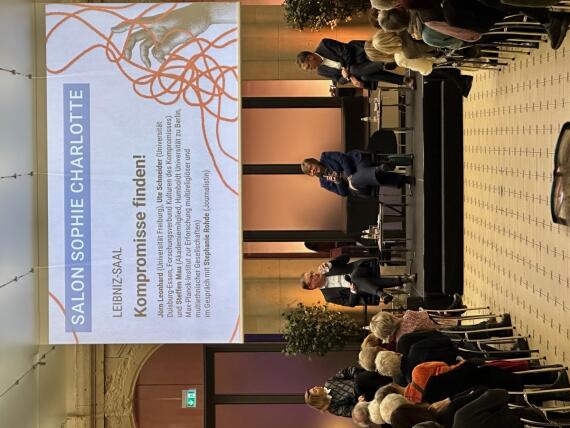
Salon Sophie Charlotte: Paneltalk on Compromise

The Berlin-Brandenburg Academy of Sciences and Humanities invites guests to the Salon Sophie Charlotte every year. In January, experts came together to discuss on “Resolving Conflicts!” as part of this meeting point for science, the arts, and an interested public.
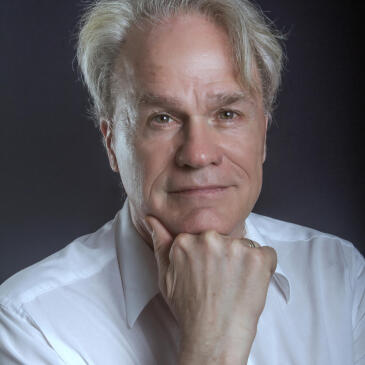
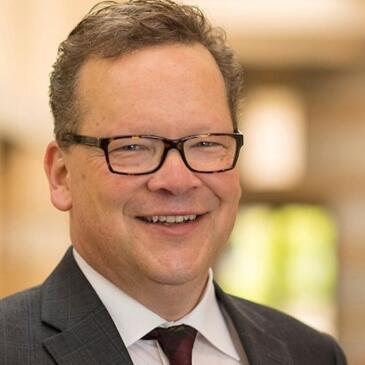
Historian Prof. Dr. Ute Schneider, head of the research project “Cultures of Compromise,” also took part in the Salon. Together with Prof. Dr. Jörn Leonhard, a historian with expertise in the history of war and peace, and Prof. Dr. Steffen Mau, a sociologist, she discussed conflict resolution through compromise, how compromises are reached in practice, and how they can be designed to ensure that they last.
The panel discussion in the Academy’s Leibniz Hall was moderated by journalist Stephanie Rohde. The recording of the panel talk can be watched on the Gerda Henkel Foundation’s L.I.S.A. science portal.

© © James Green

Pulic Lecture: James N. Green (Brown University): “Brazil’s Long Struggle: Dictatorship, Conflict, and the Challenges of Plurality”

In a lecture on November 20, 2024, the historian James N. Green, shared his knowledge of Brazil's history since the 1964 military coup and its ongoing impact on the country’s political landscape. The focus was particularly on agonal pluralities – not only within opposing political camps but also within the opposition to the dictatorship itself, which was notably shaped by the ‘Generation 77’.

© Donahue

New Fellow: Prof. William Donahue (University of Notre Dame, Indiana)

From May to July 2024, Professor William Collins Donahue will be a Visiting Fellow at the Research Network "Cultures of Compromise" and the "Agonistic Plurality"-Project.

Prof. Donahue is Cavanaugh Professor of Humanities at the University of Notre Dame in Indiana (USA), where his research interests include German Studies, Contemporary European Studies, Holocaust Studies and German-Jewish Studies in the College of Arts and Letters. He has been a guest at the UDE on several occasions and edits the yearbook "andererseits: Yearbook of Transatlantic German Studies" together with Prof. Georg Mein and Prof. Rolf Parr.

You can contact Professor Donahue here: William.C.Donahue.36@nd.edu 

For more information please visit the "Cultures of Compromise"

© Christian Thein

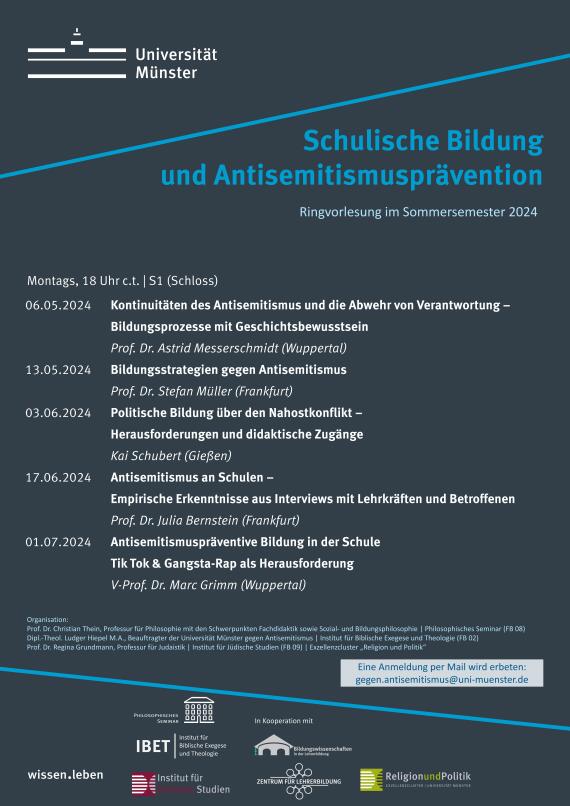
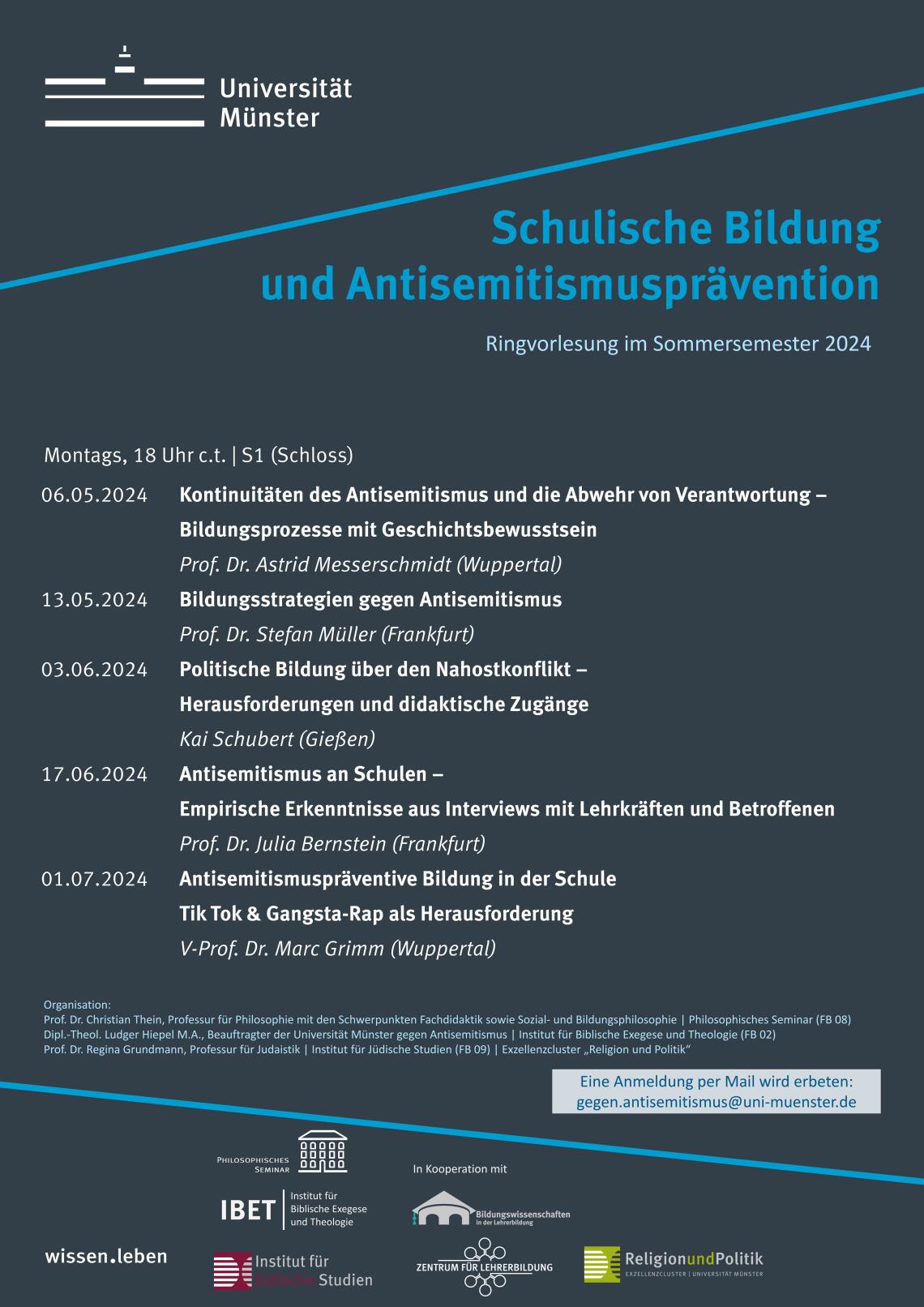
Lecture series "School Education and Antisemitism Prevention" (in German)

Christian Thein, Ludger Hiepel and Regina Grundmann are organising a lecture series on "School education and Antisemitism Prevention" (in German) this summer. You can find the full programme here. Please register by email at gegen.antisemitismus@uni-muenster.de.

© Le Figaro

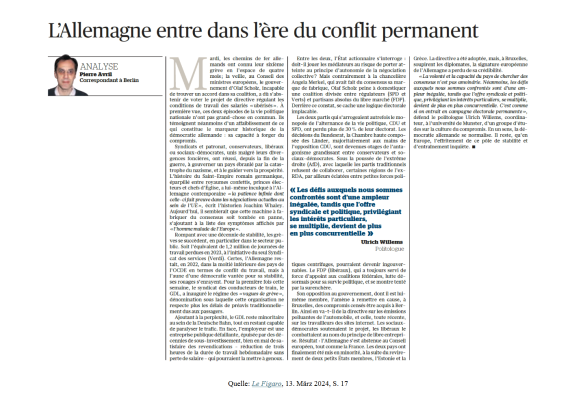
Interview with Prof. Dr Ulrich Willems in “Le Figaro”

The French daily Le Figaro has published a commentary on the current practice of compromise in Germany. The article is based on an interview with Prof. Dr. Ulrich Willems by the journalist Pierre Avril (Le Figaro correspondent in Berlin). Read the article here (French language).

© Concrede

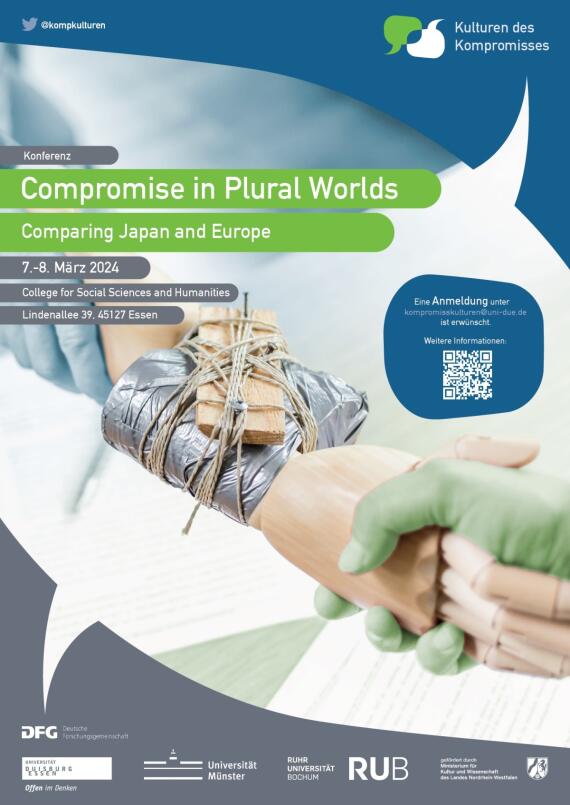
International Workshop: „Compromise in PLural Worlds"

On 7 and 8 March 2024, the conference "Compromise in Plural Worlds" took place in Essen, organised by Dr Jan-Hendryk de Boer, Mariko Jacoby and Dr Manon Westphal. Speakers from Japan, Great Britain, the Netherlands and Germany from the fields of history, literature, sociology and political science were invited. The key question was what role compromises played in Japan at different times and in different constellations. Preliminary results of the discussion can be found on the website of the "Cultures of Compromise" research network. The full programme of the workshop is available here.

© privat

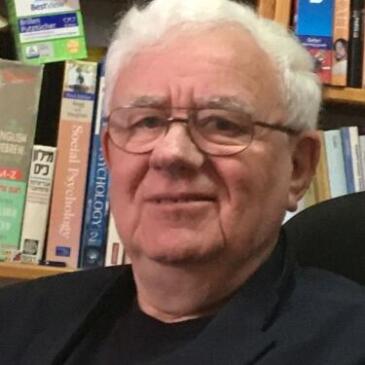
Münster and Essen host Daniel Bar-Tal

From 22 to 25 January 2024, Prof. em. Daniel Bar-Tal (School of Education/Tel Aviv University) will teach a master class for students and present his new monograph at the University of Münster. At the University of Duisburg-Essen, a workshop offers further exchange concerning his research.