3D Laboratory
Photos

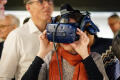
© Archäologisches Museum/Yannick Oberhaus 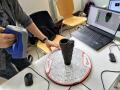
If the digital copies have been created on a computer, the originals found at archaeological sites can remain in the country concerned.© Archäokogisches Museum/bn 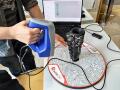
The handheld scanner is mainly used on archaeological excavations.© Archäologisches Museum/bn 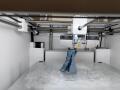
Real objects can be created from the digitised files (virtual objects) using a 3D printer.© Archäologisches Museum/bn 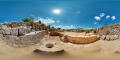
© Archäologisches Museum/Yannick Oberhaus


In the 3D laboratory at the Archaeological Museum, objects from the collection can be captured in three dimensions in order, amongst other things, to create and archive digital twins for the purposes of cultural heritage protection. Using two laser scanners and the ‘structure-from-motion’ method, objects in the museum and from the University’s excavations can be digitised. The handheld scanner is used directly on site during artefact processing at excavation sites. Whilst the originals thus remain in their respective countries of origin, the digital copies are available worldwide.
The 3D laboratory is increasingly being used in teaching to train students in the use of the equipment and, furthermore, to impart additional skills in the field of digital humanities. In addition to training on the scanners, seminars and practical sessions are offered in the fields of 3D modelling and visualisation. The 3D laboratory thus also serves as a space for experimentation, where not only are best-practice methods further developed, but new avenues can also be explored, for example when experimenting with 3D printers. Furthermore, new research questions can be generated within the individual disciplines, linking three-dimensional digitalised objects with IT applications.
Within the museum itself, three different VR stations are now in use, offering visitors the opportunity to virtually explore digital reconstructions or the excavation site at Doliche.