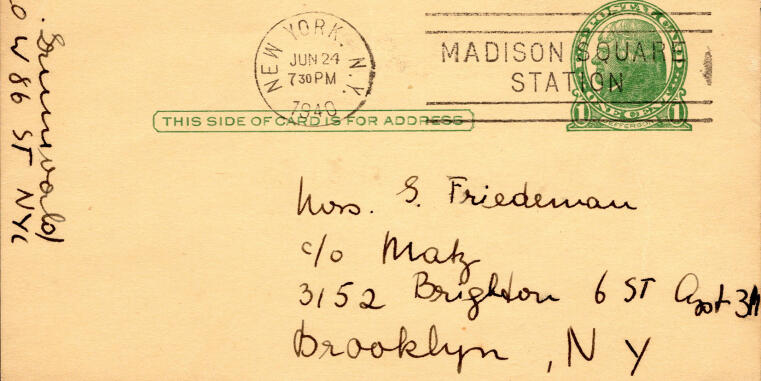
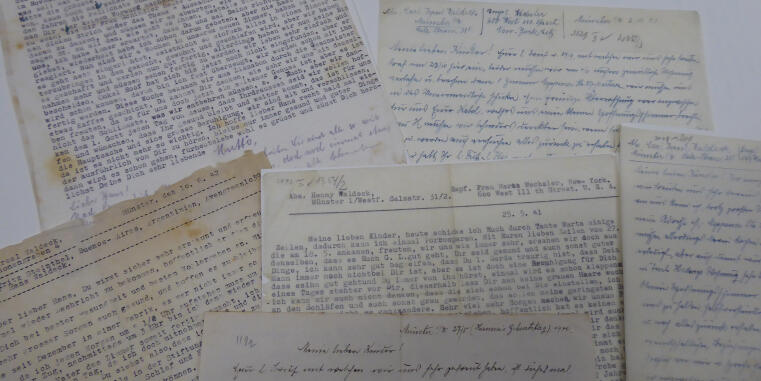
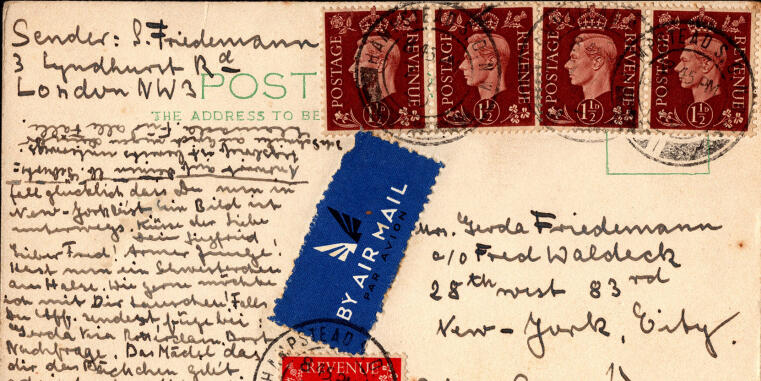

The «Exile Letters» project catalogues, edits and comments on first-person documents of Jewish-German history. The focus is on the correspondence of Jewish families from Münster, in which emigrated and fled family members endeavoured to maintain contact with their relatives in Germany. The letters of the fugitives tell of flight and new beginnings in exile, of the challenges, hopes and fears. The letters from Münster address the repression and persecution of the Jewish community by the Nazis, the precarious living conditions and the fear of deportation. The edition project transfers transcriptions of the mostly handwritten letters into XML files, which are labelled according to TEI standards (Text Encoding Initiative). They are accompanied by a facsimile view, a translation into English and detailed annotations and can be accessed using a variety of navigation and search functions.

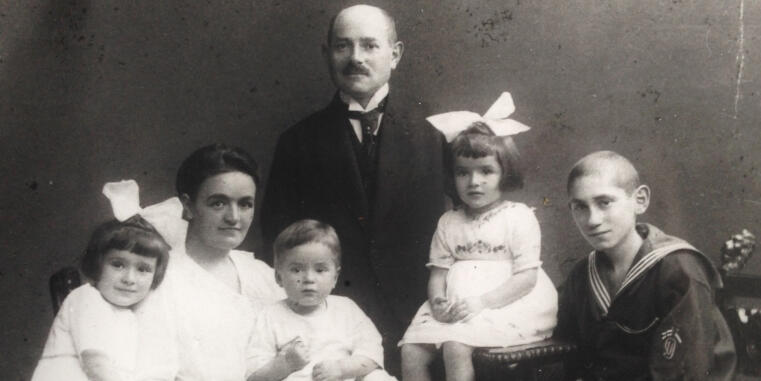
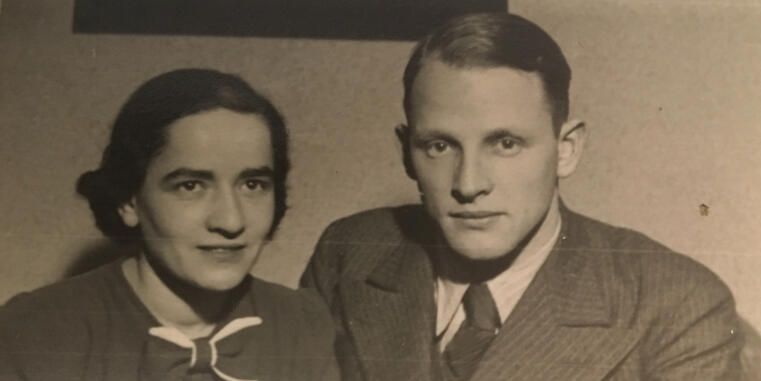
The «Friedeman-Waldeck» collection comprises a total of 162 testimonies of Jewish-German history from the period of National Socialist persecution. The majority of the extant letters were written by the Jewish teacher and cantor Simon Friedeman, who lived in exile in England from 1939 to 1942, to his wife Gerda, who fled to the Netherlands in 1939 and shortly afterwards to the USA. The collection also consists of letters that Gerda and her siblings received from their parents Henny and Carl Waldeck, who remained in Münster until they became victims of the Shoah in 1944.

When Gerda Friedeman in 1988 gave the original letters (1940–1941) of her parents, the Jewish merchants Henny and Carl Waldeck, to Gisela Möllenhoff and Rita Schlautmann-Overmeyer for the exhibition “History of the Jews in Münster”, she could not have imagined that these documents would one day become part of a letter edition. Henny and Carl Waldeck could not leave Münster while their children were able to emigrate. The letters they wrote to their children in various parts of the world were digitally edited as part of the “Exile Letters” project developed by the Institute for Comparative Urban History (IStG) and published on the website www.exileletters.de. Letters that Gerda received between 1939 and 1942 from her husband Simon Friedeman, who was living in exile in England, are also part of this edition. The original 162 testimonies of the Friedeman-Waldeck family, separated by flight and emigration during National Socialism, are archived in the Villa ten Hompel, among other places, and can now be found as facsimiles with transcriptions on the aforementioned project website using a variety of navigation and search functions.
Eight decades after the murder of Henny and Carl Waldeck by the National Socialists, three Waldeck descendants from Florida (Ruth Federman Stein), Quebec (Maya Waldeck) and North Carolina (Josh Federman) arrived on December 11, 2024. They wanted to be there when Rita Schlautmann-Overmeyer and Simon Dreher from the IStG presented the “Exile Letters” project and short biographies of the Friedeman and Waldeck families to the public at the Münster Public Library. Various cooperation partners were involved: Cordula Gladrow (Münster Public Library), Carsten Rothaus (Schlaun-Gymnasium), Stefan Querl (Villa ten Hompel) and Peter Worm (Münster City Archive).

Excerpts from the edited letters were presented in an oral reading by students from the social sciences extra course at Schlaun-Gymnasium under the direction of Carsten Rothaus. Clara Zentgraf, Anna Marinca, Emily Herber, Malena Kaiser, Ginta Nekvedaviciute, Hadassah Ma, Jan Rönick and Alexandra Kochetov read selected passages from the correspondence, that impressively testifies to the situation of Jewish people before their deportation on the one hand and to life in exile on the other.

Gerda's daughter, Ruth Federman Stein, summed up: “These letters present new insights into the lives of my parents and grandparents. Our children, grandchildren and great-grandchildren will also learn more about the struggle for survival during the Holocaust and how my parents were finally reunited”. These emotional words were followed by an intensive discussion with the Waldeck descendants.
Projektmanagement: Dr. Angelika Lampen
Academic editor: Rita Schlautmann-Overmeyer M.A.
Responsible for the digital edition: Simon Dreher M.A.
Collaborators: Anna-Lena Schumacher B.A., Markus Breyer B.A., Laura Abramczyk
Cooperation partners: SCDH Münster, Villa ten Hompel, Münster
 |  |