Das Promotionskolleg Empirische und Angewandte Sprachwissenschaft organisiert regelmäßig Veranstaltungen. Neben den Gastvorträgen im Forschungsforum, die öffentlich zugänglich sind, bieten wir für unserere Promovierenden mindestens einmal jährlich Workshops an, die der Vermittlung einschlägiger Arbeitswerkzeuge oder der Vertiefung von Methodenkenntnissen dienen. Zweimal pro Jahr findet zudem das Doktorandenkolloquium statt, in dem die Promovierenden ihre Dissertationsprojekte vorstellen und diskutieren.
Nachwuchstagungen
Alle zwei Jahre organisieren die Promovierenden selbstständig eine Nachwuchstagung, deren Thema sie frei wählen können. Unterstützung erhalten sie im Rahmen der Werkstatt, die von einer Mentorin oder einem Mentor aus der Runde der Lehrenden, in der Regel der Sprecher bzw. die Sprecherin des Promotionskollegs, begleitet wird. Die nächste Konferenz wird im September stattfinden: LinPin 2025
World Englishes Language Teaching and Teacher Education: Connecting Research and Practice
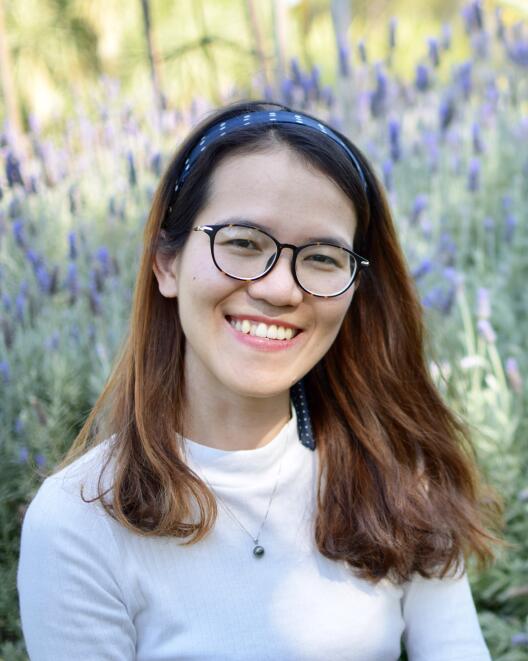
As part of the research forum, Dr. Mai Nguyen ( Manchester Metropolitan University) will give a guest lecture on May 11, 2026, 4 p.m. via Zoom.
Interested parties are cordially invited!
As World Englishes continues to develop as a celebrated field of linguistics and language education research in the current multilingual world, the need to translate and transform its insights into classroom practice has become both pertinent and urgent. This talk argues that engaging with World Englishes not only informs pedagogy, but also invites a rethinking of key assumptions underpinning English language teaching and teacher education. Drawing on my recent work in Vietnam and Indonesia, I present cases of English teachers who have engaged with World Englishes research to reconceptualise not only their classroom practices but also professional thinking. These cases illustrate several important shifts: from viewing English as a fixed, standardised language to understanding it as a pluricentric and socially situated resource; from evaluating learners against native-speaker norms to nurturing contextually effective, multilingual users; and from positioning teachers as consumers of research to recognising themselves as active interpreters and creators of pedagogical knowledge. The talk will highlight how such shifts are engendered through dialogic and co-constructive interactions between teachers and researchers, and manifest in concrete classroom strategies adopted by teachers, including integrating localised English varieties and legitimising students’ home languages and cultures in English lessons. At the same time, persistent challenges, including the powerful influence of native-speaker norms embedded in teaching materials and in dominant beliefs about what it means to be a “good” English learner and user, will be critically examined. By foregrounding both possibilities and tensions, I aim to position teacher education as an enabling space to meaningfully and sustainably connect research and practice in World Englishes.
Option to join on campus: Room 10, Germanistisches Institut, Schlossplatz 34
Interlanguage Phonology: The Acquisition of German Vowels by Italian Adult Learners – Results and Outlook
As part of the research forum, Alexia Despina Leonidou (Philipps-Universität Marburg, University of Verona) will give a guest lecture on May 18, 2026, 4 p.m. Room 10, Germanistisches Institut, Schlossplatz 34
Interested parties are cordially invited!
Interlanguage is, in simple terms, the hybrid language that takes shape during the process of learning a foreign language. It is a unique language - not only because it differs for every individual, but also because it results from a constellation of features belonging to both our linguistic background and the target language. Cross-Linguistic Influence (CLI) is one of the phenomena that most characterizes interlanguage and most closely affects us when speaking a foreign language in our daily lives.
In my talk, I will guide you through an exploration of my doctoral research on Italian-German interlanguage, which, until then, was one of the least researched (European) linguistic constellations. I will present both the process and the results I achieved. Finally, I will explore future perspectives with you, potentially benefiting from your feedback as learners.