
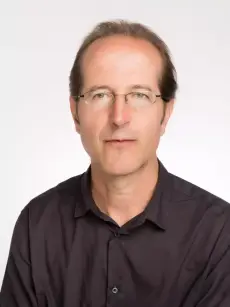
Alexander Alberro
Contemporary Art Between the Regional and the Global
21.07.2017 - 18:00 Uhr c.t.
Juridicum, Hörsaal JUR2 / Lecture Hall JUR2
Im Mittelpunkt meines Beitrags stehen drei grundlegende Fragen. Ist es möglich, die verlorene Verbindung zwischen moderner oder zeitgenössischer Kunst und einer schlüssigen kunsthistorischen Erzählung wiederherzustellen? Zweitens: Lässt sich die Kunst des vergangenen Vierteljahrhunderts strukturell betrachten – das heißt, ist sie um eine Struktur herum organisiert? Und drittens: Gibt es theoretische und praktische Instrumente, die uns helfen könnten, sowohl das Leitprinzip regionaler Traditionen als auch die angebliche Globalisierung der Kunstwelt in den letzten Jahren zu verstehen? Bislang haben die Antworten auf solche entscheidenden Fragen nur eine begrenzte Verbindung zwischen einem regionalen oder nationalen Kunsträum einerseits und einem transnationalen und globalen Kunsträum andererseits hergestellt.
Um diese Trennung zwischen regionaler und transnationaler Kunst im Kontext der Moderne zu überwinden, möchte ich die These aufstellen, dass die Kunst der letzten Jahrzehnte in einem vermittelnden Raum zwischen diesen beiden Polen existiert: einem parallelen Territorium, das relativ autonom vom politischen Bereich ist und sich daher Fragen, Debatten und Erfindungen spezifisch künstlerischer Natur widmet. Hier werden Kämpfe aller Art gemäß einer künstlerischen Logik und in künstlerischen Formen gebrochen, verwässert, verzerrt oder transformiert. Meine Hoffnung ist, dass ausgehend von dieser Hypothese – und unter dem Versuch, all ihre theoretischen und praktischen Konsequenzen zu erfassen – ein Verständnis von Kunst entwickelt werden kann, das sowohl regional als auch transnational ist: mit anderen Worten, ein Konzept, das eine einheitliche Darstellung beispielsweise der Entwicklung neuerer Kunstformen oder der Ästhetik der Kunstwerke und ihrer Verbindung zur politischen, wirtschaftlichen und sozialen Welt liefern könnte.
Die Blumenberg Lectures 2017 sind eine Kooperation der Westfälischen Wilhelms-Universität Münster mit den Skulptur Projekten. Sie werden ermöglicht durch die großzügige Unterstützung der Gerda Henkel-Stiftung, der Universitätsgesellschaft Münster e.V. und der Sparkasse Münsterland Ost.
Herr Alberro wird seinen Vortrag in englischer Sprache halten.
My paper centers around three fundamental questions. Is it possible to reestablish the lost link between modern or contemporary art and a consistent art historical narrative? Second, can the art of the past quarter century be seen in structural terms--that is, is it organized around a structure? And third, are there theoretical and practical tools that could help us to comprehend both the governing principle of regional traditions, and the alleged globalization of the art world in recent years? To date, the answers given to such crucial questions have established only a limited connection between a regional or national art space on the one hand and a transnational and global art space on the other.
In order to move beyond this division between regional and transnational art in the modernist context, I will propose that the art of the past several decades exists in a mediating space between these two poles: a parallel territory, relatively autonomous from the political domain, and dedicated as a result to questions, debates, inventions of a specifically artistic nature. Here struggles of all sorts are refracted, diluted, deformed or transformed according to an artistic logic, and in artistic forms. My hope is that working from this hypothesis, while trying to envisage all its theoretical and practical consequences, an understanding of art that is both regional and transnational can be developed: in other words, a concept that could give a unified account of, say, the development of recent art forms, or the aesthetics of the artworks, and their connection to the political, economic and social world.
The Blumenberg Lectures 2017 are organised by the University of Münster (WWU) in cooperation with the Münster Skulptur Projekte. They are made possible thanks to the generous support provided by the Gerda Henkel-Stiftung, the University Society Münster and the Sparkasse Münsterland Ost.
The lecture will be given in English.