

The digital transformation has not changed our society with a bang, but rather as a “silent revolution” (Bunz 2012): quietly but profoundly. It has penetrated work, education, culture and politics, and today shapes our thinking, actions and decisions in many areas. Algorithms evaluate job applications, AI systems control logistics and transport, and platforms determine which voices are heard in public. These processes open up enormous opportunities – but at the same time they harbour risks of new dependencies and social divisions.
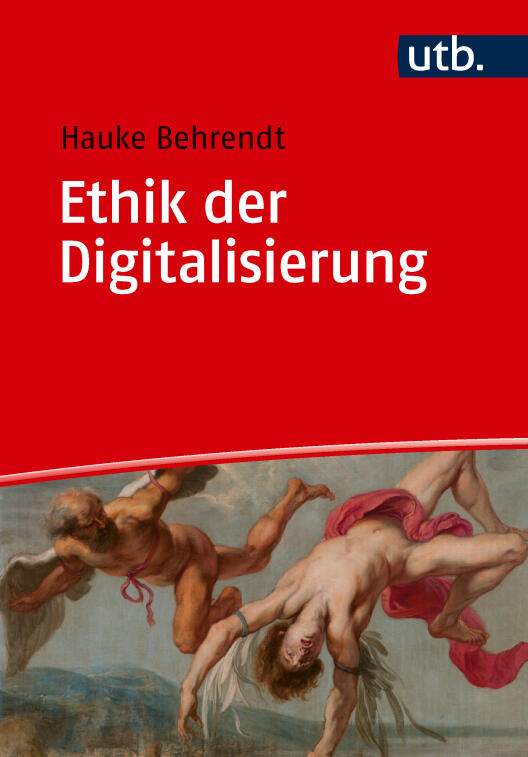
The challenges of the digital transformation are the subject of the book “Ethik der Digitalisierung” (Ethics of Digitalisation) by Hauke Behrendt, currently a senior fellow at the Centre for Advanced Study “Access to Cultural Goods in Digital Change”. Behrendt regards the digital transformation as a complex social creative process that depends heavily on our normative decisions and in which questions of justice, responsibility and control therefore arise again and again. In his new book, he therefore takes a decidedly justice-theoretical perspective and addresses the challenges of the digital transformation as questions of participatory justice, which he understands as the moral ideal of equal and full social participation. “Ethik der Digitalisierung” was published on 8 December 2025 by transcript/utb.
To mark the publication of the book, the Centre hosted a Book Presentation with Hauke Behrendt on 15 December 2025.