Universita degli Studi di Milano | I MILANO01
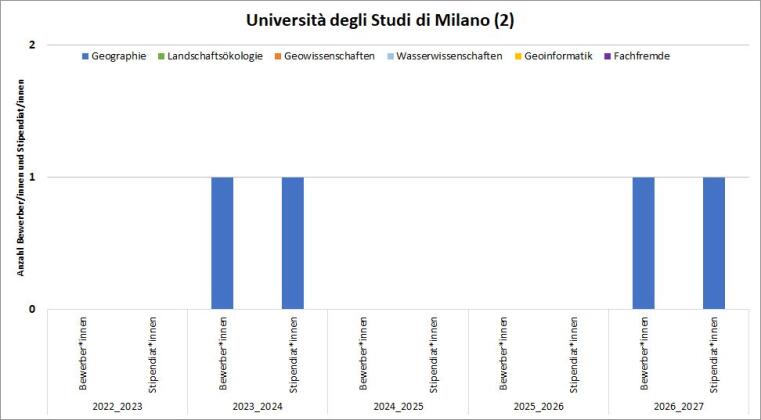
2 spots Geosciences
Information about the university
Partner institute: Dipartimento di Scienze della Terra Ardito Desio
ISCED code: 0532 - Earth sciences | 0521 - Environmental sciences
Language of instruction: Italian; (English)
Language requirement: B1 Italian + B1 English
Areas of specialisation: BA and MA
Links
Department of Cultural and Environmental Heritage
Department of Earth Sciences "Ardito Desio"
Allgemeine Informationen für Incomings
Deadlines and Dates
Academic calendar
first semester: October - January
second semester: March - JuneAutumn term: 30. June
Spring term: 30. November
Advice from former students
Studies
- Courses are selected on campus, in consultation with the Erasmus coordinator
- It is also possible to take courses at other departments
- I took courses in three different departments; since there was no geography program, I took geography courses from various departments
- The organization was a bit chaotic, but the Erasmus coordinator was very dedicated and helpful
- Courses are mostly lectures
- Instructors were very open to finding alternative forms of assessment for Erasmus students, such as writing a paper on a topic instead of taking a written exam in Italian
Life
- ESN Milan comes highly recommended
- Lots of activities, especially at the beginning—a great way to meet people
- Even during the semester, ESN organizes regular trips, for example to one of the lakes, to Switzerland, or cultural events in Milan itself, such as free admission to the Scala or cooking evenings
Housing
- Accommodations in Milan are often very expensive; take advantage of the opportunity to secure a spot in a dorm. You can indicate this on your application. I recommend the Martinitt dorm, though keep in mind: it’s a double room, and the atmosphere is friendly despite the 400 students on campus; the shared kitchen and garden make it easy to get to know people.
Mobility/Public transport
- Atac pass (public transit) for 20 euros per month—very convenient since most people don’t live in the city center and some departments are spread out
- Milan has excellent train connections; I recommend taking lots of day trips—trains in Italy are relatively inexpensive and very reliable
- Long-distance buses, such as Itabus or Flixbus, have a good network
- Lake Como and Lake Maggiore are easily accessible from Milan by train and perfect for a day at the lake
Further information
Support from the host university: helpful, a bit complicated
Fact-Sheet
[As for 22.09.2026]