Welcome to the website of the Economic Geography and Globalization working group!

website under construction

The Economic Geography and Globalization Research Group at the Institute of Geography seeks to tackle – in a collaborative and integrative way – questions in economic geography and globalization research from critical, inter- and post-disciplinary, and decolonial perspectives. Our research focuses on the renegotiation of natural resources; food security and food sovereignty; global financial flows; new technologies; and alternative futures, particularly in rural areas. More broadly, we are interested in reimagining what the “economy” means and is. We engage with these topics by critically asking how we – as a global humanity – can sustain our future on this planet, and what kinds of new, old, diverse, and plural approaches we can tap into moving forward.

  • Who are we?

    As a group, we share an interest in exploring economic practices in their multifaceted social, political, cultural, ecological, and material dimensions. Across our individual projects, we are interested in how economies are made through the everyday activities of people. We seek to understand how the “economy” is sustained, contested, and (re)negotiated – and ask about the possibilities for imagining different forms of living together.

    The topics we work on range from food and agriculture; development, labour, and migration; global financial flows, technology, and digitization; to everyday collective practices and resistance. Across these topics, we address questions of power, inequality, and (inter-)dependency, while looking at the alternative, experimental, and mundane activities through which people seek to sustain themselves and create different futures. Our research spans various places and regions across the world – from Germany to the Mediterranean, the UAE to Australia, and China to Latin America.

    We work mostly with qualitative and ethnographic methods and approach our research “from the ground up.” We also use participatory, engaged, visual, creative, and arts-based approaches and remain mindful of questions of power and positionality, including those we ourselves bring to the field.

    As a group, we value inter- and post-disciplinary exchange, collaboration, and different ways of producing and communicating knowledge. We see research, teaching, and civic engagement as closely connected and seek to create space for diverse perspectives, experiences, and forms of knowledge production and communication.

    While English is our working language, as a team we strongly value multilingualism. Alongside German, we also speak French, Spanish, Arabic, Chinese, and a bit of Italian.


    WG-Team

    Prof'in. Dr. Sarah Ruth Sippel

    Dr. Clara Baumann

    Lukas Dörrie

    Cynthia Gharios

Activities and news

© CIFAR

CIFAR Discovery Program "Capital Flows for Transforming Food Production"

Co-directed by Truzaar Dordi (University of York), Sarah Ruth Sippel (Münster University) and Phoebe Stephens (Dalhousie University)

This program will explore the fundamentals of agriculture and food production, sustainable finance, financial activism and policy and regulation. Members will examine the major Institutional and Informational gaps at different nodes of the food and financial system, from how financial institutions can invest in sustainable food to how an environmentally and socially sustainable food economy translates into real financial and non-financial returns for investors. 

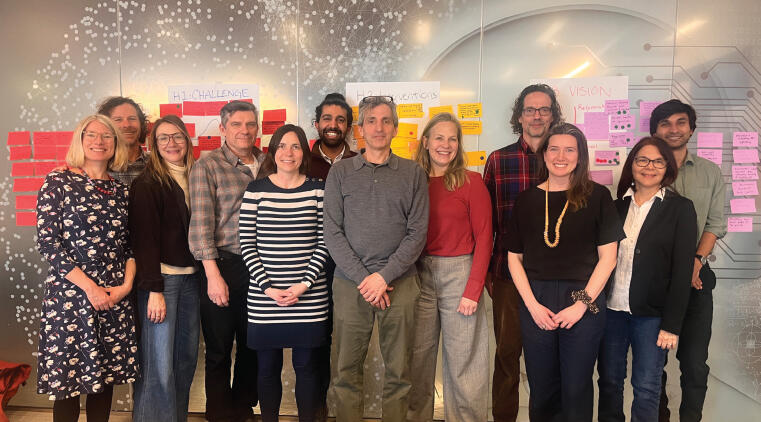
Workshop-Participants
© CIFAR
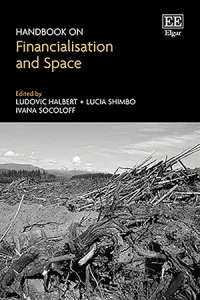
© Edward Elgar

Combining scholars from around the world, this Handbook presents theories, methods and case studies that illuminate the far-reaching role of financial markets in the production of space. Focusing on the role of finance, it critically examines the uneven and conflictual geographies of contemporary capitalism (Edward Elgar).

  • Research projects

    Agtech trajectories: tracing the social life of digital farming technologies

    Capitalizing on Transformation: A Recipe for Sustainable Food Systems

    Diverse economic practices, quiet everyday resistance, and alternatives from the margins

    Farming in unlikely places: Environment and Agriculture Technologies in the United Arab Emirates

    Reconfiguring dependency: Chinese investment and development in Latin America

    Communal Bakehouses: Concrete Fragments of a Rural Community Economy

    (De)coloniality in Tanzanian Geography and what to learn from it

  • WG Economic Geography and Globalization in the research portal of the University of Münster 

Teaching

  • Our approach to teaching

    We aspire to create teaching and learning environments in which students are encouraged to critically, politically, and personally engage with key questions of our time. Inspired by alternative pedagogies, we understand teaching and learning as collaborative processes of knowledge production rather than a one-way transmission of “facts”. We aim to encourage critical reflection on what knowledge means, how it is produced and acquired, and the power dynamics and inequalities embedded in these processes.

    We also seek to create spaces in which conventional roles of teachers and students can be questioned and (re-)negotiated. Students are encouraged to engage critically with the perspectives they encounter – including our own – while learning from one another and valuing the different experiences, perspectives, and competencies they bring to the classroom. In doing so, we aspire to make teaching a process of collective inquiry, critical reflection, and mutual learning.

    We welcome students who are interested in writing their final theses or MAPs on topics related to the research areas outlined above and are happy to discuss potential ideas and projects. More generally, we encourage students who are interested in our ongoing research to reach out to us – whether with a concrete project in mind or simply to learn more about what we do.

  • Example courses

    Here are a few examples of courses we taught in the past or are offering as part of our curriculum:


    Some „flagship“ courses to mention here

    When would this course become relevant during your studies


    Clara Baumann:

    „Globale Ungleichheiten im 21. Jahrhundert - Lateinamerika zwischen China und den USA“ / “Global Inequalities in the 21st Century – Latin America between China and the USA” (Elective class for advanced BA students)

    The aim of this seminar is to create awareness on the increasing inequalities and dependencies across the globe, going beyond mainstream explanations developed in the “global North”. Focusing on Latin America, it traces the socio-economic and political legacies of colonial structures, the subsequent dependencies enhanced by asymmetrical “North-South” hierarchies and economic exchanges, and the changes (or the lack thereof) enhanced by the rapid rise of a “global China”. Conceptually, the seminar discusses diverse approaches to “development” and embeds these into ongoing debates about China´s global rise.

    “Transnationale Arbeitsmärkte und Migrationsdynamiken” / “Transnational labour markets and migration dynamics“ (Elective class for advanced BA students)

    Labour is increasingly organised across national borders. (Multinational) firms are relocating their production along global value chains, while millions of workers are simultaneously migrating to their production sites. This seminar analyses how work is spatially organised, regulated and experienced across borders from a human geography perspective. Regionally, it focuses on China, supplemented by case studies from Europe, Africa, and Latin America.

  • Supervision of final theses

    If you would like to write your Bachelor’s or Master’s thesis with one of us, we ask you to first prepare a short two-page exposé outlining your proposed research question, theoretical approach, empirical methodology, and an initial list of relevant literature. Based on this exposé, we can then discuss your ideas and the project’s feasibility in a personal meeting.

  • Materials for students

    We would like to encourage students to take the following guidelines and information into consideration:  ...

  • Excursions

    As part of our teaching, we also offer excursions that give students the opportunity to engage with the course topics and research questions directly in the field. Past excursions include, for example, one-day excursions to regenerative and community-based-agricultural farms around Münster, a summer school in the region of Molise in southern Italy (tbc) or the Rural Studies Colloquium 2027 in Northern Hesse in cooperation with the Kompost Ensemble e.V.