„Five questions and a cafézinho" with Halvard Gremme
Research-oriented study visit within the framework of a master's module (Molecular Biomedicine) in Rio de Janeiro, through a laboratory collaboration of Prof. Dr. Götte with Prof. Pavão

1. Brazil Centre: How did your study visit in Rio at the UFRJ contribute to your career path?
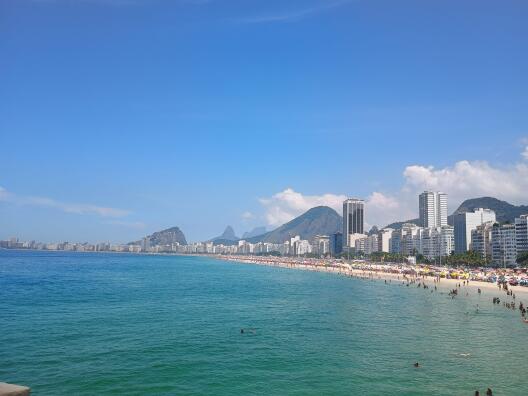
Halvard: Prof. Pavão, who was Prof. Götte's contact and my host, works in medical biochemistry, and up until then I had barely had any points of contact with the topic here in Münster. This way, I got to know a completely new subject area and learned new techniques in the laboratory. Something else I found interesting was seeing how the laboratory is set up in other countries. So, “does it look exactly the same as in Germany, or can you see differences?" And it was really interesting to simply have a new experience and see what it's like in other countries and how people work!
There were indeed big differences. Among other things, I had the feeling that everyone there is just much, much, much more laid-back. But I definitely found that relaxed attitude to be a positive thing. It was great fun working there. There was a lot of chatting, it wasn't just geared towards work, but rather a good mix, so that you don't come out of it with burnout (laughs).
During these 2 months, I worked with algae. I had never done that before. It was really interesting to get to know them as a model organism. We then specialised in extracting two different polysaccharides. And methodologically, I had never worked with that before. So, it was really cool to get to know that and to gain that insight.
At that time, the laboratory, through Prof. Pavão, was in contact with a start-up that was just then in the process of testing a new product, based on these polysaccharides that we extracted. And then they came by for a week and had a look at what we do in the laboratory, and so I also got to meet the people from the start-up. There were also lectures. It was really cool to see how this whole field of research can also be implemented commercially.
2. Brazil Centre: Were there any difficulties or particular challenges during your time in Rio?
Halvard: Before departing, I had tried to learn a bit of Portuguese, because I had also read and heard on the internet that people speak very little English. That was absolutely confirmed. Outside the laboratory, in those entire two months, I met two or three people who could speak a bit of English. Outside the laboratory, English didn't work at all. And in the laboratory, it was fifty-fifty. Some could speak English relatively well, others rather less. Communication was often through gestures or with a translator. But with gestures it worked surprisingly well (laughs).
It was challenging in the laboratory context, especially when they tried to explain new methods to me. Because I could barely speak Portuguese and they could barely speak English, it was always a bit of back and forth.
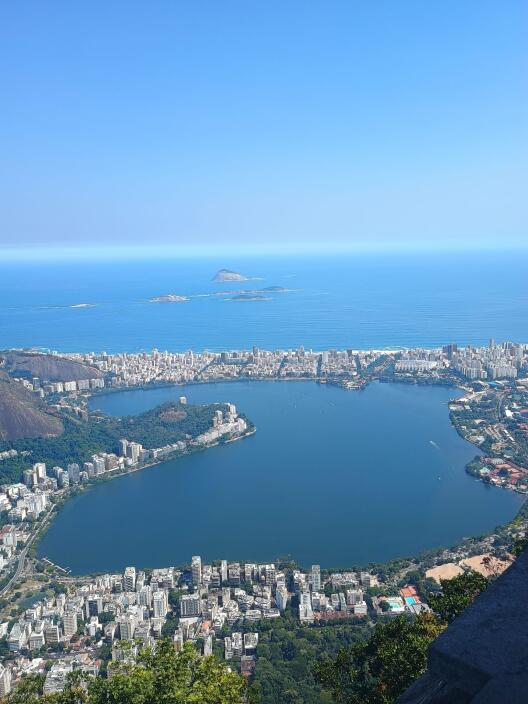
Besides the language, there's one more thing I noticed: riding the bus. I rode the bus quite a lot there. The problem is that on the bus they don't display which stop it's currently at. So, there I'd be sitting on this bus and it would just keep going. At some point you simply no longer know where you are. I also didn't know what the place I needed to get off at looked like. It was always a bit of guesswork whether that had already been my stop or whether I still had to carry on. That was at times a bit annoying, or rather, it was something I first had to get used to.
Finding accommodation wasn't so easy at first either. But I was lucky to receive a lot of support from Prof. Pavão. I could always send him the addresses so that he could then tell me whether it was a safe area. That's one thing that perhaps also wasn't so easy. Especially if you don't have any contact in Rio, I imagine it's quite difficult to find an area that's very safe, but also not necessarily the tourist district, where you then pay three times as much.
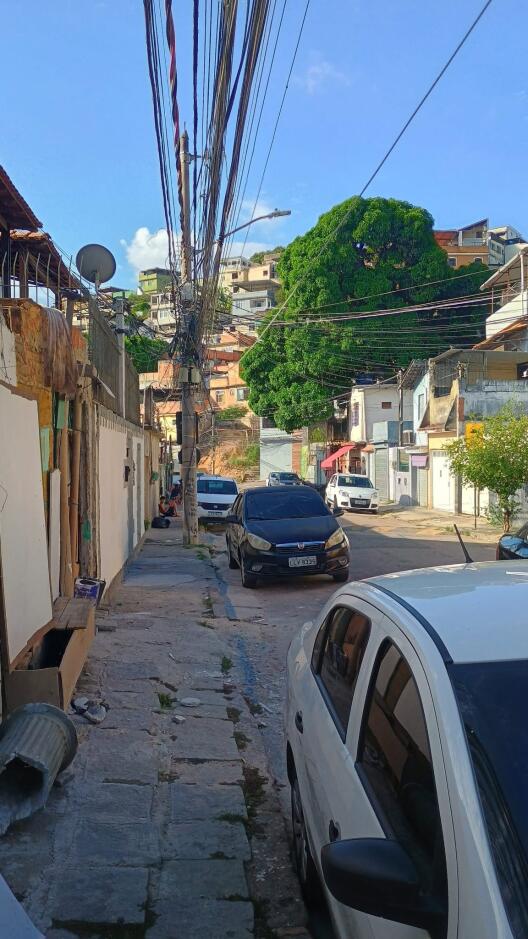
But funnily enough, in the end I did end up living about 10 metres away from one of the biggest favelas. There were also others from the laboratory who lived on that region near me. Because of that, I did end up feeling relatively safe. The lady I lived with was also super nice. She told me right away: “Better not to go there, just avoid the area and everything will be fine". So, I felt relatively quickly at home and safe!
3. Brazil Centre: How did your stay affect you on a personal level?
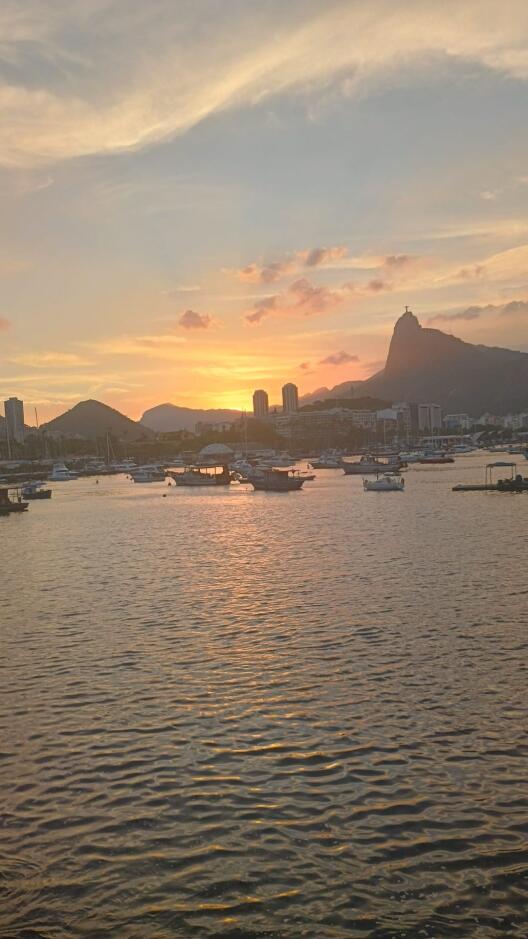
Halvard: I think, because I've now got to know yet another completely new culture. Before, I had never been to South America, always only tralleved through Europe, that was already a really cool experience, and it also broadens one's horizons. When you see: how do people actually live here? What makes up their everyday life? That's really cool. And then you can pick out the best things and perhaps go on to establish them in your own everyday life.
Rio itself is a huge city, and finding your way around there on your own at first and understanding what's actually going on and then coping there on your own. That was also a challenge at first, but you then notice that it's quite doable, and you grow from it!
I also have to say that the people were all super, super nice. When I had questions, I would sometimes approach people with my phone and show them the translation, and they helped me straight away. You're never completely alone there, if you don't want to be. If you need help, you can always ask someone, and then most of the time I got help too!
4. Brazil Centre: Would you recommend a stay, and why?
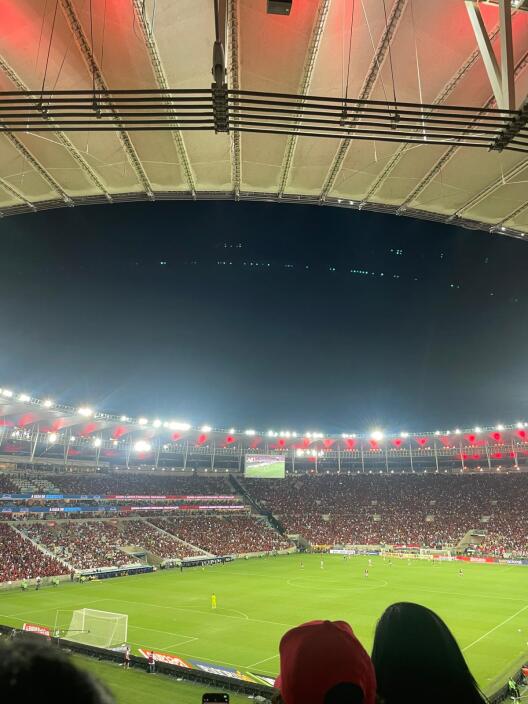
Halvard: Yes, I would definitely recommend it! Especially if it's the first bigger trip you're taking. Simply because you have so many people who can help you with it. I had help from Prof. Götte, who set up the contact for me in Rio. Then Professor Pavão helped me find a flat. I made loads of contacts in the laboratory, who then gave me tips on how best to behave in Rio and what I could best do. They showed me cool places. That already influenced the trip very positively. It made everything considerably easier. Had I had to figure everything out on my own, I probably would hardly have done it.
I'm also still in contact and still messaging with the people I had the pleasure of getting to know there. It's now more on a friendly basis. It's now more than just writing about the laboratory. It's really cool that I also made new friends there!
5. Brazil Centre: Lost or found in Translation? Can you translate this experience into a word, a sentence or a quote?
Halvard: There I would mention the language thing again. That was the biggest point, that I was completely clueless there and at the beginning didn't understand anything at all. When you learn the language yourself and simply say it out loud to yourself, it also sounds three times different than when you hear native speakers, and there I was completely overwhelmed.
And on top of that, this huge city… at the beginning I did feel pretty lost. But as I said, the people from the laboratory helped me a great deal to find my feet there, so that in the end I really wasn't so lost anymore (laughs).
My language basics were then enough for shopping and for asking how someone was doing and so on. But they did give me a slightly odd look at the beginning, because I simply couldn't manage all those intonations.
Brazil Centre: Shall we start our cafézinho moment? As you already know, the cafézinho moment is the moment in which you can tell us about a faux pas, an anecdote or a remarkable story about your experience in Brazil. In short, a story you'd tell over a cup of coffee.
What story did you experience that left a lasting impression during your stay?
Halvard: I think something comes to mind: when I arrived in Rio, I was already looking forward to the new culture and so on. And of course, that also includes testing what the beer tastes like!
And so there I was at the airport, where Prof. Pavão had even picked me up and had already shown me a bit of Rio. The very first thing I saw was, on this huge high-rise building, an enormous ad for a German beer. And I was super astonished that I suddenly arrived in Rio and — I don't know, probably over 9,000 kilometres away, in any case simply many kilometres away — suddenly saw German beer again! That was a bit of a shock moment; I simply hadn't reckoned with that at all, suddenly seeing something German. But I then learned that they also have local beer there, which also tasted quite good!
This beer was also really super prominent there. You constantly saw adverts. At those beach bars, it was very frequent, something sponsored by this beer brand. It's a Bavarian beer brand, by the way. Someone from the laboratory also later told me that quite close to Rio, I think about an hour away by car, there's a traditional German town. She also said that there they sometimes have German festivals. I would have liked to have a look at it, but unfortunately, I didn't manage to travel there.
Special question for the 15th anniversary:
Could you imagine, at some point in the future, doing a PhD or a research stay in Brazil or now also in one of the Latin American countries?
Halvard: To be honest, I'm not sure. I still don't know exactly what I'll do after my masters. But if I do a doctorate, then probably rather in Germany.
It was really fun and was definitely a lovely experience. That's why I'm now already thinking quite a lot about flying to South America once again for a research stay. I had also already looked into what else there is out there. As I already said, biochemistry isn't really my main topic. That's why I'm just now on the lookout for what other laboratories there are. I do a lot more with neurobiology. And so, I'm just now having a look at which countries and what kind of research groups there are.
But as I've now found out, I can also inform myself about it at the Brazil Centre (laughs)! I can definitely imagine that!
Brazil Centre: Halvard, thank you so much for your testimonial! It was a pleasure to read your impressions and see how authentically and lightly you shared your experiences – from the cafézinho moment to the linguistic challenges. We are delighted to hear that you were able to discover so much new ground in Rio de Janeiro and that the laboratory collaboration, along with the personal connections you made, had such a positive impact on your journey. We wish you all the best for your future academic endeavours and hope that the bonds you formed with Brazil and your new friends remain strong!