

Research Meeting on the Refuge Project: Progress and New Directions
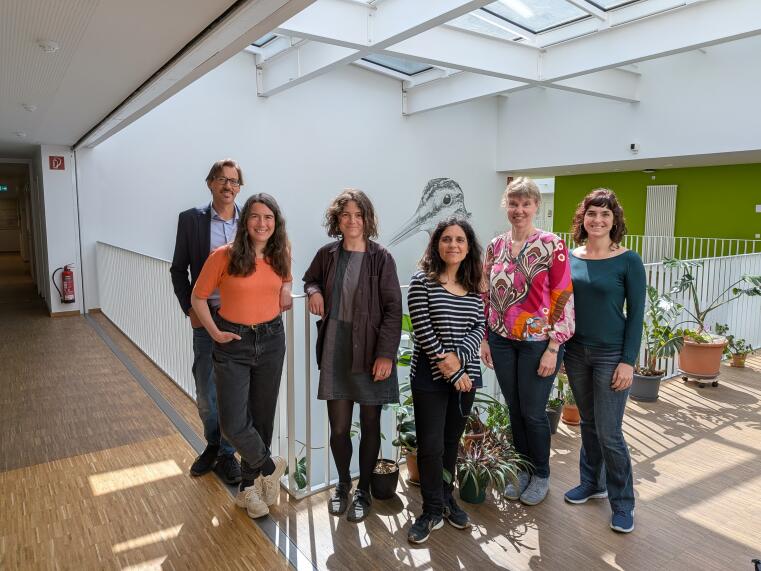
In May 2026, researchers from the universities of Seville, Genoa, Münster, and Bielefeld met in person for the second time—this time in Münster—to discuss the progress of the Refuge project and develop new research ideas. Following the successful launch of the Ulysseus Consortium in November 2025 in Seville, joint activities continued (Homepage: https://sites.google.com/view/refugeforests-de/projekt). Following the Bioblitz event in Seville—a citizen science initiative in which more than 300 citizens and students were actively involved in the research—another event is planned for end of June in Münster. What makes the Münster event unique is that it will be led by master’s students in landscape ecology - under the guidance of Nadja Pernat. Already during the preparation phase, a video message from Genoa by Paolo Giordani, the lichen specialist of the team, greatly inspired the students in Münster.
A special highlight was the field trip through urban and peri-urban forests across the city of Münster, which offered the international team insight into the site-specific ecological characteristics of temperate oak forests. The soil ecologist on the team, Ute Hamer, explained in particular the requirements to which organisms must adapt when living in sites influenced by waterlogging. Here, soils can become extremely dry during summer, while in winter they are often very wet and deprived of oxygen. In this context, Lorenz Ruhl presented first results from his master’s thesis on woodlice and millipedes, two groups that are particularly closely tied to soil conditions. Over the next two days, the team worked intensively on a review article and collaborated on developing ideas for another research project.
The Refuge Project thus continues on an exciting path toward gaining new insights into urban and peri-urban forests as refuges for numerous organisms and developing innovative strategies for their protection and promotion.