

Professor Dr. Hans Beck, FRSC
Director
Hans' work focuses on local and regional encodings of Greek culture, also in relation with the natural environment. For more info, see www.hansbeck.org.
Hans' work focuses on local and regional encodings of Greek culture, also in relation with the natural environment. For more info, see www.hansbeck.org.
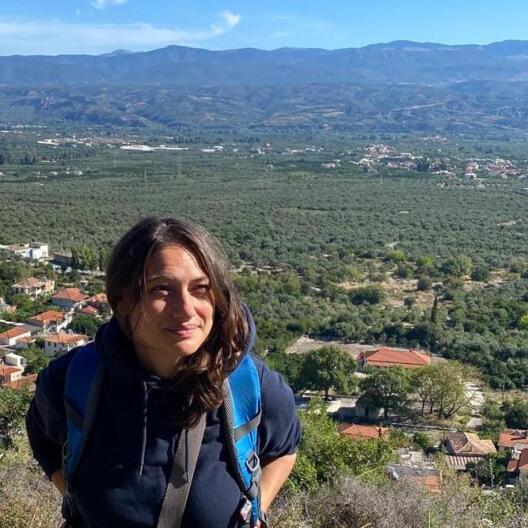
Sophia's work focuses on the interaction of past communities with the natural environment, especially resource acquisition and management. Her book on the silver mines of Laurion captures this vein of research. She is in charge of the Amykles Survey at Sparta that explores the settlement area around the Sanctuary of Apollo at Amyklai and places it in the wider context of habitation in the Eurotas valley.

Sabine works on economic connectivity in Ionia, particularly in Samos and Miletus. She examines how local and regional networks of production and exchange are embedded in social practices and shaped by environmental conditions. Further interests include cross-cultural interaction between Greek communities and local populations in the Black Sea region.

Sam's work focuses on the way in which environment and people interact, and how that interaction plays out in the communities, cultures and behaviours of ancient Greece. He is Professor in Ancient Greek History and Culture at the University of Leeds.

Emma works on ancient Thessaly, and is the author of Blessed Thessaly: The Identities of a Place and its People from the Archaic Period to the Hellenistic (2024). Her research also encompasses various aspects of ancient Greek mythology and religion, especially as reflecting interactions with landscape and natural resources.

Lukas is currently working on his PhD-dissertation, in which he scrutinizes the relationship between early polis communities in Archaic Greece and their natural environments. He is also involved in excavation and survey work at ancient Amyklai. Lukas has recently completed the European Master in Classical Cultures with a thesis on ecocritical readings of Homer’s Odyssey.