
Roman Tiutenko: Ukrainian Diaspora in Bavaria in the 20th Century: Society, Politics, Culture
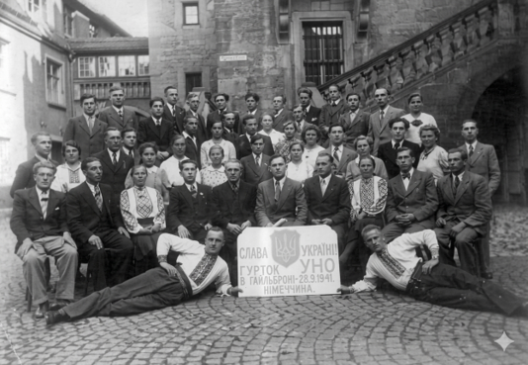
Research into the history of the Ukrainian diaspora in Bavaria during the 20th century is of great significance for understanding migration processes in Germany and Western Europe in general. Bavaria, and Munich in particular, developed into a unique centre of Ukrainian political, academic and cultural life, where after the First World War and, above all, after the Second World War, the leading intellectual figures of the diaspora gathered.
From the beginning of the 20th century, the Ukrainian community in Germany did not form an isolated environment, but rather an effective network of German-Ukrainian initiatives. This is evidenced by the collaborations between Ukrainian professors and the German universities of Munich, Heidelberg and Freiburg; the circle of prominent Ukrainian artists at the Academy of Fine Arts in Munich; the German-Ukrainian Economic Association under the leadership of Josef Pschorr; the German-Ukrainian Society in Berlin; and so on.
The study provides a comprehensive analysis of the life of the Ukrainian community in Bavaria throughout the 20th century – from the first economic migrants at the end of the 19th century and prisoners of war from the First World War, right through to the development of significant academic and educational institutions such as the Ukrainian Free University, the Shevchenko Society, and public institutions, in particular the Ukrainian Women’s Association, the Ukrainian Youth Association and others. The study draws on a wide range of archival materials (the archives of the Ukrainian Free University, the Bavarian Main State Archive, the Munich State Archive, the Central Military Archive of the Republic of Poland, State Archive of the Foreign Intelligence Service of Ukraine, etc.), as well as accounts from memoirs, letters and other sources. This makes it possible not only to reconstruct the political activities of these institutions in detail, but also to analyse the everyday lives of Ukrainians in various eras and the development of women’s, youth, public, cultural and religious organisations.