
The Idea of Occidentalism in Post-World War II Ukrainian Geocultural Discussions
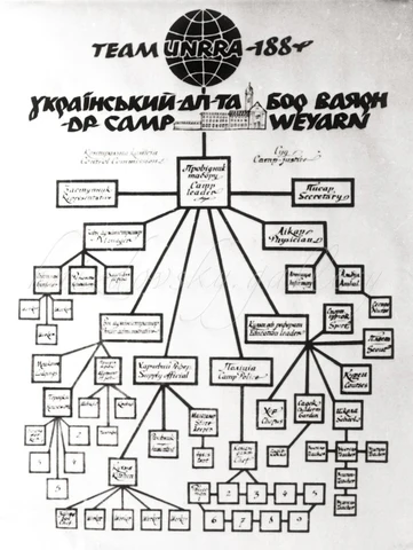
The paper focuses on the concept of Occidentalism as a discursive construction of the West made from the position of the “other” and analyses the intellectual debates in Ukrainian dis placed persons camps between 1946 and 1948 on the “crisis of Europe”. It explores two ver sions of Occidentalism, represented by Volodymyr Yaniv (1908-1991) and Yurii Shevelov (1908 2002), and traces their connection to the concept of the “Asiatic Renaissance” developed by the Ukrainian writer and publicist of the 1920s, Mykola Khvylovy. The paper examines how Ukrainian intellectuals participated in broader postwar debates on the crisis of Europe, Eurocentrism, and decolonisation.
Tamara Hundorova is Principal Research Fellow at the Taras Shevchenko Institute of Literature of the National Academy of Sciences of Ukraine (NAS). She is also a professor and dean at the Ukrainian Free University and Associate of the Harvard Ukrainian Research Institute. In her talk, she will provide insights into her current project, which she currently is working on as a Fellow at the Wissenschaftskolleg: “The Idea of Occidentalism and Post-World War Ukrainian Cultural Imagination (1945–1949).”
The project examines the intellectual debates in Ukrainian displaced persons (DP) camps in 1945–1949 regarding the postwar “crisis of Europe” and how these debates shaped the Ukrainian immigrant culture. It focuses on analyzing the concept of the West within the framework of Occidentalism studies and in the context of 20th-century Ukrainian literature.
An event as part of the Colloquium on Eastern European History, organised in collaboration with the Institute of Slavic Studies.