
Reading by Sofia Andruchowytsch
As part of the Annette von Droste-Hülshoff reading organised by the Cluster of Excellence “Religion and Politics”, Prof. Dr Irina Wutsdorff invites you to a reading with the Ukrainian writer Sofia Andruchowytsch.
You can find all the details on this website or in the leaflet [German].
For further information on the Annette von Droste-Hülshoff reading, please visit the Cluster of Excellence’s website.
Programme
Tuesday, 20 October 2026 | 6.15 pm
Opening
Prof. Dr Wolfram Drews, Spokesperson for the Cluster of Excellence ‘Religion and Politics’Introduction and moderation
Prof. Dr Irina WutsdorffSofia Andruchowytsch reads from her work
Amadoka (2020)Published in German as Die Geschichte von Romana (2023), Die Geschichte von Uljana (2023) and Die Geschichte von Sofia (2024)
The German translations will be read by an actor. The evening will take place in Ukrainian and German. The discussion will be interpreted by Dr Tetyana Dagovych.
A reception will follow.
Venue
The Cluster of Excellence’s lecture theatre building
Room JO 1, Johannisstraße 4,
48143 MünsterAdmission is free.
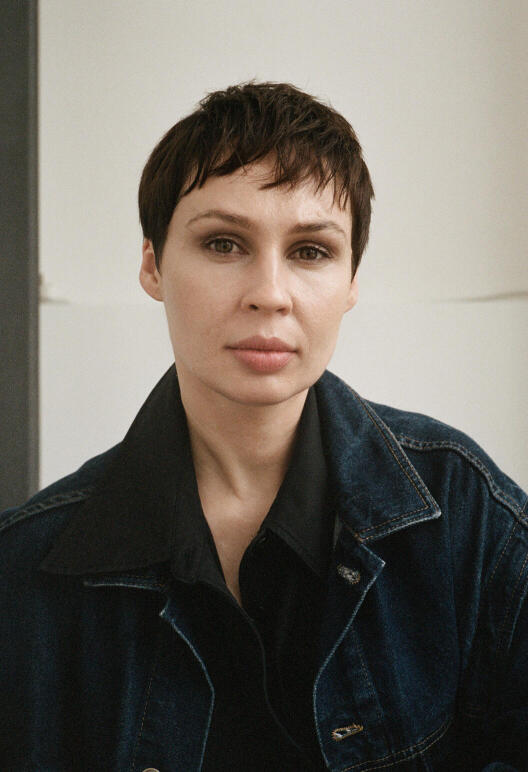
© Vasylyna Vrublevska About the author Sofia Andruchowytsch
Sofia Andruchowytsch, born in 1982 in Ivano-Frankivsk, is one of Ukraine’s most renowned contemporary authors. As a novelist, essayist and translator, she explores in depth the complex interplay between history, identity and power. Since the start of Russia’s war of aggression, she has used her international profile to raise awareness of the situation in her homeland.
Her literary work is characterised by an in-depth exploration of the political dimension of memory – both in terms of suppressed narratives and their construction. Sofia Andruchowytsch is the author of seven volumes of prose, including four novels. As early as her novel Felix Austria (2014; published in German as Der Papierjunge), she paints a panorama of the multi-religious and multicultural Galicia of around 1900. In a narrative style that is as grotesque as it is fantastical, she depicts the coexistence of German-, Polish- and Ukrainian-speaking Jewish and Christian communities.
In his monumental epic novel Amadoka (2020; published in German in the volumes The Story of Romana, The Story of Uljana and The Story of Sofia), Andruchowytsch explores the themes of loss and annihilation. Metaphorically named after a lake depicted on ancient maps but which does not actually exist, the novel links three traumatic periods in Ukrainian history: the Stalinist repressions of the 1930s and the annihilation of the Ukrainian intelligentsia (‘the shot-down Renaissance’), the ‘Holocaust of the Bullets’ – the mass shootings during the Nazi occupation in the 1940s – and the Russian-Ukrainian war, which has been ongoing since 2014.
The complexity of this epic has already found a striking counterpart on stage: Dušan David Pařízek’s production (Amadoka, Prague’s Divadlo X10 and Theater der Welt) transposes the literary motifs into the theatrical space and makes the dynamics of remembering and forgetting physically tangible. Following its world premiere in April 2026 in Prague, the production was presented to German audiences for the first time in June of the same year at the ‘Theater der Welt’ festival in Chemnitz.
In her work, Andruchowytsch avoids simplistic black-and-white portrayals. By depicting perpetrators and victims in all their human ambivalence, she challenges moral boundaries as well as the violence that can be inherent in the construction of family histories and national myths. In 2024, Sofia Andruchowytsch and her translators, Alexander Kratochvil and Maria Weissenböck, were awarded the International Hermann Hesse Prize for their outstanding literary work. Amadoka has also received the International Literature Prize from Kulturhuset Stadsteatern (Sweden, 2025), the Encounter – Ukrainian-Jewish Literature Prize (Canada/Ukraine, 2023) and the Sholem Aleichem Prize (Ukraine, 2023).
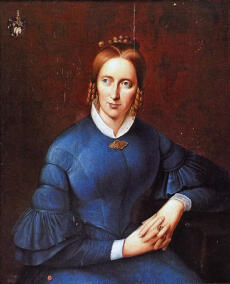
© Wikimedia Commons Annette von Droste-Hülshoff Reading
The relationship between religion and politics is not merely a subject of academic research. It has also been explored in literature throughout history. In this context, questions and nuances, dilemmas and conflicts are expressed through literary means in a way that academic study of religion and politics cannot. For this reason, the Cluster of Excellence ‘Religion and Politics’ at the University of Münster has been organising the Annette von Droste-Hülshoff Reading since 2024. International writers who explore the relationship between religion and politics in an artistically sophisticated manner are invited to take part.
The woman after whom the reading is named, Annette von Droste-Hülshoff (1797–1848), who hailed from the Münsterland region and once said that she hoped to be read in a hundred years’ time, is one of the most significant female writers in the German language. Whilst she was formerly occasionally reduced to the image of a staid Westphalian noblewoman, today her forward-looking modernity is recognised. Her critical view of religion and society, as well as her finely drawn depictions of nature and landscape – which reflect humanity’s relationship with a natural world that is, in many ways, under threat – make her work relevant in many ways today. The novella Die Judenbuche (The Jew’s Beech), published in 1842, which depicts social and religious belonging and exclusion, has long been counted amongst the most widely read works of German-language literature, but is taking on new relevance, particularly in the present day, which is marked by crises and social tensions. With their thoughtful and precise language, Droste-Hülshoff’s complex texts defy simplistic answers.
Cluster of Excellence ‘Religion and Politics’
The Cluster of Excellence ‘Religion and Politics’, which was established in 2007, will continue to investigate the complex relationship between religion and politics across different eras and cultures until 2027. The focus of the approximately 150 researchers from 20 disciplines in the humanities and social sciences is on Europe and the Mediterranean region, as well as their interconnections with the Middle East, Africa, North America and Latin America. The research network is the largest of its kind in Germany and the only Cluster of Excellence in the country to focus on the subject of religion. Since its foundation, the Cluster of Excellence has been addressing a wide range of historical and contemporary topics of current relevance.
Organisation
Cluster of Excellence ‘Religion and Politics’
Prof. Dr Irina Wutsdorff
Johannisstraße 1,
48143 Münster
Tel: +49 251 83-23376religionundpolitik@uni-muenster.de
Instagram: @religionundpolitik
www.religion-und-politik.de