
People
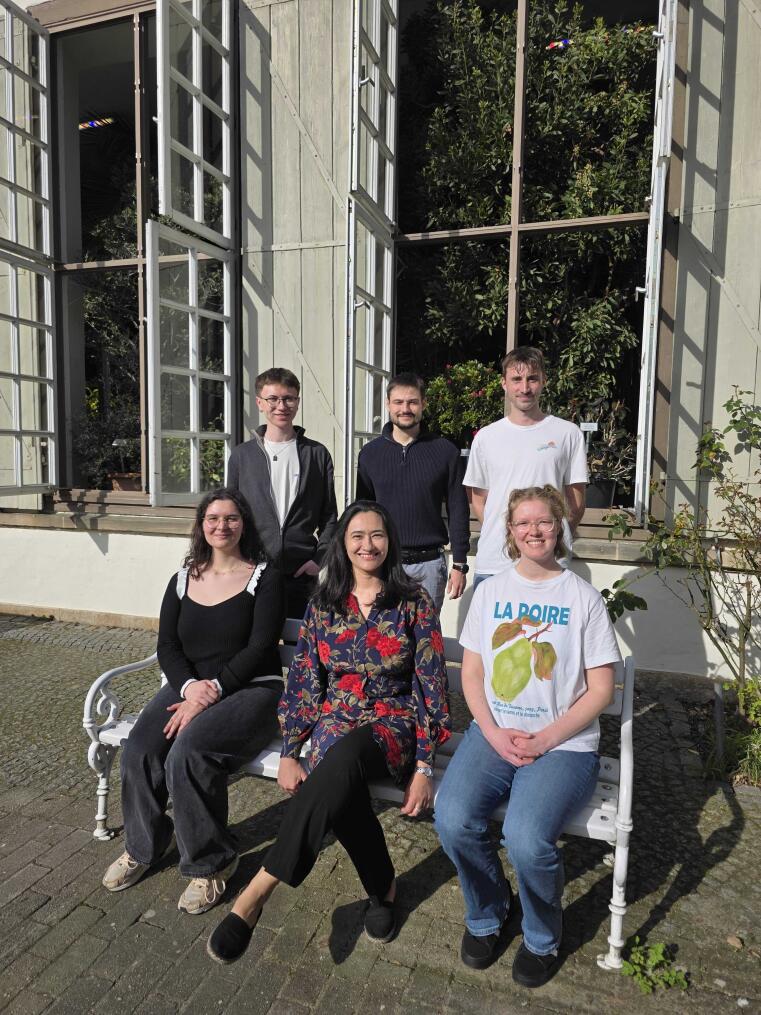
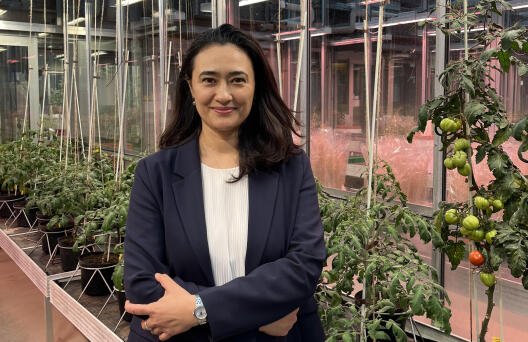
Ora studied Biology at Tel Aviv University, where she completed her BSc (2001-2005), MSc (2005–2007) and PhD (2008–2014) in the lab of Shaul Yalovsky. Her doctoral research focused on ROP signaling components and their roles in root development and cell polarity. In December 2014, she moved to Switzerland to join the lab of Christian Hardtke at the University of Lausanne, where she investigated CLE peptide signaling in protophloem development in Arabidopsis roots. In 2019, Ora was awarded the prestigious Ambizione SNSF grant and established her independent research group at the University of Fribourg. Her team continued uncovering components and mechanisms of CLE peptide signaling in plants and introduced tomato root development as a new model system in the lab. In January 2025, she became a Junior Maria Sybilla Merian Professor at the Faculty of Biology at the University of Muenster, an appointment supported by a prestigious grant from the Wuebben Science Foundation.
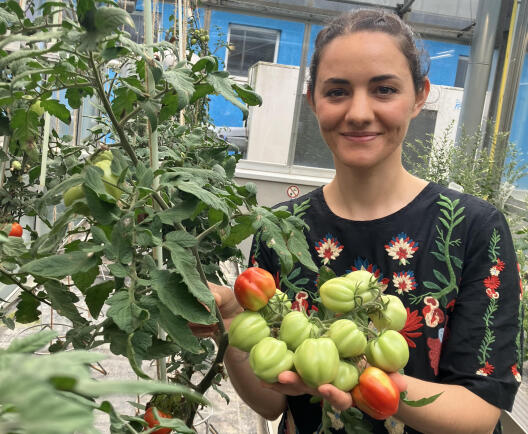
Nabila studied Biosciences (B.Sc.) and Molecular and Applied Plant Sciences (M.Sc.) at Heidelberg University (2014–2019). Concurrently, she spent an exchange semester at the Federal University of Rio Grande do Sul, Brazil (2016), and completed a Mitacs Globalink Research Internship at Université Laval, Canada (2017), and a research internship at the GEOMAR Helmholtz Centre for Ocean Research in Kiel, Germany (2018). For her bachelor’s and master’s theses, Nabila worked in the group of Prof. Dr. Sebastian Wolf, investigating cell wall signaling in Arabidopsis thaliana and characterizing a novel CLE signaling component (2017–2019). She then joined the group of Prof. Dr. Markus Schmid at the Umeå Plant Science Centre, Sweden (2019), where she studied the role of alternative splicing in temperature signaling, with a focus on transcriptional regulation, auxin signaling, and root development in Arabidopsis. In June 2026, Nabila joined the Hazak Lab at the University of Münster as a postdoctoral researcher, to investigate the role of CLE signaling pathways in tomato root responses to abiotic stress. Outside the lab, she enjoys nature photography, music, and spending time outdoors.
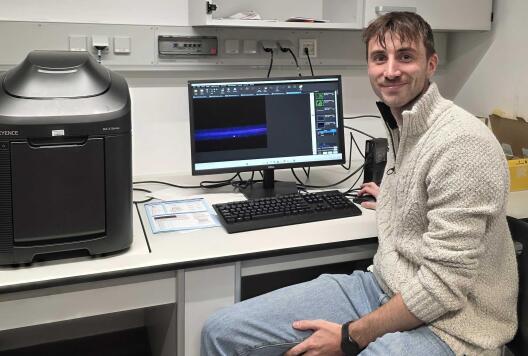
Jannik is from Lingen Germany. He studied Biology at the Bachelor level at the University of Münster (2019-2021), doing his thesis project on investigating the impact of protein modifications in photosynthesis in Prof. Iris Finkemeier’s lab. Next, he headed to Vienna for his Master's in Molecular Biology (2022-2024), where he continued to explore the fascinating world of plants, working on signaling pathways inside the chloroplasts. Now, as a Ph.D. student, he is investigating how RNA helicases affect root development through peptide signaling. When he is not in the lab, you can find him playing soccer or out for a run and spending time with his friends. Jannik is excited to be part of the AG Hazak team and contribute to the research projects of his lab mates.
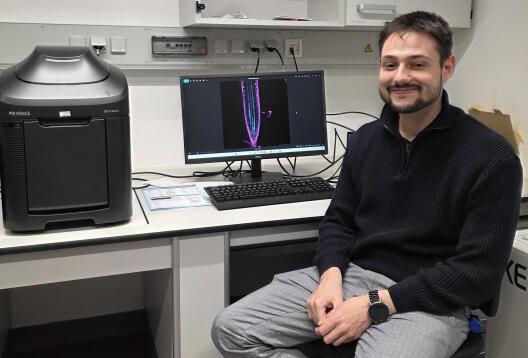
Tobias studied biology at the University of Münster (2019–2022), where he completed his bachelor's thesis in Ivan Berg's lab, investigating the role of CoA transferases in the reductive citric acid cycle and carbon fixation in thermophilic iron-reducing bacteria. In 2022, he began his master's studies at the same university (2022 – 2025), during which he joined the 2023 iGEM team, which won a silver medal and the inclusivity award. From 2024 to 2025, he developed an interest in plants while completing his master's thesis in Till Ischebeck's lab, examining the impact of increased terpenoid production on plant metabolism. In July 2025, Tobias joined the Hazak lab to study interactors of CLE receptors and their role in root development. When not working on the most fascinating aspects of biology, Tobias can be found engaging in sports or in front of his computer playing videogames.
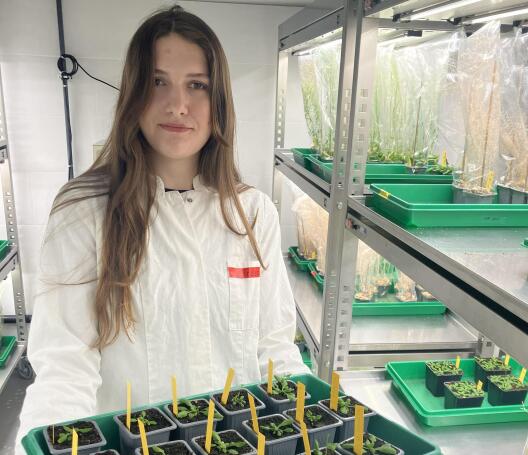
Laureen began her Biology studies at the University of Münster in 2023. She joined the Hazak Lab to conduct her bachelor’s thesis in June. Her bachelor’s research investigates the role of cell wall signaling in root vascular development and plant stress responses. In her free time, she enjoys reading, drawing, and spending time with her dog.
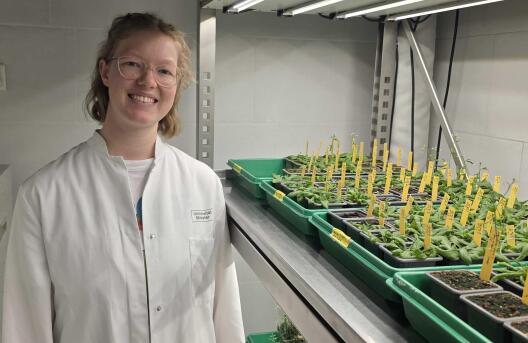
Hannah studied biology at the University of Kiel (2020–2024) and completed her bachelor’s thesis in Prof. Eva Stukenbrock’s lab, working on plant-pathogen interactions. She moved to Münster in 2025 for her master’s studies and joined the group for a research module. Her project focuses on xylem development under stress conditions. Outside of the lab, Hannah likes to swim, go to the cinema and meet friends for coffee.
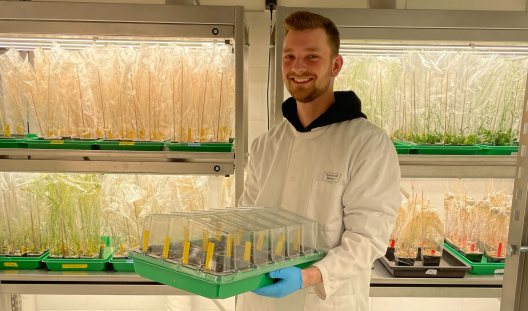
Till studied Biology at the Bachelor level at the University of Münster (2021-2024) and completed his bachelor thesis in Prof. Dirk Prüfer's lab. He was working with a pollen ploidy-affecting meiosis mutant in Arabidopsis. Till could establish a protocol for microscopic phenotyping of pollen grains. In April 2026, Till joined the Hazak group for a research module supervised by Jannik, where he is investigating the role of RNA helicase in Arabidopsis roots. In his research, he employs genetics, in vivo protein-protein interaction assays and microscopy. Outside the lab, you can find him enjoying metal music with friends & family and his instruments.
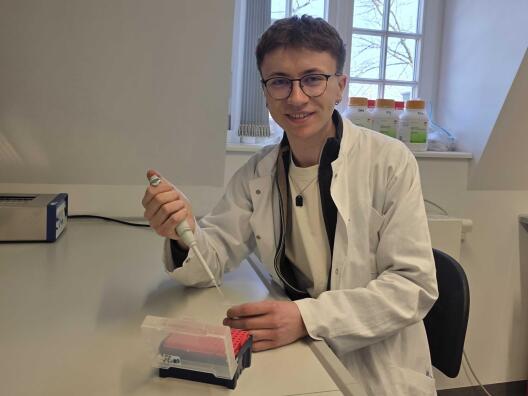
Samuel began his studies in Biology at the University of Münster in 2024. In March 2026, he joined the Hazak Lab as a student assistant (HiWi), driven by his interest in plant biology. In his free time, he enjoys reading, spending time with family and friends and caring for his house plants.
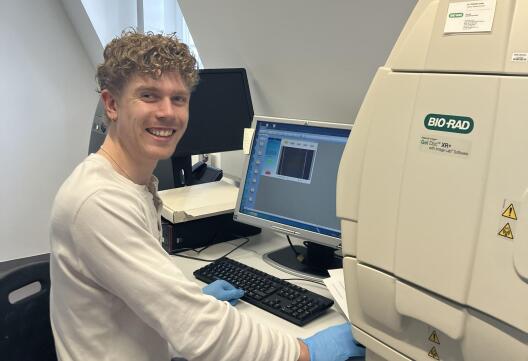
Jonah studied Biosciences (B.Sc.) at University of Münster (2022-2025) and completed his Bachelor’s thesis in Dirk Prüfer‘s lab, investigating potential interaction partners of SEOR-Proteins in the phloem. He started his master‘s in Biotechnology in Münster and joined the Hazak Lab for a research module in July 2026. Together with Nabila, he wants to investigate drought response in Tomato and the role of CLE peptides in root protophloem development. Outside the lab, Jonah enjoys quality time with friends, going for walks and eat delicious food.
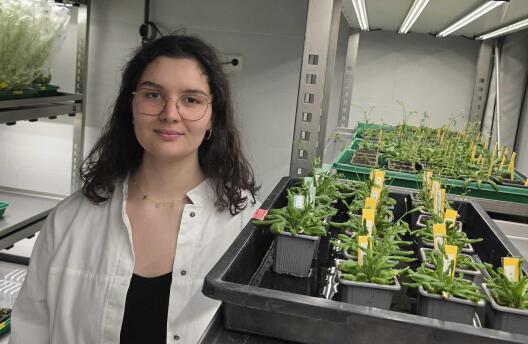
Ceren began her biology studies at the University of Münster in 2023. After successfully completing an advanced laboratory module (Vertiefungsmodul) in the Hazak Lab, she joined the group to conduct her bachelor’s thesis. Her research focuses on characterizing a novel component of the CLE receptor complex in roots. In her free time, she enjoys walking, reading, and spending time with friends.