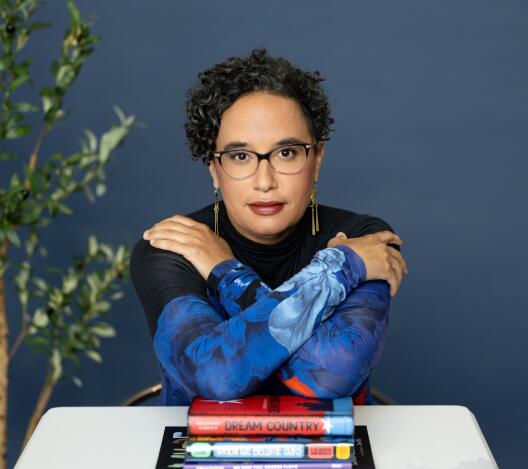
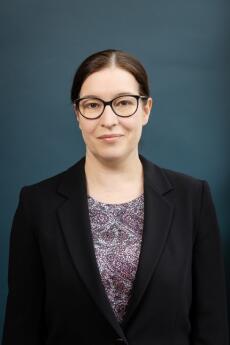
Katharina Gerund is professor of American Literature and Culture at the University of Zurich and currently serves as president of the Swiss Association for American Studies (SANAS). She completed her PhD in American Studies at the University of Bremen and her Habilitation at Friedrich-Alexander-Universität (FAU) Erlangen-Nürnberg. Her dissertation has been published as Transatlantic Cultural Exchange: African American Women’s Art and Activism in West Germany (transcript, 2013). Her second book manuscript, which received FAU’s Habilitation Award in 2025, is tentatively titled “Happy Home Front Heroines? Military Spouses in the Cultural Imaginary of the US.” Katharina’s research and teaching spans cultures of war and critical military studies, cultural theory and US popular culture, affect and sentimentality, cultural mobility, as well as race and gender in the transatlantic world. Her most recent publications include “Liberation, Re-Education, Democratisation: The Politics of Gratitude in German-American Relations after 1945” in Contemporary European History 34.2 (2025) and “Feeling Barbie: Mothers, Daughters, and White Feminist Genealogies” in Feminist Theory 26.3 (2025, with Stefanie Schäfer) as well as the co-edited special issues Re-Thinking Solidarity (Amerikastudien / American Studies 2023, with Nathalie Aghoro and Sylvia Mayer) and Civilization, Democratization, Containment: Strategies of Re-Education in Imperial Settings and Beyond (The International History Review 2024, with Jana Aresin).
ABSTRACT: Military Spouses Making Kin: Families, Friends, and Foremothers
The nuclear family with its heteropatriarchal structures as well as its 1950s nostalgic connotations is central to contemporary representations of military culture. The military family frequently stands in for a nation imagined along familial lines. Especially military spouses have gained visibility and affective agency at least since the post-9/11 era and often in the culturally idealized form of what I have termed “happy home front heroine.” Yet, kinship structures in the military community are obviously more complex than these representations suggest, and my talk examines how military spouses, real and imagined, (try to) make kin across time, across cultures, and beyond ‘traditional’ family ties.
I will analyze cultural representations in different genres and media that position modern military spouses within a long historical genealogy and that show how they cultivate friendships, community, and connections within and beyond military culture. My case studies include memoirs by journalists Dana Canedy and Lily Burana, Jehanne Dubrow’s re-imagining of The Odyssey, and the prestige TV show The Unit. All of these texts engage with and, to some extent, validate hegemonic discourses on marriage, family, and gender roles, which provide a framework for military spouses to become intelligible. Yet, as I argue, they also represent attempts at making kin beyond these confines as they highlight the sisterhood of “Unit wives,” the transhistorical community of women waiting at the home front, and the need to foster, at least for the time being, (alternative) relationships that not always endorse the dominant logics of military culture.