
Partners in Empire? Ukrainian Cossacks, Imperial Loyalty, and Local Pride in the Caucasus
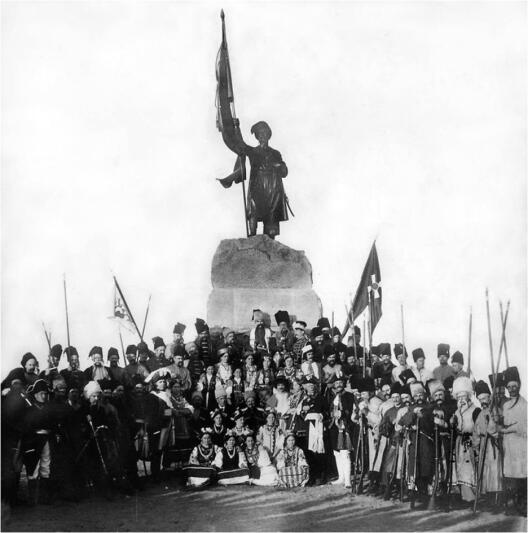
Since the nineteenth century, the Zaporozhian Sich has occupied a central place in Ukrainian his torical imagination as a symbol of political freedom, military valilor, and a distinctive Ukrainian path of historical development. Equally powerful has been the memory of its destruction in 1775 by order of Catherine II, often interpreted as a decisive moment in Ukraine's imperial subjugation. Yet this familiar narrative obscures an important paradox: although the Sich disappeared from the lower Dnipro, the Zaporozhian Cossacks survived as an institution far from Ukraine, playing a cru cial role on one of the Russian Empire's most violent colonial frontiers along the Kuban River. This lecture explores how Ukrainian Cossacks, regarded with considerable suspicion by imperial authorities in their homeland, became indispensable partners of empire in the conquest and col onization of the Caucasus. It argues that the idea of Zaporozhian descent evolved into a powerful political myth that structured relations between the Cossacks and the imperial state. For tsarist officials, the myth offered a language through which to define the Cossacks as a loyal military estate and reliable agents of colonization. For the Cossacks themselves, however, it became a resource for defending corporate privileges, negotiating with the imperial center, and preserving a distinct sense of identity in a rapidly changing frontier society. Far from standing in opposition to one another, imperial loyalty and local patriotism often proved mutually reinforcing. By presenting themselves as the heirs of the Zaporozhian tradition and as the conquerors of the North Caucasus, Cossacks in the Kuban fashioned a regional identity that was simultaneously Ukrainian in memory, Caucasus in attachment, and imperial in political alle giance. By examining the political uses of the Zaporozhian past, the talk highlights the ambiguous position of Ukrainian Cossacks as both suspects and agents of empire. In doing so, it invites broader re flections on the relationship between settler colonialism, imperial loyalty, and local pride on the fringes of the Tsarist Empire.