Secondments

As part of their PhD training the TReND fellows have the opportunity to spend short research stays at partners of the TReND consortium.
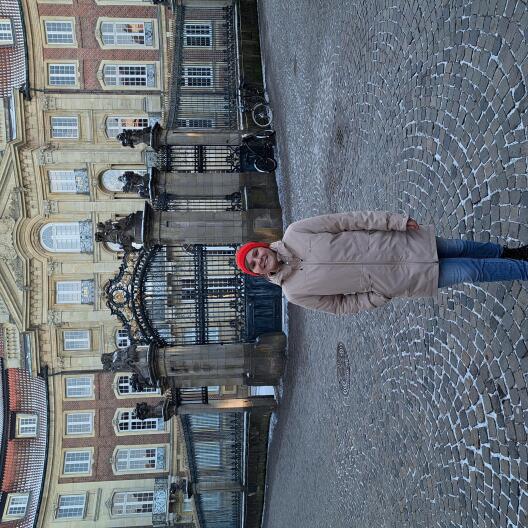
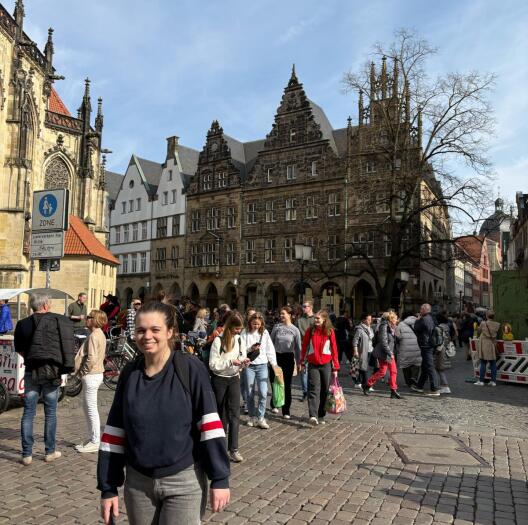
© Constanze Dammeyer

Secondment #6: Constanze

Our fellow Constanze is telling us about her recently completed secondment. Constanze is doing her PhD project at the University of Bern, Department of Movement and Exercise Science, and recently had the opportunity to visit the Department of Neuromotor Behavior and Exercise at the University of Münster.


"During the past months, I completed my secondment in the Department of Neuromotor Behavior and Exercise at the University of Münster.
This experience gave me a great opportunity to enhance my skills in motion capture and study design and to further deepen my knowledge in data analysis.

Together with TReND fellow Sofía Avila Pérez, I conducted a pilot study investigating the effects of a coordinated walking intervention on various gait parameters. The study combined solo walking, the coordinated walking paradigm used in Bern, and the Cup Transportation Task developed by Sofía in Münster.
Throughout the study, I gained experience with different motion capture systems and valuable insights into the organization and operation of other laboratories. I also learned much about the design and implementation of intervention studies. It was a pleasure to collaborate with Sofía and to carry out this small joint project!
I also took a deeper look into my data, working with Dr. Julian Rudisch on continuous relative phase analysis and with Dr. Kutz on wavelet coherence. Both provided me with valuable insights and helpful advice for my ongoing work.
Beyond research, I joined several informal events and enjoyed meeting the team in a relaxed setting. Experiencing different team dynamics and leadership styles also broadened my perspective on research group management.

As Münster is my hometown, I was delighted to spend time with my family and friends during the Christmas season and to return home for a few months after living abroad for several years.

Overall, I truly enjoyed my secondment, gained many new experiences, and return to Switzerland with fresh motivation and inspiration."

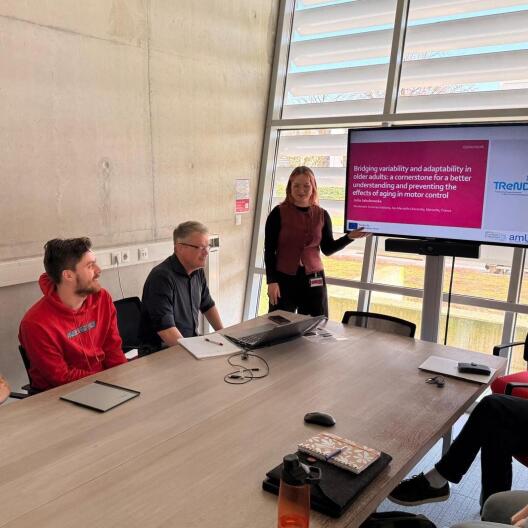
© Victoria Trifonova

Secondment #5: Victoria

This time our fellow Victoria is telling us about her secondment that she completed in December. Victoria is doing her PhD project at the Institut des Sciences du Mouvement, Aix-Marseille Université and had the opportunity to visit the Stade Marseillais Université Club (S.M.U.C.), Marseille, France.


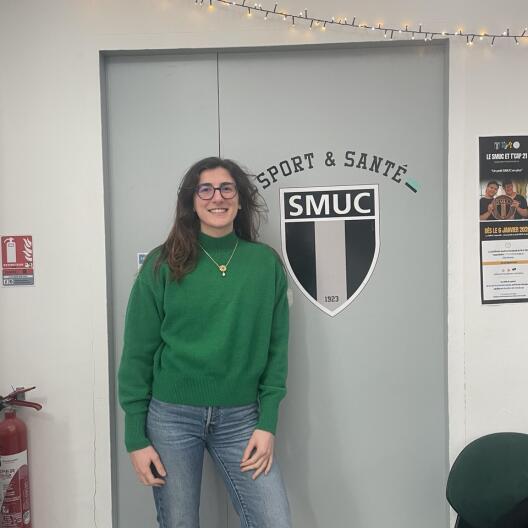
"In December 2025, I completed a 3-month secondment at Stade Marseillais Université Club (S.M.U.C.), Marseille, France, working with the coordinator, Isabelle Petit, and the adapted physical activity coach, Martin Nottin. S.M.U.C. is a local civil society organisation in Marseille that promotes physical activity among various populations, including older adults and people with special needs. As such, benefiting from their facilities, resources, and knowledge was particularly insightful for my PhD goals, which are focused on improving methodological approaches in geriatric assessments and training protocols targeting older adults’ wellbeing. This secondment enabled me to: (i) gain insight into multidisciplinary, evidence-based assessment and training practices; (ii) initiate participant recruitment and cohort development for my experimental studies; and (iii) observe functional assessment sessions in older adults, improving my understanding of best practices in applied evaluation.

In more detail, I had the opportunity to observe real-life functional assessments, including handgrip strength, single-leg stance test, sit-to-stand test, 6-minute walk test, timed up-and-go test, body composition test (analysis of body muscle and fat), and numerous questionnaires. This gave me insight into how professionals administer and evaluate these assessments. This was particularly useful as I will administer some of these tests during my experimental program to link my studies on the temporal structure of variability with the more tangible, comparable outcomes evident by those tests. Furthermore, I had the unique opportunity to establish relationships with S.M.U.C. professionals, who have helped me and will continue to do so in the future by sharing their hands-on expertise on training protocols and providing contacts with some of the centre’s visitors, who are part of the cohorts of interest for my experimental program. Finally, I had the opportunity to attend a few sports classes at the centre and meet some of the older adults who are dedicated to enhancing their health and wellbeing. I especially liked this opportunity, as it allowed me to better understand the needs and struggles of older adults and to appreciate more fully the value of my PhD contributions. I return from this secondment inspired and invigorated to transform my research into a more easily translatable, practical tool for assessing functional capacity of older adults that can be used by non-specialists clinicians and researchers."

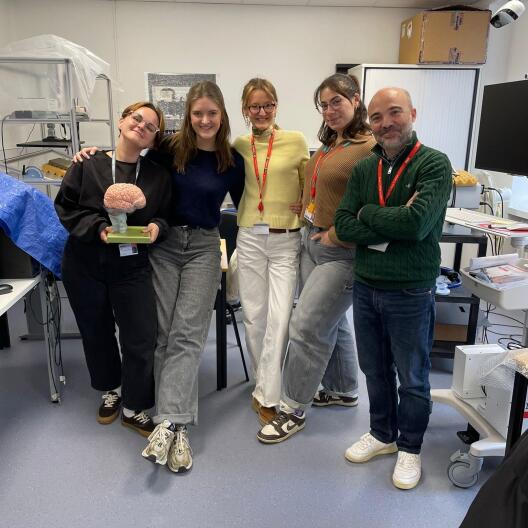
© Lea Obrecht

Secondment #4: Léa

Our fellow Léa is telling us about her recently completed secondment. Léa is doing her PhD project at the Behavioural Science Institute of Radboud University, and recently had the opportunity to visit King’s College London.


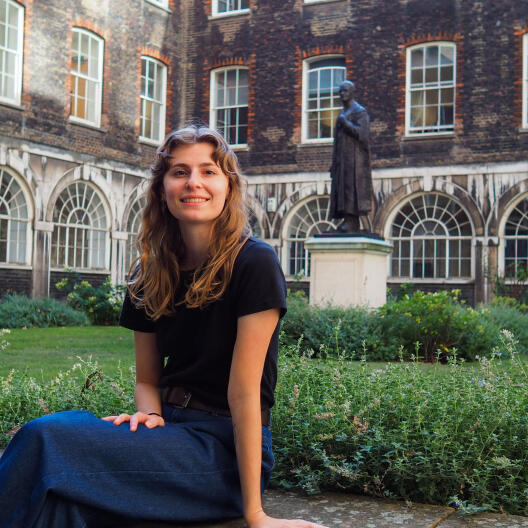
"I completed my secondment at King’s College London in Prof. Marco Davare’s laboratory. I had the opportunity to develop my understanding of motor control and neurophysiological measurement methods both in theory, through discussions with experts, and in hands-on practice. During my stay, I applied these skills while assisting with an experiment that combined transcranial magnetic stimulation (TMS) and electromyography (EMG) within an immersive virtual reality setup to investigate how different types of sensory feedback influence motor system activity.

At the same time, I spent time with clinical researchers working in the rehabilitation of children with motor disorders. This gave me insight into how research is conducted with patients to understand their motor impairments, including the use of neurophysiological methods, and how these findings inform the development of evidence-based rehabilitation tools. I also learned how research can engage patients and caregivers in shaping care and in making scientific evidence accessible to families.

Together, these experiences offered a comprehensive view of research from lab to clinic, deepening my understanding of how motor function is studied and supported in children. I came back with fresh ideas, valuable connections, and inspiring perspectives for my project!"

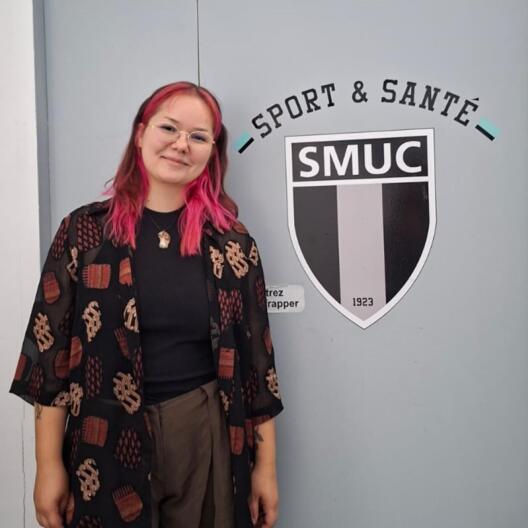
© Dilşah Gençaslan
© Dilşah Gençaslan
© Dilşah Gençaslan

Secondment #3: Dilşah

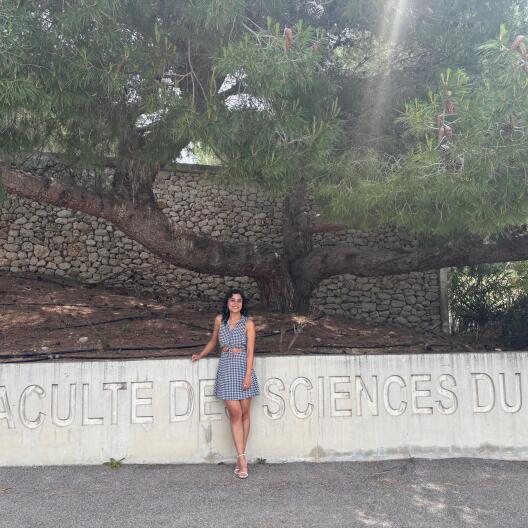
Next, our fellow Dilşah ist telling us about her secondment in Aix-Marseille. Dilşah ist doing her PhD project at the University of Münster – Department of Neuromotor Behavior and Exercise.


''I recently completed my first secondment at Aix‑Marseille University (AMU), working with Prof. Dr. Rita Sleimen‑Malkoun and Prof. Dr. Jean‑Jacques Temprado. Building on the expertise I developed in Münster on the complexity and variability of brain signals, our discussions broadened my theoretical outlook and opened fresh avenues for my PhD research. Alongside this, I began refining my programming skills to support more advanced data analyses in the next project phase.

AMU generously welcomed me into several research facilities. Guided by Noah and his colleagues, I toured state‑of‑the‑art sport‑science laboratories, observed their equipment in action, and even participated in a few experiments myself. These hands‑on experiences were invaluable, and I thank everyone who made them possible. Working on a campus nested in the Calanques National Park—surrounded by sea air and striking scenery—added an unexpected boost of energy and inspiration to my work.

Outside academia, I formed lasting friendships, savored France’s famous boulangeries and cheeses, and explored new cities along the Côte d’Azur. As this was my first visit to France, each moment felt particularly meaningful. My heartfelt thanks go to my colleagues, housemates, and travel companion for turning this secondment into an unforgettable experience. I am equally grateful to the TReND network for making this opportunity possible, and to Rita and the entire AMU team for their warm hospitality and unwavering support.

A PhD is a non‑linear journey, so I wish all my friends the very best along the way. And if something doesn’t work out, just remember: c’est la vie!''

© Ajša Džindo

Secondment #2: Ajša

This time our fellow Ajša is telling us about her recently completed secondment. Ajša is doing her PhD project at the Donders Centre for Neuroscience (DCN), Department for Neurobiology UMC Radboud, Department for Rehabilitation and had the opportunity to visit the Neuromotor & Training Department at University of Münster.


"During my secondment in Münster, I had the opportunity to participate in the retreat of the Neuromotor & Training Department at the stunning Landhaus Rothenberge. This year’s focus on artificial intelligence in everyday academic life,  open science, and linear models sparked broad and productive discussions. 

A highlight of my experience was gaining an in-depth look at the Parkinson Vibrating Socks project. I observed the team’s experimental procedures and data collection methods, including the use of EEG, treadmills, and other measurement tools. This hands-on exposure provided practical insight into both the research design and technological implementation behind their work. As someone with a long-standing personal interest in sports — and for whom sport has been a significant part of life — it was particularly exciting to explore the scientific side of the field, seeing how sport and movement are studied from a research perspective within sport science. 

While in Münster, I also had the chance to engage in meaningful conversations with members of the department. I particularly appreciated discussions with Dr. Kutz, whose expertise greatly enhanced my understanding of locomotor adaptation. This secondment also gave me the opportunity to reflect on different team leadership, and learning styles, offering a broader perspective on project and research group management. 

Outside of work, exploring Münster’s beautiful and historic city was a real pleasure. Just as importantly, I thoroughly enjoyed spending time with colleagues from the TReND network — building connections, sharing experiences, and strengthening collaborations in an informal, supportive setting. 

This secondment was a rewarding experience both scientifically and personally. I left feeling more connected, inspired, and equipped with fresh ideas and perspectives for the future."

© Sofía Avila Pérez
© Sofía Avila Pérez

Secondment #1: Sofía

Our fellow Sofía is telling us about her recently completed secondment. Sofía is doing her PhD project at the department of Neuromotor Behavior and Exercise at the University of Münster and had the opportunity to visit the Department of Movement and Exercise Science at the University of Bern. 
 

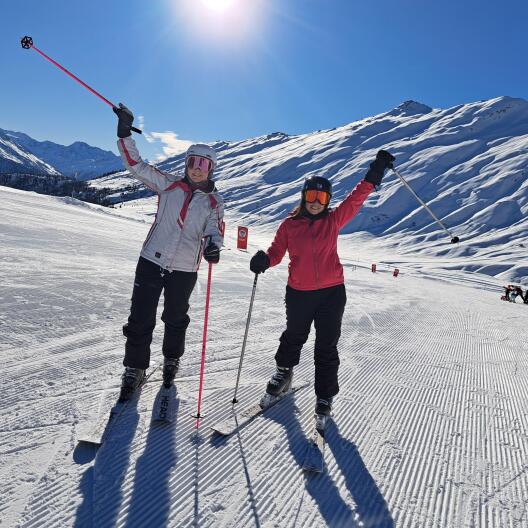
“During my secondment in Bern, Switzerland, I had the opportunity to attend the Winter Academy, where I learned a lot about sports science research. It was great not only to dive into the theories but also to put them into practice by acquiring some skiing skills! While working there, I engaged in some very interesting discussions with the members of the motor control team, especially with Prof. Dr. Ernst-Joachim Hossner who encouraged me to explore attention topics at a deeper level from different perspectives and introduced me to new theories that I will bring into my PhD journey. Outside the academic side, I made sure to enjoy the beauty of Bern and its historical buildings. I also visited the Alps for some outdoor activities such as hiking and sledging. I am truly grateful for my time in Bern, where the team made me feel part of their community from the very start. I am looking forward to returning for the Summer School in June and continuing our work together.”