© Felicia Pais Araujo, Carina Ferderer

Pesquisa em Münster e São Paulo – Uma comparação

As part of our project management module, we, four participants of the 2025 “SãMBio” program, prepared a comparative report on the University of Münster and the University of São Paulo.

The SãMBio double-degree program enables selected master’s students from Münster and São Paulo to study life sciences at the respective partner university for six months, with the option to extend their stay to ten months to complete their master’s thesis. Funded by the German Academic Exchange Service (DAAD) and supported by the Federal Ministry of Education and Research (BMBF) for German students, as well as by the University of São Paulo for Brazilian students, the program promotes academic exchange and a binational research collaboration between Germany and Brazil.

The aim of this report is to compare the University of Münster and the University of São Paulo in terms of their research environments in life sciences, considering both practical, everyday aspects and broader issues such as funding, organization, working methods, and laboratory equipment. Special attention is also given to the social environment, including workplace atmosphere, collaborations, and the integration of new members, as well as to the structure of academic studies and teaching. The findings are intended to provide guidance for future exchange students in biosciences. Therefore, we conducted surveys at both universities involving students, PhD candidates, academic staff, and professors and have incorporated our own experiences and observations as well. Although the surveys provide a reasonably representative picture, it should be noted that this report cannot claim to be entirely comprehensive.

Münster Schlossfigur
© Marius Felix Sprang

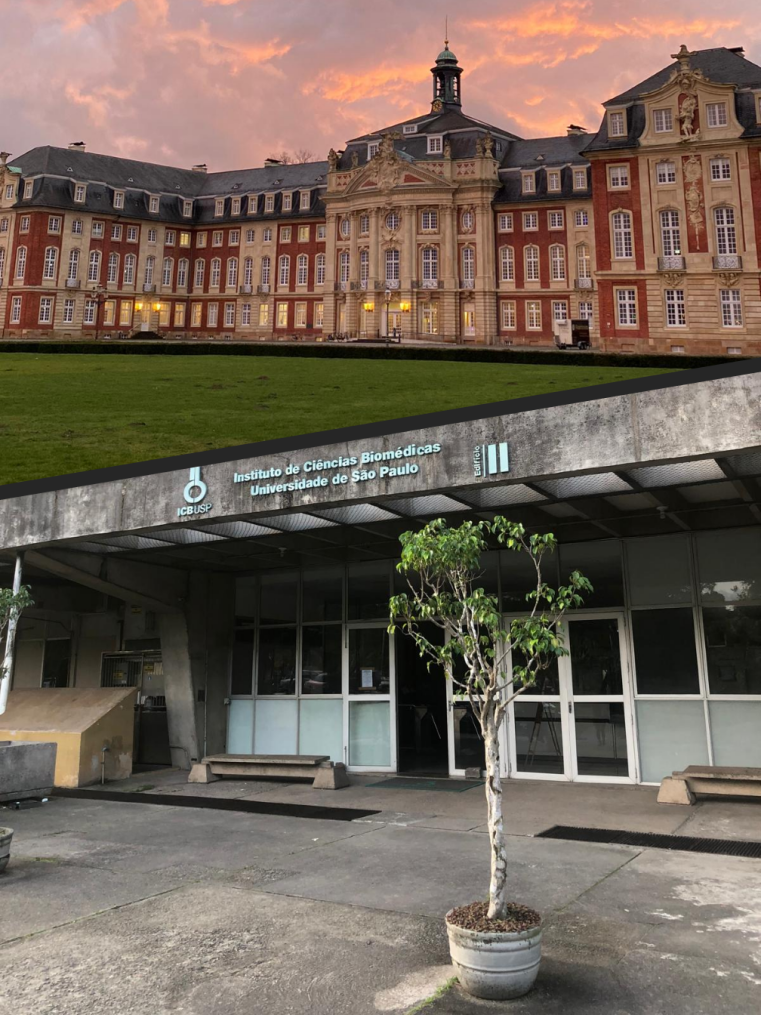
University of Münster

The University of Münster (UM) was founded in 1780 and ranks among the leading higher education institutions in Germany, holding a strong position in European university rankings. As a public university with 43,000 students, funded by the state of North Rhine-Westphalia, it provides tuition-free education and is known for its strong focus on research-driven teaching.
UM offers over 120 academic programs across 15 faculties. In the field of life sciences, research and teaching are mainly organized within the Faculty of Biology and the Faculty of Medicine, supported by interdisciplinary centers like the Cells-in-Motion Interfaculty Centre (CiM). The Faculty of Biology includes around 40 professors and is structured into five research institutes, offering undergraduate, graduate, and PhD programs in biology, biotechnology, and molecular biomedicine, as well as teacher education programs in biology and biology didactics. Research in the Faculty of Biology is currently centered around six focus areas: Biochemistry and Biotechnology, Bioenergetics and Metabolism, Evolution and Biodiversity, Multiscale Analysis of Cellular Systems, Neuroscience and Behavior, and Plants. The university’s strong research profile is reflected in its structured doctoral programs and graduate schools, such as the CiM-IMPRS Graduate School, run jointly with the Max Planck Institute for Molecular Biomedicine. These programs provide advanced research training and foster interdisciplinary collaborations.
The University of Münster enjoys a strong international network, with over 800 partner universities worldwide, and actively promotes student mobility through exchange programs and joint research projects. 

Clocktower USP
© Felicia Pais Araujo

University of São Paulo

The University of São Paulo (USP), established in 1934, is the leading institution for higher education and research in Brazil. It ranks as the best university in South America and also holds a strong position in a multitude of global university rankings. As a public institution funded by the state government of São Paulo, it provides tuition-free education to its 97,000 students. 
USP provides a broad range of academic and research fields, offering over 300 undergraduate and more than 800 graduate programs distributed across its eight campuses throughout the state of São Paulo. Furthermore, the academic community consists of approximately 216,000 people, including more than 5,000 faculty members and about 2,200 active research groups.
In the biomedical and biological field, a wide range of teaching and research is conducted in both the Institute of Biomedical Sciences (ICB) and the Institute of Biosciences (IB), organized in 12 different departments. The ICB consists of around 160 professors and 266 technical-administrative employees. With more than 150 laboratories across seven departments, projects in both basic research and translational science are conducted. The institutes are home to a variety of highly qualified professors and researchers, many of whom enjoy strong international recognition. This outstanding international reputation is reinforced by numerous collaborations and exchange programs with universities around the world.

  • Equipamentos

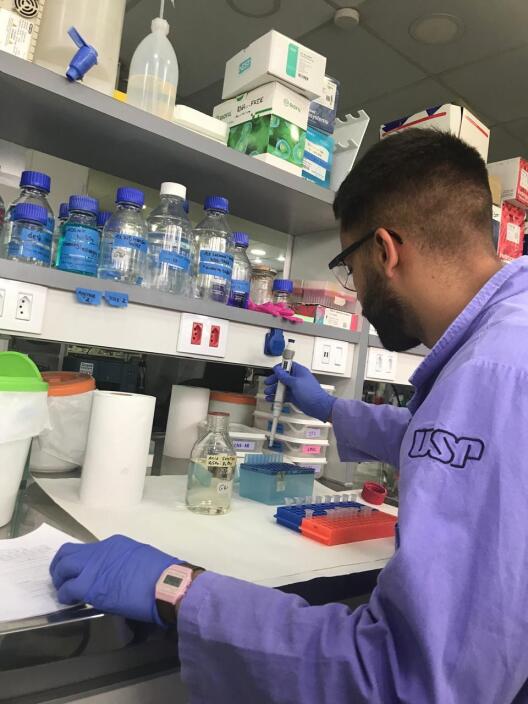
    The biological research infrastructure plays a crucial role at the University of São Paulo and the University of Münster. The following section will provide insight into both similarities and differences within the universities, focusing on laboratory equipment and infrastructure conditions in biological research laboratories.

    At both universities, expensive and highly specialized instruments such as large centrifuges, autoclaves, cryogenic storage systems and specialized imaging units are available. In both cases, they mainly rely on the same major international laboratory equipment manufacturers, most notably Eppendorf, Thermo Fisher Scientific, and Bio-Rad. However, despite these similarities, clear structural differences exist. 

    At the University of Münster, for instance, laboratory equipment is more frequently available at the level of individual research groups, which improves accessibility and reduces dependency on shared scheduling systems. Basic bench equipment such as pipettes, vortex mixers, and small centrifuges is often available per person or shared among a small number of users. Ordering and delivery processes are generally fast and highly predictable, with consumables and reagents typically arriving within a few days or weeks. Reuse of consumables occurs only occasionally and mainly in non-sterile contexts, as single-use policies are strictly implemented, especially in clinically affiliated laboratories. Laboratory spaces at the University of Münster are clearly assigned to specific research groups, resulting in a structured organization and clear responsibilities. Students usually use assigned workspaces and shared computer pools, while PhD candidates and postdoctoral researchers often have permanent working stations. In addition, laboratory buildings and equipment in Münster are generally new, with some facilities having been renovated and much of the equipment being less than ten years old, contributing to a modern overall research environment.

    The University of São Paulo is characterized by a collaborative approach to resource management, with extensive infrastructure sharing across research groups that fosters integration and scientific exchange. Although the overall number of instruments per manufacturer is comparable, access is organized through shared equipment pools, a model that maximizes instrument utilization, though it can occasionally require coordination around scheduling. Ordering procedures are occasionally subject to administrative lead times, as specialized reagents sourced from international suppliers may require several weeks for delivery. As a consequence, long-term experimental planning benefits from careful coordination.  Reuse of consumables such as Falcon tubes, pipette tips, cell culture flasks, and gloves is a well-established practice rooted in principles of sustainability and resource optimization. Laboratory rooms and infrastructure are widely shared, fostering a collaborative environment. Access to desks and computers varies between institutes, with ongoing efforts to optimize availability, particularly for students. Maintenance and the acquisition of new equipment are typically supported through research grants, resulting in a dynamic infrastructure landscape where modernization reflects the active scientific output and funding success of individual research groups.


    While both institutions rely on centralized infrastructures, the comparison highlights structural differences between the two universities. The University of Münster benefits from high individual equipment availability, as well as from fast and predictable supply chains. The University of São Paulo, in contrast, stands out for its remarkable culture of resource sharing and adaptability. Even when navigating certain financial and logistical challenges, particularly in relation to import regulations and procedures, it consistently makes effective use of its available resources.


    © Felicia Pais Araújo
  • Financiamento

    Looking at funding structures, noticeable differences can be found when comparing the two universities, reflecting the distinct academic and financial systems in which the institutions operate. Nevertheless, both universities rely on a variety of funding sources to support research and academic activities. The following section briefly outlines and compares some of the main funding structures at the University of Münster and the University of São Paulo.

    At the University of Münster, external research funding is primarily provided by the German Research Foundation (DFG), which is the largest national research funding organization in Europe. Its budget is financed roughly two-thirds by the federal government and one-third by the federal states. This funding can sometimes account for up to 80% of a research group's budget, typically through grants of varying sizes, often around €100,000. In addition, university budgets regularly contribute to financing research groups. Further funding opportunities include EU research programs and international initiatives such as the Human Frontier Science Program (HFSP) or specialized funding schemes like ERA-CAPS, which focuses on plant science.

    In contrast, research at the University of São Paulo relies heavily on state-level and national funding agencies, most notably FAPESP (São Paulo Research Foundation), particularly within the state of São Paulo. FAPESP provides regular project grants of approximately €50,000 and since 2025, up to €100,000 for two-year projects. Alternatively, thematic projects for the duration of 5 years with almost no funding restrictions can be applied. In addition, universities themselves cover a large share of research group expenses. Further funding is provided by federal agencies such as CAPES and CNPq.


    Stipend structures reveal further differences. In Münster, student stipends typically provide around €300 per month, often through foundations linked to political parties or other organizations, while full scholarships such as those offered by DAAD programs are available for students as well. In addition, the German federal training assistance scheme (BAföG) provides means-tested support of up to €992 per month, of which half is repaid as an interest-free loan after graduation. Organizations like the German Academic Scholarship Foundation provide allowances of about €300 for undergraduate and graduate students and approximately €1,750 for PhD students. Nevertheless, PhD funding is often obtained through employment contracts, DFG-funded positions, or DAAD scholarships.


    At the University of São Paulo, stipend funding is more standardized and centrally regulated. FAPESP offers the highest stipends, providing approximately €190 for undergraduate students, €566 per month for master’s students, €1,190 for PhD students, and €2,080 for postdoctoral researchers. CAPES and CNPq offer similar stipends of around €341 for master’s students and €514 for PhD students and about €866 for postdoctoral researchers. However, differences in funding amounts must be considered in relation to the cost of living in the respective countries and should not be interpreted as absolute values.


    Conference funding at both universities is relatively comparable. At the University of Münster, support comes from university funds, DFG grants, DAAD mobility programs, equality funds, and other third-party project budgets. At the University of São Paulo, mobility grants are mainly provided by FAPESP and CAPES, with scholarship-linked travel funding and occasional additional support from private budgets, particularly for early-career researchers. The time required to secure conference funding is similarly variable, ranging from a few weeks to several months, depending on the specific program. Applications for research grants are also quite similar at both institutions. Preparing proposals can take several weeks to months, depending on the grant size and complexity, and the review process may take several additional months.


    In conclusion, while the University of Münster and the University of São Paulo differ in their financial structures and funding systems, both institutions provide multiple opportunities for individual and project-based research support. As previously mentioned, funding levels must be interpreted in the context of the respective countries’ cost of living and therefore cannot be compared in absolute terms.

     

  • Organização

    Students and staff from the two universities described a similar organizational structure, with working hours in research being generally flexible, ranging at 40 hours per week. Researchers often organize their time independently depending on their projects, especially during phases of autonomous work. Laboratory work is mainly structured around individual research projects. Students, doctoral candidates, and researchers usually work on their own topics, however lab members frequently support each other when projects overlap or assistance is needed. Bachelor’s and Master’s students are often supervised by doctoral researchers or postdocs, creating a mentoring structure within the lab.

    Task distribution is usually coordinated by the principal investigator, sometimes with support from technical assistants. Routine tasks such as ordering materials, preparing solutions, or autoclaving are frequently carried out by technical staff or distributed among lab members. Standard hygiene procedures include wearing protective equipment, surface disinfection and autoclaving materials. 


    At UM, research involving genetic engineering or biological materials is regulated by German and European laws. Academic staff often describes these regulations as strict and somewhat bureaucratic, particularly regarding animal experiments, but also necessary for ethical and safety standards. Regarding the students' study courses, students generally receive a broad theoretical foundation, while practical skills are often developed later through laboratory work and respective projects.

    Similarly, research involving animals or genetic engineering at USP is regulated by national guidelines and institutional ethics committees, such as the Animal Ethics Committee (CEUA). Although the approval process can be bureaucratic and time-consuming, it has been described as manageable once protocols are approved. The theoretical knowledge of students was mostly described as area-specific, with practical laboratory skills being mainly developed during research work.


    In conclusion, the comparison illustrates that both universities provide structured and supportive environments for academic work and research. While certain organizational aspects, regulatory frameworks, and educational approaches differ, many fundamental elements of daily research practice are comparable. These similarities and differences reflect the broader academic systems.

  • Ambiente social

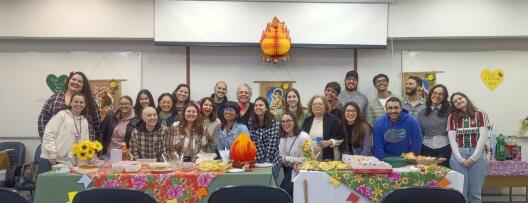
    Both universities offer an overall very positive social environment for study and research purposes. At both institutions, flat hierarchies, respectful interaction between students and academic staff, and a supportive and collaborative working atmosphere were described. Professors are mostly perceived as accessible, and student supervision by doctoral candidates or postdoctoral researchers is usually clearly structured. In this regard, both universities provide a strong foundation for collaboration, integration, and academic work.


    However, small differences emerge in the organization of daily university life and in the cultural emphasis placed on certain aspects. At the University of Münster, the social and academic environment is strongly shaped by internationality. English is the main working language in most research groups, particularly in lab meetings and seminars, thereby facilitating the integration of international students. Although flat hierarchies are reported, they remain clearly perceptible. The pressure to publish and perform is perceived differently, but mostly as healthy, positive, and moderate. Nevertheless, it can also lead to stressful situations, particularly when problems arise during a project. Breaks are largely spent together, mostly in shared group rooms. External lab activities are organized regularly, although they vary considerably between individual research groups and among laboratory staff, contributing to good social relationships within the group.


    At the University of São Paulo, in contrast, social interaction is characterized by a more informal and personal atmosphere. Hierarchies exist primarily for organizational reasons. Communication is very open among all laboratory members, and personal topics are often part of everyday conversations. The integration of new members usually takes place very quickly and naturally through immediate involvement into the group, open communication and structured practical training. Portuguese is the dominant working language, also in lab meetings, as the presence of international students is quite rare. Furthermore, English is used far less frequently due to the occurring language barrier, however all demands can be addressed in English language. Publishing pressure is not a central aspect of everyday laboratory work, but it becomes relevant in relation to external funding organizations such as FAPESP. However, this aspect is also highly group-dependent and may vary significantly between laboratories. Shared breaks and especially social activities outside the laboratory are very regular and firmly embedded in group routines, contributing to close personal relationships and strong social interaction. The Brazilian culture and openness are clearly reflected in the daily research environment, which can ease pressure and bring a lighter atmosphere to everyday academic work.


    In summary, both universities offer supportive and cooperative environments that differ in their respective emphases. While the University of Münster is characterized by internationality, clear structures, and institutionalized processes, the University of São Paulo stands out for its very open and strongly community-oriented working culture. Both models provide different, yet complementary perspectives on academic work and highlight the added value of international experience in the university context.


    © Felicia Pais Araújo
  • Sobre os autores

    We are a group of master’s students in Biomedicine, Biology, and Biotechnology from the University of Münster, Germany, who spent six months at the University of São Paulo as part of the SãMBio double-degree program. During our stay in São Paulo, we joined different research groups, contributed to ongoing projects, and became part of the everyday laboratory life in a new academic and cultural environment. Our motivation was not only to gain scientific experience but also to better understand how research is conducted in a different institutional and social context.

    Working at one of the largest public universities in Latin America allowed us to experience diverse laboratory structures, varying resource availability, and new forms of scientific collaboration. Through daily interactions with local students and researchers, we learned that flexibility, creativity, and resilience are essential skills in experimental science, especially when working under different structural conditions.

    At the same time, living in Brazil was an equally important part of our exchange. We explored Brazilian culture, student life, and the unique atmosphere of São Paulo, a city so large that planning your commute sometimes felt like planning a small research project. :) 

    Navigating daily life in a megacity, improving our Portuguese (sometimes more, sometimes less successfully), and adapting to new routines made this experience both challenging and rewarding. Over time, we developed a shared interest in reflecting on the similarities and differences between research environments at the University of São Paulo and our home university in Münster. This report, therefore, combines structured observations with personal impressions from our stay and aims to provide useful insights for other students considering an international exchange.

    Dennis, Enya, Felicia, and Miguel :)

    © Felicia Pais Araújo