
2. Work in Progress
Announchment of PhD Research
Tong WU (University of Leeds, mltwu@leeds.ac.uk)
I am currently writing a PhD thesis on the cult of Asclepius, covering the period from its mythical origins to the Hellenistic age. My research focuses on the birth myth of Asclepius and its association with early cult sites (before his introduction to Athens), the establishment of his cult in Athens, the spread of Asclepius’ worship to other regions in the fourth century BCE and beyond, and the succession of healing functions among Apollo, Asclepius, and his family members. I am now working on the development of the cult of Asclepius in Athens, and the presence of other healing cults in the region of Attica, especially that of Amphiaraus at Oropos, has led me to explore more deeply the possibility of interaction or competition between these two cults.1
The region of Oropos
experienced a complicated political history. Located on the
border between Thebes and Athens, it was at various times
controlled by Athens, by Thebes, or remained independent. As a
result, the cult of Amphiaraus at Oropos also shifted in control
during this time. Geographically, Oropos lay close to central
Greece, where the cult of Asclepius appears to have been not
well developed; consequently, other healing cults would have
been more prominent in this area.
My focus on the
Amphiareion at Oropos arises from my interest in the extent to
which the cult of Asclepius may have influenced other healing
cults, with that of Amphiaraus providing a particularly good
example. In my thesis I have already argued for several
connections between the two cults. For instance, the cult of
Amphiaraus originally functioned as an oracle in which
worshippers received responses through incubation, and it was
only after the introduction of the cult of Asclepius to Athens
in 421/20 BCE that the sanctuary at Oropos seems to have
incorporated healing practices, inspired by the combination of
incubation with healing rituals. Furthermore, the cult of
Amphiaraus appears to have adopted the system of divine family
members associated with Asclepius, such as Iaso, Hygieia, and
Panacea, who were originally understood as his daughters. This
is supported by Pausanias (1.34.3) and by Aristophanes’ lost
play Amphiaraus, where a scholium (on Ar.
Wealth 701) reports that Amphiaraus addressed Iaso as his
daughter.
Few scholars have examined the relationship between these two cults, and when they are mentioned together, they are often presented simply as the healing cults of Athens, with their deeper connections largely overlooked.2 Therefore, I believe that my research on the cult of Amphiaraus can offer new insights into the impact of the introduction of the cult of Asclepius, as well as contribute to my broader investigation into why Asclepius’ cult was comparatively underdeveloped in the region of Boeotia.
[1] All images presented here are my own photographs.
[2] E.g. Parker 1996; Mikalson 1998; and Wilding 2022 whose work focuses only on the cult of Amphiaraus itself and does not consider the possibility of interference from the cult of Asclepius.
Bibliography
Mikalson, J.D. 1998.
Religion in Hellenistic Athens. Hellenistic culture and society
29. Berkeley.
Parker, R. 1996.
Athenian Religion: A history. Oxford/New York.
Wilding, A. 2022.
Reinventing the Amphiaregion at Oropos.
Mnemosyne supplements 445. Leiden.
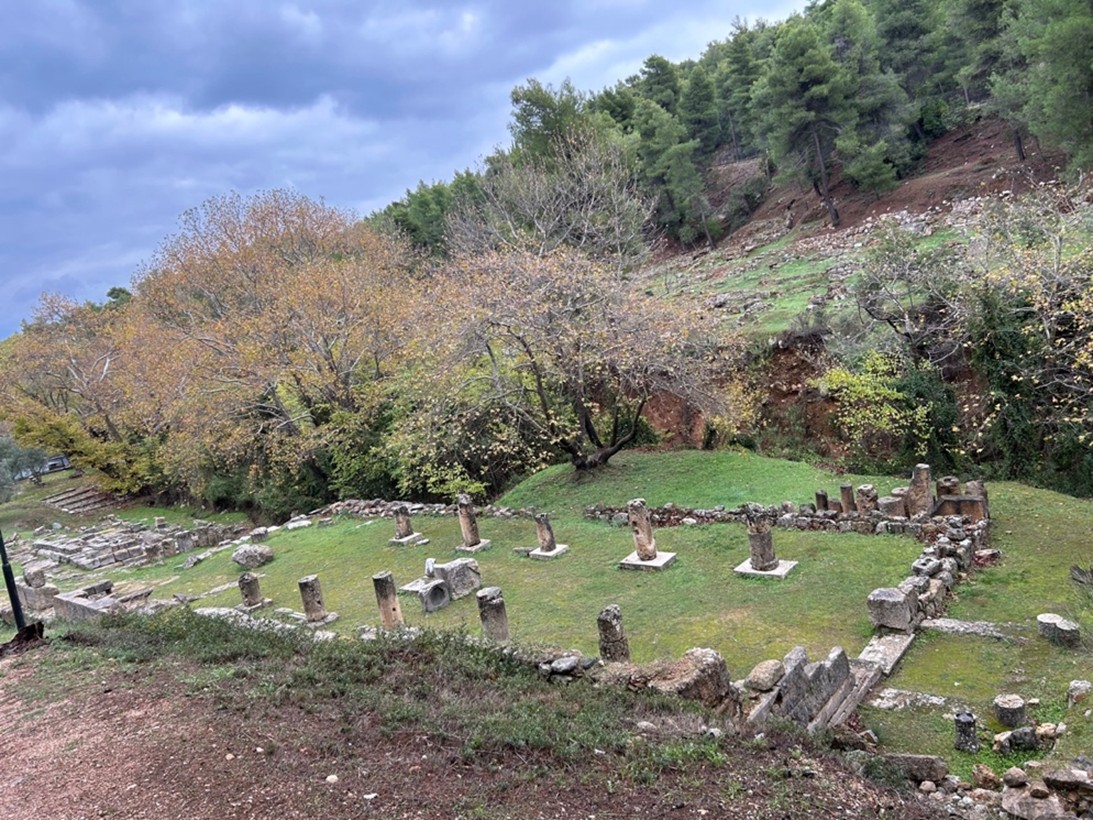
Figure 1: The Temple of Amiphiarus in Oropos
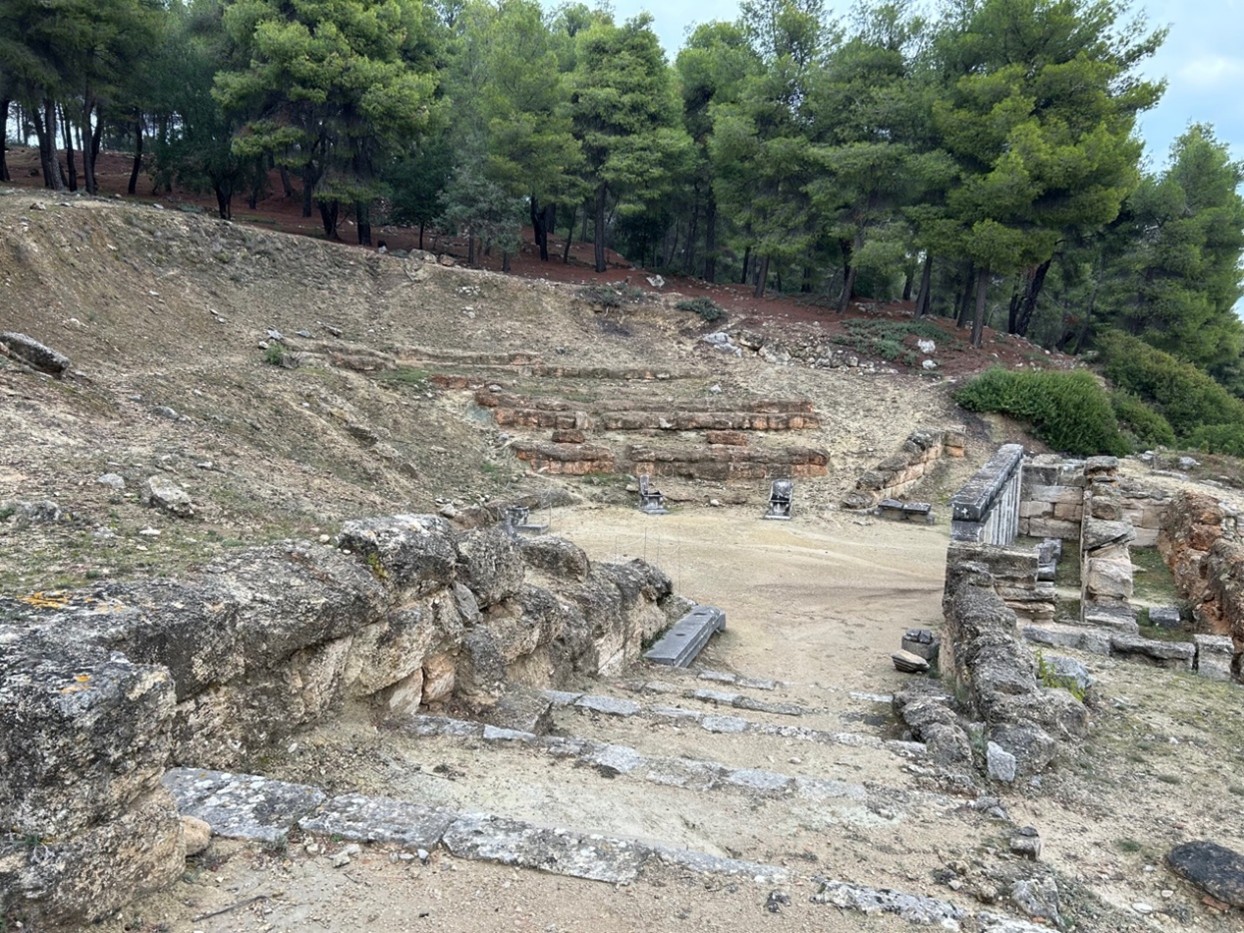
Figure 2:
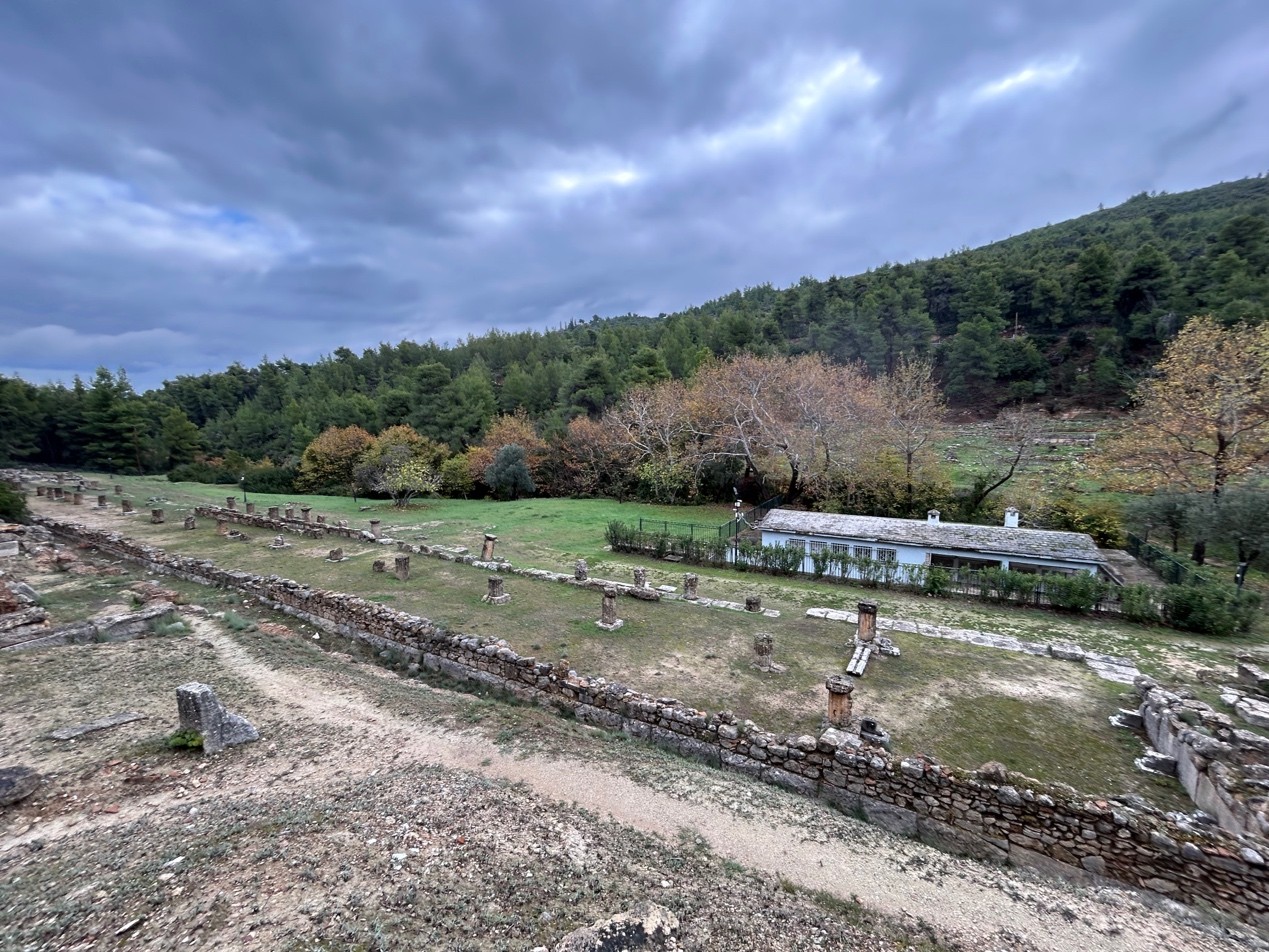
Figure 3: The Stoa