
Prof. Dr. med. Martin A. Kriegel
Host immune-microbiota interactions in autoimmune diseases
Autoimmune Diseases
Cell Biology / Molecular Biology
Immune-Microbiota Interaction
Inflammation
Microbiology / Virology / Infectiology

Our laboratory aims to uncover fundamental principles of host-microbiota interactions in autoimmune diseases such as lupus, rheumatoid arthritis, and autoimmune liver diseases. The onset and progression of these diseases is thought to be partly driven by the translocation of gut microbial species from the small intestine to secondary lymphoid organs and liver. The goal of our research is to identify human translocating pathobionts and dissect the cellular and molecular mechanisms of how these commensal bacteria break immunologic tolerance and instigate systemic inflammation and autoimmune pathology. This line of research might lead to news ways to prevent or treat immune-mediated diseases in the future.
The bed-to-benchside approach we take is based on patient sample collections (skin, oral cavity, blood, tissues and stool) with detailed dietary and clinical metadata. We then study these samples in gnotobiotic animal models (germfree and antibiotic-treated mice) and apply metagenomics (16S rDNA sequencing and WGS), culturomics (aerobic and anaerobic cultivation and sequencing), cellular immunology (FACS, ELISA, proliferation assays), cell culture (primary immune cells, intestinal cell lines, reporter cell lines, organoids) and imaging (fluorescently labelled bacteria and host cells) in a highly interdisciplinary team together with regional and global collaborators (USA, Israel, Switzerland, Netherlands).
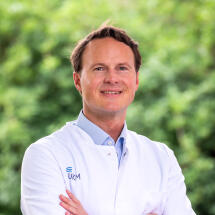
Vita
- 1994 - 2000 Studies in Medicine, Friedrich-Alexander University of Erlangen, Germany
- 2001 Graduation Dr. med., Friedrich-Alexander University, Erlangen, Germany
-
2001 - 2003 Medicine Intern/Fellow, University Hospital,
Friedrich-Alexander University Erlangen, Germany -
2003 - 2006 Fellow, Flavell Lab, Department of Immunobiology, HHMI, Yale School of Medicine,
New Haven, CT, USA -
2006 - 2008 Medicine Resident, ABIM Research Track, BIDMC, Harvard Medical School,
Boston, MA, USA -
2008 - 2012 Rheumatology Fellow, ABIM Research Track, BWH/BIDMC, Harvard Medical School,
Boston, MA, USA -
2009 - 2012 Research Fellow, Benoist/Mathis Lab, Department of Immunology,
Harvard Medical School, Boston, MA, USA -
2012 - 2017 Assistant Professor, Department of Immunology and Department of Medicine
(Rheumatology), Yale School of Medicine, New Haven, CT, USA -
2017 - 2018 Assistant Professor Adjunct, Department of Immunobiology,
Yale School of Medicine, New Haven, CT, USA -
2017 - 2020 Senior Principal Scientist/Senior Principal Medical Director, Roche,
Basel, Switzerland -
2019 - 2020 Visiting Physician, Section of Rheumatology, Department of Medicine,
University Hospital Basel, Switzerland -
Since 2018 Associate Professor Adjunct, Department of Immunobiology and Department
of Medicine (Rheumatology), Yale University, New Haven, CT, USA -
Since 2020 University Professor and Head, Translational Rheumatology and Immunology,
University of Münster, Germany -
Since 2020 Chief, Section of Rheumatology and Clinical Immunology, Department of Medicine,
University Hospital Münster, Germany
Selected references
Translocating gut pathobiont Enterococcus gallinarum induces TH17 and IgG3 anti-RNA-directed autoimmunity in mouse and human.
Gronke K, Nguyen M, Fuhrmann H, * Santamaria de Souza N, Schumacher J, Pereira MS, Löschberger U, Brinkhege A, Becker NJ, Yang Y, Sonnert N, Leopold S, Martin AL, von Münchow-Klein L, Pessoa Rodrigues C, Cansever D, Hallet R, Richter K, Schubert DA, Daniel GM, Dylus D, Forkel M, Schwinge D, Schramm C, Redanz S, Lassen KG, Manfredo Vieira S, Piali L, Palm NW, Bieniossek C, Kriegel MA. Sci Transl Med. 2025 Feb 5;17(784):eadj6294. doi: 10.1126/scitranslmed.adj6294. Epub 2025 Feb 5. PMID: 39908347.
Translocating Lactobacillus torments tumors via tryptophan catabolism.
Pereira MS, Kriegel MA. Cell. 2023 Apr 27;186(9):1821-1823. doi: 10.1016/j.cell.2023.03.022. PMID: 37116468
Structural host immune-microbiota interactions.
Brito IL, Kriegel MA. Curr Opin Struct Biol. 2022 Oct;76:102445. doi: 10.1016/j.sbi.2022.102445. Epub 2022 Sep 2. PMID: 36063760 No abstract available.
Within-host evolution of a gut pathobiont facilitates liver translocation.
Yang Y, Nguyen M, Khetrapal V, Sonnert ND, Martin AL, Chen H, Kriegel MA, Palm NW. Nature. 2022 Jul;607(7919):563-570. doi: 10.1038/s41586-022-04949-x. Epub 2022 Jul 13. PMID: 35831502 Free PMC article.
Translocation of a gut pathobiont drives autoimmunity in mice and humans.
S Manfredo Vieira, M Hiltensperger, V Kumar, D Zegarra-Ruiz, C Dehner, N Khan, F R C Costa, E Tiniakou, T Greiling, W Ruff, A Barbieri, C Kriegel, S S Mehta, J R Knight, D Jain, A L Goodman, Kriegel MA. Science. 2018 Mar 9;359(6380):1156-1161. doi: 10.1126/science.aar7201.