
Prof. Dr. Angelika Rambold
Decoding the metabolic infrastructure of inflammation
Inflammation
Immunology
Bioenergetics
Immunometabolism
Systems Organelle Biology
Innate immune cells form the body’s first defense, detecting and eliminating pathogens to maintain tissue integrity and prevent infection or cancer spread. When their function declines—through mutations, aging, or chronic inflammation—susceptibility to infection and weakened anti-tumor immunity increase. Understanding the mechanisms controlling these cells is key for developing better therapies.
A major regulator of immune behavior is metabolism. Beyond supplying energy, it actively shapes cell fate, migration, signaling, epigenetics, and antimicrobial activity. Organelles such as mitochondria, lysosomes, peroxisomes, and the endoplasmic reticulum coordinate these metabolic processes through dynamic interactions, aligning output with immune demands. Yet, how organelle networks rewire metabolism during immune responses remains poorly understood.
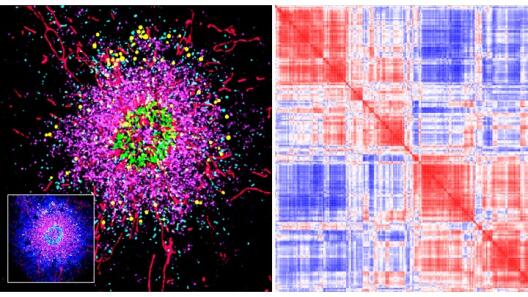
Our lab investigates this dimension of immune regulation by studying how intracellular architecture orchestrates immune function. Using multi-omics, spatial approaches, and advanced multicolor (multispectral and multiplexed) organelle imaging (OrgaPlexing), we examine how organelles remodel their structure, interactions, and functions in immune cells under stress, infection, or inflammation. This systems-level strategy reveals novel immune-metabolic circuits and clarifies how cellular organization supports immunity. Ultimately, we aim to identify new opportunities to modulate immune responses by targeting the architecture of metabolism.

Vita
- 1998 - 2004 Studies in Biology, Munich, Germany
- 2008 Graduation, Max Planck Institute for Biochemistry, Martinsried and LMU Munich,
Germany - 2008 - 2014 PostDoc with Dr. Jennifer Lippincott-Schwartz, National Institute of Health,
Bethesda, MD, USA - 2014 – 2015 Project Leader, Department of Developmental Immunology, Max Planck Institute
for Immunobiology and Epigenetics, Freiburg, Germany - 2015- 2018 Group Leader, Center for Chronic Immunodeficiences, University of Freiburg,
Germany - 2016-2024 Group Leader, ‘Organelle Networks in Immunology’, Max Planck Institute for
Immunobiology, Freiburg, Germany - Since 2025 Principal Investigator and Head of the Laboratory for “Structural Metabolism
of Inflammation”
Selected references
Wogram E, Sümpelmann F, Dong W, Rawat E, Fernández Maestre I, Fu D, Braswell B, Khalil A, Buescher JM, Mittler G, Borner GHH, Vlachos A, Tholen S, Schilling O, Bell GW, Rambold AS, Akhtar A, Schnell O, Beck J, Abu-Remaileh M, Prinz M, Jaenisch R. (2024) Rapid phagosome isolation enables unbiased multiomic analysis of human microglial phagosomes. Immunity 57(9):2216-2231
Mihlan M, Wissmann S, Gavrilov A, Kaltenbach L, Britz M, Franke K, Hummel B, Imle A, Suzuki R, Stecher M, Glaser KM, Lorentz A, Carmeliet P, Yokomizo T, Hilgendorf I, Sawarkar R, Diz-Muñoz A, Buescher JM, Mittler G, Maurer M, Krause K, Babina M, Erpenbeck L, Frank M, Rambold AS*, Lämmermann T*. (2024) Neutrophil trapping and nexocytosis, mast cell-mediated processes for inflammatory signal relay. Cell 187(19):5316-5335 *senior authors
Zimmermann JA, Lucht K, Stecher M, Badhan C, Glaser KM, Epple MW, Koch LR, Deboutte W, Manke T, Ebnet K, Brinkmann F, Fehler O, Vogl T, Schuster EM, Bremser A, Buescher JM, Rambold AS. (2024) Functional multi-organelle units control inflammatory lipid metabolism of macrophages. Nat Cell Biol. 26(8):1261-1273.
Schuster EM, Epple MW, Glaser KM, Mihlan M, Lucht K, Zimmermann JA, Bremser A, Polyzou A, Obier N, Cabezas-Wallscheid N, Trompouki E, Ballabio A, Vogel J, Buescher JM, Westermann AJ, Rambold AS. (2024) TFEB induces mitochondrial itaconate synthesis to suppress bacterial growth in macrophages. Nat Metab. 4(7):856-866
Buck MD, O'Sullivan D, Klein Geltink RI, Curtis JD, Chang CH, Sanin DE, Qiu J, Kretz O, Braas D, van der Windt GJ, Chen Q, Huang SC, O'Neill CM, Edelson BT, Pearce EJ, Sesaki H, Huber TB, Rambold AS, Pearce EL. (2026) Mitochondrial Dynamics Controls T Cell Fate through Metabolic Programming. Cell. 166(1):63-76.
Link
Münster homepage in the making