Doctoral Studies Programme
The Graduate School’s Doctoral Studies Programme provides for a dissertation on a topic from the conflicting interests of religion and politics. Simultaneous to their doctoral studies, the doctoral students attend the Graduate School’s study programme which four mentors from different disciplines undertake with them. Professors of the Cluster of Excellence supervise the doctoral theses.
The Graduate School’s period of funding is initially two years. The management of the Graduate School and the supervising professors will then decide on an extension, based on the previous research results. The maximum period of funding is three years.
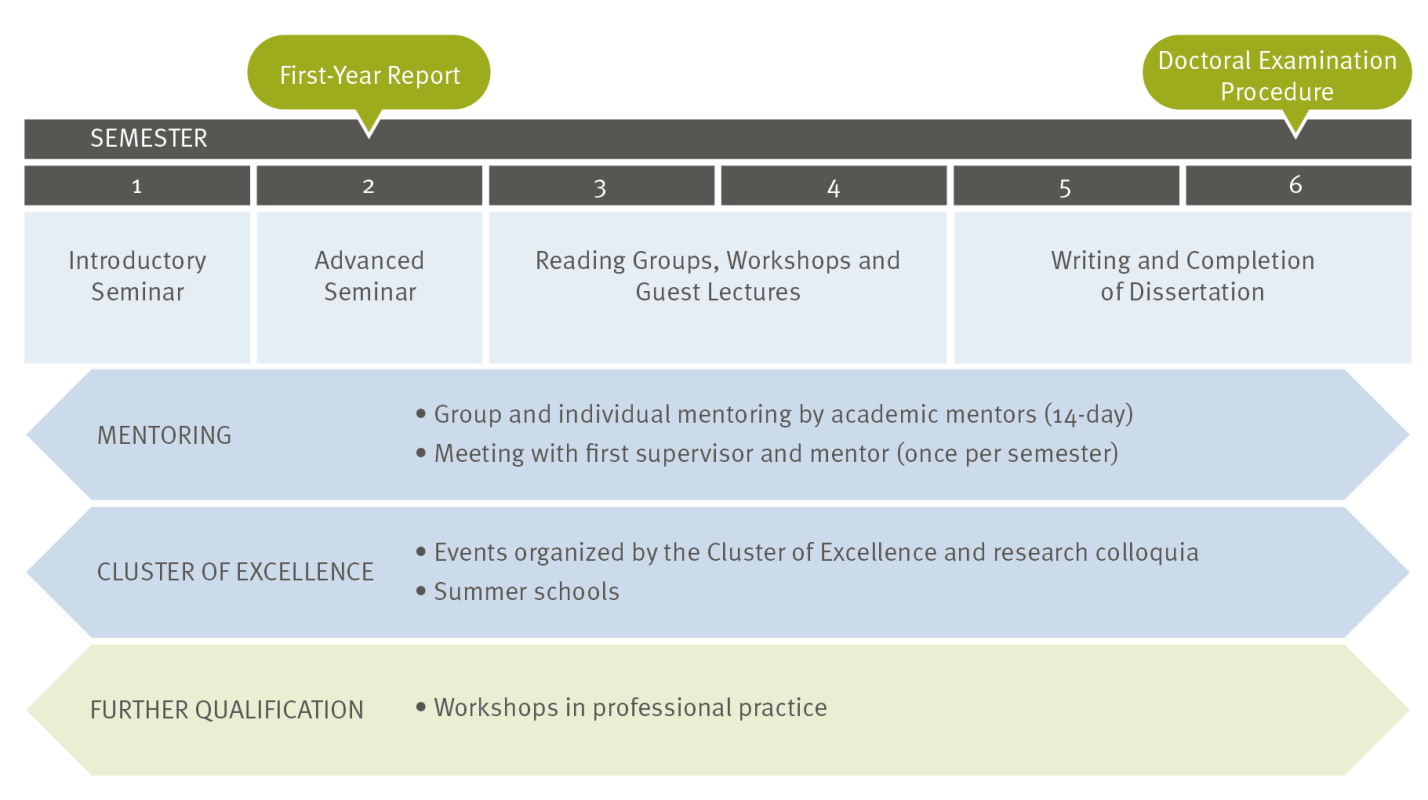
The doctoral students attend the Graduate School’s study programme:
Semester |
Programme |
Evaluation |
Mentoring |
Cluster of Excellence |
| 1. | Introduction |
Fortnightly Individual and Group Mentoring Regular Meetings with Supervisors and Mentors |
Participation in Colloquia and Lectures of the Cluster | |
| 2. | Special Subjects | First-Year Report | ||
| 3. | Workshops and Master Classes | |||
| 4. | Application for Extension | |||
| 5. | Write-up and Completion of Dissertation | |||
| 6. | Thesis Defense |
Doctoral Studies Programme (Download, pdf)
Introductory course: reading class on fundamental questions of religious research for all doctoral students of a year
Advanced course: seminars with a thematic priority, held by the mentors
Workshops: doctoral students organise a workshop with external guests or members of other projects of the Cluster of Excellence
Guest lectures: lectures by external guests of the Graduate School, held as keynote lectures with subsequent discussion in a master class
Group mentoring: interdisciplinary meetings of the doctoral candidates and the mentors to discuss synopses and chapters of the dissertations, as well as project-related publications
Individual mentoring: office hours of the mentors for the doctoral students