

Prof. Dr. Appa Rao Podile
University of Hyderabad
Department of Plant Sciences
Hyderabad - 500046
India
Professor Appa Rao Podile has over two decades of research experience in plant microbe interactions. So far, six students obtained Ph.D. and four students obtained M. Phil. under the guidance of Prof. Podile at University of Hyderabad. At present, 8 Ph.D. students and two post doctoral fellows are working in Prof. Podile’s lab. The lab is supported by Department of Biotechnology, Government of India with two major research grants in glycosciences.
Prof. Podile started his research career working on the plant cell wall degrading enzymes produced by vascular wilt pathogens and also with the proteins associated with plant cell walls and their role in immobilization/inactivation of pathogen-produced enzymes. Prof. Podile’s group worked on the importance of chitin-degradation by chitinolytic bacteria in biological control of plant pathogenic fungi. Prof. Podile’s lab has several recent findings; Neeraja et al. 2010, Molecular Biosystems, 6: 1492-1502; Neeraja et al. 2010, Bioresource Technology, 101:3635-364; Neeraja et al. 2010, Crit. Rev. Biotechnol., 30: 31-41; Purushotham et al. 2012, Bioresource Technol., 112: 261-269; Purushotham and Podile 2012, J. Bacteriol. (under revision); Purushotham et al. 2012, PloS One, under review; Das et al., Crit. Rev. Biotechnol. (under revision) on the cloning, characterization and application of bacterial chitinases. Currently work is under progress to clone more genes involved in chitinolysis, characterization of the enzymes and also to modify the properties of chitinases using SDM.
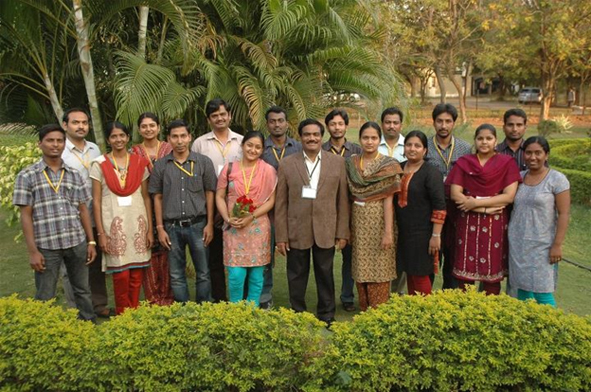
Already two Ph.D. students registered with Prof. Podile are recruited into the IRTG programme in the first two batches in collaboration with Prof. Moerschbacher and Dr. El Gueddari. Prof. Podile’s research team photograph can be seen below: